
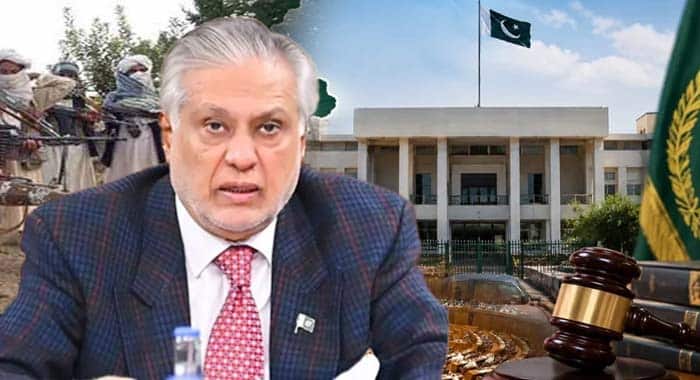
A joint sitting of Pakistan’s Parliament, chaired by National Assembly Speaker Sardar Ayaz Sadiq, has endorsed the imposition of Governor’s Rule and a state of emergency in Khyber Pakhtunkhwa by a majority vote, following an extensive debate between government and opposition members.
The decision came after lawmakers from both sides expressed their positions on points of order, with Deputy Prime Minister and Foreign Minister Senator Mohammad Ishaq Dar defending the government’s measures as constitutionally justified and necessary in view of the country’s security challenges.
Addressing the joint sitting, Ishaq Dar asserted that Pakistan had paid an enormous price in its fight against terrorism and warned that failure to confront the threat effectively at this stage could result in further serious consequences for national security.
He questioned the decisions that had allowed militants associated with the banned Tehreek-e-Taliban Pakistan (TTP) to return to the country, asking who had authorized the reopening of the border and the release of detained militants.
Referring to the circumstances surrounding the return of TTP members, Dar alleged that they had been permitted to move back towards Pakistan’s border areas following engagements in Kabul. He argued that the decisions taken at the time had contributed to the present security situation.
The foreign minister also criticized the Khyber Pakhtunkhwa government over its handling of the province’s resources, stating that an expenditure of Rs800 billion, had it been used effectively, should have helped prevent the current circumstances.
Dar further maintained that the federal government’s decision to impose Governor’s Rule and a state of emergency in Khyber Pakhtunkhwa had been taken in accordance with the Constitution. He rejected allegations that the measures were unconstitutional, emphasizing that the relevant parliamentary forums had formally endorsed the decision.
Responding to criticism from those questioning the legality of the measures, Dar asserted that the government had acted within the constitutional framework and stressed the importance of addressing the country’s security challenges decisively.
He also referred to Interior Minister Mohsin Naqvi’s briefing to Parliament, saying that the minister had presented detailed facts concerning the situation before the House.
The parliamentary endorsement marks a significant development in the federal government’s response to the security situation in Khyber Pakhtunkhwa. The decision and the concerns raised during the session are expected to intensify the political debate over responsibility for the resurgence of militancy, the effectiveness of provincial security policies, and the constitutional implications of federal intervention.
The government has maintained that confronting terrorism requires firm action and accountability for decisions that have contributed to the current situation. Dar reiterated that Pakistan could not afford to lose another opportunity to address the threat posed by militant groups.
The joint session concluded with the government securing majority support for Governor’s Rule and the state of emergency in Khyber Pakhtunkhwa, while the wider debate over security, governance, and constitutional authority remains central to the country’s political landscape.



