
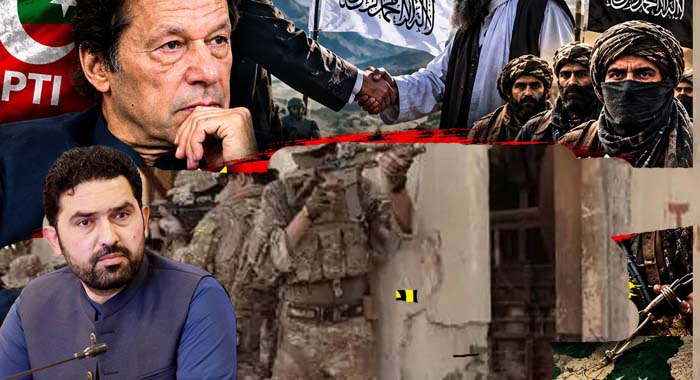
The ongoing dialogue between the government and Pakistan Tehreek-e-Insaf (PTI) has encountered a major deadlock, with counterterrorism policy, security-related administrative measures and the situation in terrorism-affected areas emerging as the central points of disagreement, according to sources familiar with the negotiations.
Sources said that despite extensive discussions between the two sides, no meaningful breakthrough could be achieved as differences over the state’s counterterrorism strategy and the administrative response required in areas facing terrorist threats remained unresolved.
According to sources, the government has taken the position that combating terrorism is a national security priority requiring unequivocal cooperation from all relevant state institutions and provincial administrations. The government side has stressed that administrative measures necessary to protect citizens and support counterterrorism operations cannot be kept outside the framework of political negotiations.
The sources said the PTI side has expressed reservations over some of the measures proposed for terrorism-affected areas, particularly those relating to administrative action and the broader counterterrorism approach.
What began as a broader political dialogue has increasingly become centered on a fundamental question: how should the state and provincial authorities respond to the continuing threat of terrorism? Sources said the government made its position clear during the negotiations that counterterrorism could not be treated as a secondary or negotiable issue when the lives and security of citizens and law-enforcement personnel are at stake.
The government side maintained that effective counterterrorism requires close federal-provincial coordination, strong administrative support, effective policing and decisive action against terrorist networks and their facilitators. The PTI, according to sources, has not agreed to certain administrative measures sought by the government, resulting in the issue becoming one of the principal obstacles to further progress.
Sources said the government’s position during the talks was unequivocal: if the two sides cannot make progress on terrorism-related matters, meaningful progress on the remaining issues will also remain difficult. The position reflects the government’s view that political dialogue cannot be separated from the prevailing security environment, particularly in areas where terrorist organisations continue to pose a threat. The government has maintained that protecting citizens, strengthening law enforcement and preventing terrorist activity must remain above political considerations.
According to sources, the negotiations have also brought renewed focus on PTI’s position regarding counterterrorism operations and administrative measures in terrorism-affected areas. The government side has questioned the PTI’s reluctance to support certain measures that it considers necessary to strengthen the security framework and assist law-enforcement institutions. Sources said the disagreement has become sufficiently significant that it is now affecting the prospects of progress on the broader negotiating agenda.
However, the PTI’s position and interpretation of the disputed issues remain part of the ongoing political process, and the latest claims attributed to government sources have not independently established the party’s motives.
The latest round of negotiations consumed much of the day but concluded without a breakthrough on the core areas of disagreement. Instead of narrowing the differences, the discussions brought the counterterrorism question more prominently to the forefront, with both sides remaining apart on key administrative and security-related matters. The development has raised questions about whether the wider dialogue can move forward without first addressing the fundamental disagreement over the state’s response to terrorism.
The government maintains that terrorism is not merely a political or administrative issue but a national security challenge requiring a unified state response. Officials have stressed that Pakistan’s security forces, police, intelligence institutions and civilian administrations must operate within a coordinated framework to prevent terrorist attacks, dismantle support networks and protect vulnerable communities. The government has also maintained that provincial administrations in terrorism-affected regions have an important responsibility in supporting law-enforcement and security efforts through effective governance and administration.
The latest impasse has transformed counterterrorism from one issue among several under discussion into a central test for the future direction of the dialogue. At stake is not only the resolution of political differences but also the question of how federal and provincial institutions will coordinate their response to terrorism and whether both sides can establish common ground on security-related administrative measures. Sources said the government’s position remains that no sustainable political understanding can be achieved while fundamental differences over counterterrorism remain unresolved.
The PTI, meanwhile, continues to maintain its own position on the issues under discussion, leaving the two sides facing a difficult path toward consensus.
The government has reiterated that political dialogue can continue, but the fight against terrorism must remain a national priority. The authorities maintain that every institution and administration has a responsibility to contribute to the protection of citizens and to prevent terrorist organisations from exploiting administrative gaps or political divisions.
The latest deadlock has therefore placed a critical question before the negotiating sides: can political differences be set aside sufficiently to establish a common approach to counterterrorism? Until that question is addressed, sources say, progress on the wider negotiating agenda is likely to remain difficult.



