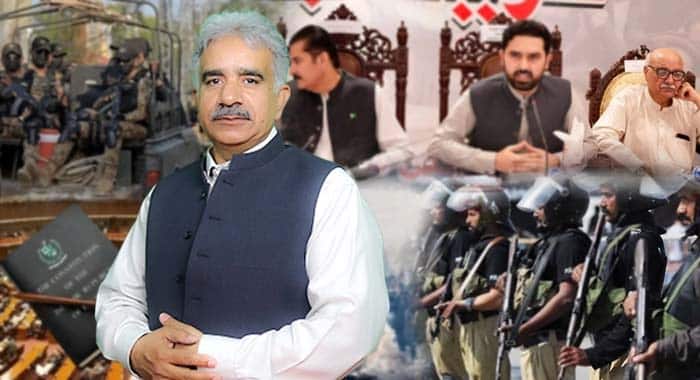
Khyber Pakhtunkhwa’s security situation cannot be separated from the provincial government’s responsibilities, its spending priorities and the capacity of its police and counter-terrorism institutions.
After the 18th Amendment, law and order is among the core responsibilities of the provincial government, along with health, education, infrastructure development and rehabilitation. When we look at the security situation in KP, however, the ground realities raise serious questions about whether the province has developed the capacity required to deal with the threat.
Compared with last year, the number of terrorist attacks has increased significantly. Last year, around 220 people were martyred, while this year the figure has reached around 260. The number of attacks has also increased, from roughly 500 to 600. The threat is no longer confined to the traditional areas of South and North Waziristan. It has expanded into urban and settled areas, including Bannu, Dera Ismail Khan, Karak, Kohat and Lakki Marwat.
The question, therefore, is not simply how much money has been allocated for security. The real question is what capacity has been created with that money.
The federal government has repeatedly said that substantial resources have been provided to strengthen the police and the Counter Terrorism Department. This was also part of the National Action Plan, under which kinetic operations were to be complemented by civilian measures. Whether the province is Khyber Pakhtunkhwa, Balochistan, Sindh or Punjab, the civilian side has responsibilities that cannot simply be transferred elsewhere.
If there is a shortage of around 11,000 personnel in the police and law-enforcement agencies, and vacant positions remain unfilled, then that is a serious institutional problem. At the same time, around 13,500 personnel have reportedly been deployed for the security of political and elite figures. That tells you something about priorities.
The question of funding is raised repeatedly. The provincial government says it has not received the full amount being claimed by the federal government, that it is not receiving its due share and that it has not received the one percent that was supposed to be provided for the former tribal areas in connection with the war against terrorism.
The provincial government has also said that it increased the budget for police and law-enforcement agencies by 103 percent and diverted Rs35 billion from the development budget to strengthen the police.
Fine. But then the question becomes very straightforward: where is the capacity?
Have the armored and bulletproof vehicles been purchased? How many night-vision devices are available? How many vehicles does the CTD actually have? If these things have been bought, the provincial government can show them. The Inspector General of Police and the relevant ministers can provide the figures.
There is no problem if the money has been spent properly. If the audit shows that vehicles, equipment, night-vision devices and drones were purchased, then that is an answer. But if the money was consumed by salaries, pensions, compensation for personnel martyred in terrorist attacks and rehabilitation of damaged houses and structures, then that is a different matter.
The issue is not simply where the money went. The issue is whether it was spent where it could build the capacity required to confront terrorism.
And there is another, even more important, issue: the provincial government’s position on military operations remains vague.
If you repeatedly say that terrorism has increased because of wrong policies, then you also have to ask yourself why terrorism has increased over the past two or three years and what responsibility the provincial government itself carries. Is it not the government’s responsibility to protect the lives and property of its people?
If a suicide bomber reaches a market, you have to ask how that person got there. Where was the police? Where was the intelligence setup? Where were the FIA and Special Branch? If people carrying out attacks are reaching settled areas, these institutions have responsibilities.
You cannot repeatedly build a narrative that these decisions are made by someone else and that the provincial government has no role in them.
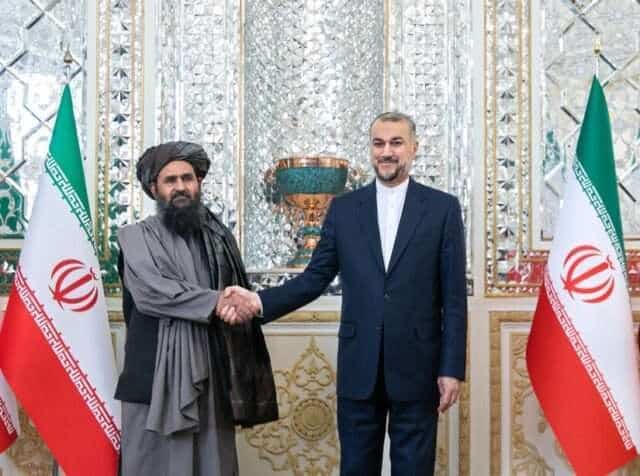
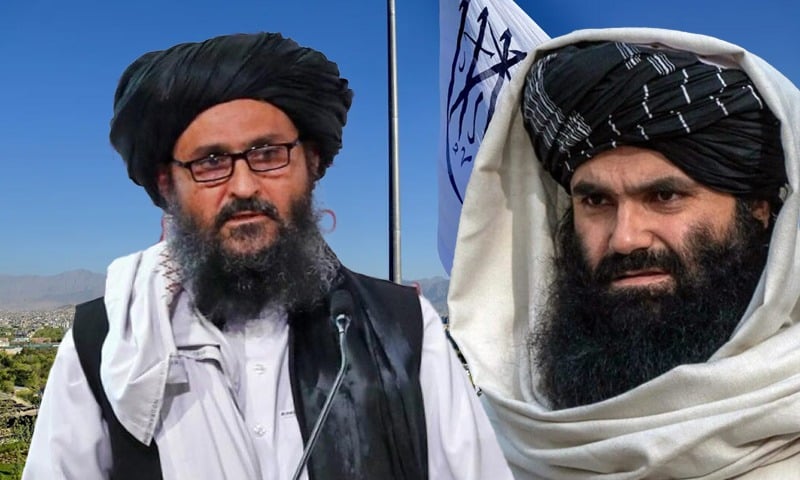
I also believe that the provincial government’s position toward the Taliban regime in Afghanistan is counterproductive. The Afghan Taliban regime is providing space from the western border to groups involved in terrorism against Pakistan. Terrorists are being facilitated through financing, movement and safe havens. Figures such as Noor Wali Mehsud, Sanaullah Ghafari and Hafiz Gul Bahadur are present in Afghanistan, along with other members of these organizations. International agencies have also documented the presence of terrorist groups there.
Despite this, when the provincial government says that Pakistan’s policy is the problem, it needs to explain what alternative policy it is proposing.
If you believe the state’s policy is wrong, then another question follows. Those who do not accept the state of Pakistan, its Constitution or democracy cannot simply be treated as another political stakeholder with whom the provincial government can negotiate.
There is also a repeated argument that the federal government does not take KP on board. But there is an Apex Committee. There are parliamentary committees on law and order. There are forums in the National Assembly and Senate. If there is a genuine issue, these are precisely the institutions through which it can be raised.
The same applies to the debate over talks with the TTP. Pakistan has tried negotiations in different ways, but those efforts did not resolve the problem.
You can talk to the TTP, but what about Al-Qaeda? What about Daesh-Khorasan? What about ETIM and other groups? Will all of them accept the same arrangement? The threat is larger than one organization, and that is why the province needs a clear line of action.
KP also has to look at the wider nexus between terrorism, crime and the illegal economy.
There is drug smuggling. There is an illegal cross-border economy involving drugs, electronic equipment, petrol and diesel. Billions of rupees move through these networks. The question is: who benefits from this racket?
People operating in these illegal networks can develop links with extremist elements and provide them protection. If you want to deal with terrorism, you cannot ignore these economic networks.
KP shares a long border with Afghanistan, and its demand for greater federal assistance in guarding and manning that border is understandable. But the province also has responsibilities within its own territory.
When large quantities of drugs and other smuggled goods are being intercepted, it demonstrates the scale of the illegal economy. These networks need to be disrupted because criminal and extremist networks can reinforce each other.
Security is also directly connected to economic development.
Who will come to areas where law and order is poor for tourism? Who will invest there? What industry is operating in KP? What does the province export? Marble comes from the province, but much of the raw material and processing infrastructure is not properly organized.
The province needs industrial planning and economic development, not simply the buying and selling of plots.
This is where government priorities become important. If law and order is not right, development projects will not deliver their intended benefits. You can construct flyovers and underpasses, but what economic activity are they ultimately serving?
There are several such projects around Peshawar, including developments around Jameel Chowk, Hazar Khwani, Pishtakhara and Hyderabad Chowk. But if the surrounding areas do not develop into industrial or economic centers that generate greater movement and investment, then infrastructure alone does not solve the province’s deeper problem.
You can build another Ring Road in the future, but what is the point of roads and flyovers if people do not feel secure enough to travel, invest or do business?
Law and order has to be a priority.
KP currently lacks the kind of tourism, industrial development and investment that could provide a strong economic base. When those avenues remain weak, political polarization becomes even more dominant.
This brings us to PTI’s political struggle.
There is no objection to any political party pursuing its political struggle. But a party governing the province has another responsibility. The people elected representatives not only to pursue national political objectives but also to provide law and order, education, health and governance.
If representatives say that their vote was given primarily to secure the release of Imran Khan, that is a political position. But they also have to answer for the province they are governing.
People want better law and order. They want better education and hospitals. They want better governance. These are the responsibilities of elected representatives.
If everything is blamed on the federal government, Punjab or Sindh, how will the people accept that explanation? If you accuse others of corruption, prove those allegations through evidence. Political rhetoric and media hype cannot replace governance.
The same applies to the current political confrontation. The provincial government needs to adopt a realistic approach.
Keep the door of dialogue open. A political party has to do politics in a political system. It cannot operate entirely through confrontation and stubbornness.
If a party believes it can mobilize people and take over everything through a particular protest or political move, that is a difficult path. Blocking roads and shutting down economic activity also imposes costs on ordinary people. If around Rs120 million is lost every day because of disruption, then the people are the ones who ultimately bear that cost.
Political parties have a constitutional right to protest and hold public gatherings. But there should be a method. Seek permission, identify a place and hold the gathering there.
If the confrontation becomes so severe that constitutional provisions relating to emergency administration are invoked, a governor or another administrative arrangement could emerge. That would create another source of confrontation between the people of the province and the system.
So the province has to think about two problems simultaneously: how to address law and order and how to reduce political polarization.
This is not the responsibility of ordinary citizens. It is the responsibility of politicians sitting in the assemblies.
The people of Khyber Pakhtunkhwa have already given their representatives a two-thirds majority. Now those representatives have to perform their responsibilities.
They cannot keep asking people to join every protest, march or political confrontation. The people have already played their role through the electoral process. Now elected representatives have to govern.
There is also a political question surrounding the provincial leadership and the future of the government. If Sohail Afridi is replaced, another PTI-backed chief minister could potentially take his place because PTI remains the largest political force in the province, whether through party-backed or independent representatives.
At present, it is not clear that parties such as JUI-F, ANP, QWP or Jamaat-e-Islami are prepared to take responsibility for governing the province under such difficult circumstances. The political options therefore remain open, and ultimately the elected representatives will have to decide how they want to proceed.
But whatever the political arrangement, one fact remains: the province cannot escape its responsibility for governance.
The same principle applies to terrorism.
The provincial government needs a clear line of action. It has forums available to discuss security. It has representatives in the National Assembly and Senate. It has the Apex Committee. It can engage with the federal government and the military leadership on law and order.
If there is a problem, sit across the table and resolve it.
Do not make the war against terrorism another extension of political polarization. And do not allow the argument over who is responsible to replace the more important question of whether the province is actually building the capacity needed to protect its people.