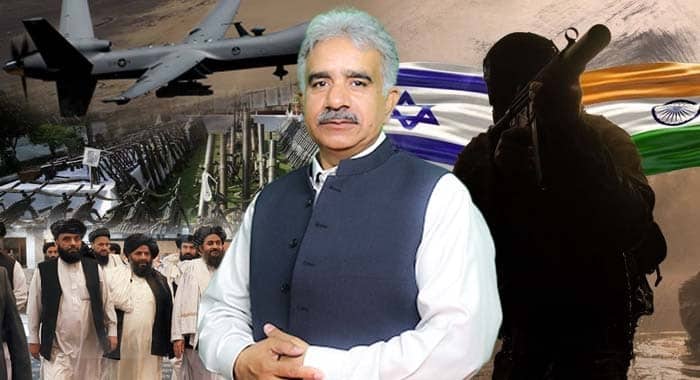
Pakistan is facing a security threat that can no longer be viewed only through the activities of individual terrorist organizations. The situation has developed into a wider nexus involving India, the Afghan Taliban regime and, according to allegations that require international scrutiny, Israeli technical support.
There is no second opinion, in my view, that India is currently fighting a war against Pakistan from the Afghan side of the western border. India has also been speaking about continuing its strategy under what it calls Operation Sindoor 2.
India’s relationship with Afghanistan therefore deserves much greater attention. There have been claims that India provided $7.8 million to the Afghan government and terrorist organizations including the TTP, BLA and other groups involved in attacks inside Pakistan. If such financial support exists, the obvious question is where the money is going and what mechanism exists to audit it.
The growing air-cargo connection between Kabul and Delhi raises another question. Ariana Airlines is operating frequent cargo flights to India, including flights that do not use Pakistani airspace. But what exactly is being transported?
Afghanistan does not have the kind of large-scale development infrastructure that would ordinarily explain such a rapidly expanding cargo connection. Where are the major school, hospital or development projects requiring these shipments? If there is no clear development explanation, then the cargo route deserves serious scrutiny.
Retired Indian Army officers have also openly discussed Afghanistan’s importance to India’s strategy. The argument presented in such discussions is that Afghanistan provides India with an opportunity to operate against Pakistan from its western side.
This is why the issue cannot simply be dismissed as ordinary trade between Kabul and Delhi.
The threat, as I see it, has three dimensions. India can provide financing, Israel can provide technical assistance, and the Afghan Taliban can provide territory, logistical support and an operating environment.
There have also been claims about a major structure in Ladakh housing Israeli intelligence personnel who are allegedly involved in training terrorist organizations including the TTP, BLA, ETIM and TIP, with the Afghan Taliban’s facilitation. These allegations need to be examined and independently verified, but they cannot simply be ignored when discussing the changing nature of the terrorist threat.
Modern terrorism is not only about guns and explosives. Drones, quadcopters and sophisticated weapons systems require technical expertise. If terrorist organizations are receiving advanced equipment, someone has to teach them how to operate it.
There are also reports and claims about American, Israeli, European and French-origin weapons being available in Afghanistan. The important question is not simply where a weapon was manufactured. The question is who is providing the technology, training and logistical support that allows terrorist organizations to use modern systems.
This is why I describe the situation as a form of state terrorism against Pakistan involving three states: India, Israel and the Afghan Taliban regime.
It is important, however, to distinguish the Afghan Taliban regime from the Afghan people. The Afghan people should not be blamed for the policies of the regime controlling Afghanistan.
Another major danger is the presence of Al-Qaeda and other international terrorist organizations in Afghanistan. UN reporting has repeatedly raised concerns about terrorist groups operating from Afghan territory. Al-Qaeda’s connections with foreign terrorist networks are particularly dangerous because they extend beyond Pakistan.
There are links involving groups associated with Chinese militants, the Turkistan Islamic Party and other Central Asian networks. If people are trained in Afghanistan and subsequently sent to conduct operations in their own countries, then the threat becomes international.
Daesh Khorasan is also recruiting in Central Asian countries. This is why the issue should concern not only Pakistan but also Turkey, Central Asia, China, Europe and other countries that could ultimately face the consequences.
The warning is straightforward: if international terrorist networks are allowed to establish themselves, recruit and train people, the consequences can eventually reach far beyond Afghanistan.
That is also why Pakistan’s recent strikes against terrorist targets in Afghanistan should not simply stop. Pakistan has coordinates, intelligence and precision-strike capabilities. When terrorist sanctuaries are identified, the objective should be to eliminate the threat.
The Pakistani government has said its September 21 strikes targeted terrorist camps and hideouts in the border region with Afghanistan, reporting that 28 terrorists were killed. Afghan officials and the UN, however, reported civilian deaths, showing why claims surrounding such strikes remain contested.
Whenever Pakistan conducts such strikes, Zabihullah Mujahid quickly speaks about civilian casualties. But another question must also be asked: if terrorists are operating from houses or civilian areas, who is responsible for allowing them to operate there?
Pakistan’s civilians are also dying. Police officers, children, doctors and ordinary citizens are being killed in terrorist attacks. The recent attack on the Kohat Police Lines, for example, killed and injured large numbers of Pakistanis before the attackers were eliminated in a prolonged security operation.
So when Afghan officials speak about civilian suffering, the question should also be directed toward those providing terrorists with sanctuary.
Noor Wali Mehsud is in Afghanistan. Sanaullah Ghafari is in Afghanistan. Bashir Zeb, Aslam Baloch and Shehnaz Baloch have also been associated with terrorist activity from Afghan territory. The international community needs to examine these issues seriously.
There are also reports of TTP members moving away from areas close to the Pakistani border. If the Afghan Taliban have started realizing that terrorist groups cannot remain concentrated along the border indefinitely, that could be a sign that pressure is having an effect.
But moving terrorists from one Afghan province to another does not solve the problem. They can live anywhere in Afghanistan as long as they stop using Afghan territory to attack Pakistan.
This means both Pakistani and international pressure matter.
At the same time, the Taliban leadership should reconsider its repeated rhetoric about Afghanistan being the graveyard of international powers. Which international powers did the Taliban actually defeat? The Soviet war had many Afghan and international actors, while the United States ultimately completed its mission and withdrew.
It is easy to build a narrative around the idea that Afghanistan defeated every major power. History is much more complicated than that.
It is also easy to patronize terrorism. The real question is whether terrorist organizations can take over Pakistan through such a strategy. They cannot.
So why build a base against Pakistan and allow international terrorist organizations to operate from Afghan territory?
That is unacceptable.
Zabihullah Mujahid has also spoken about retaliation against Pakistan. The question is: retaliation against whom?
Will the response be another attack on Pakistani civilians? Will terrorists attack a police station, a market or another public place?
A narrative has been developed in Pakistan and outside the country that the Pakistani state is responsible for violence against its own people. But the attacker is Pakistani, the police officer is Pakistani and the civilian is Pakistani. Why should Pakistanis become enemies of one another?
The Hafiz Gul Bahadur Group, the TTP, Al-Qaeda and Daesh Khorasan all have their own reasons for targeting Pakistan. What is Pakistan’s enmity with ordinary Afghans? What is Pakistan’s enmity with Muslims who want to live peacefully?
Daesh attacks mosques and religious scholars. Terrorist organizations kill civilians and security personnel alike. Yet the entire discussion is sometimes reduced to Pakistan’s military operations.
This is why the Afghan Taliban’s support or tolerance of such organizations has to be questioned.
If the Taliban regime wants to retaliate for Pakistani strikes, what exactly is its military option? It does not have an air force capable of matching Pakistan’s. It does not have the conventional military capability to fight Pakistan on equal terms.
The most likely consequence would therefore be another wave of terrorist attacks.
Pakistan should take such threats seriously.
The question then becomes whether pressure should remain focused only on terrorist camps or whether the leadership directing extremism and terrorism must also be held accountable. If leadership continues to promote terrorism, then the leadership itself cannot remain outside the discussion.
Where is that leadership?
Hibatullah Akhundzada remains largely unseen. Other senior Taliban figures occasionally appear in public and then disappear again. The international community needs to know who is making these decisions and who accepts responsibility for terrorist activity emanating from Afghan territory.
At the same time, Pakistan’s position on dialogue has also been clear. Pakistan is not opposed to diplomatic engagement, trade or negotiations. The message from Pakistani officials has been that relations can move forward if terrorist activity stops.
That is where the discussion should begin.
I am not a military strategist, and this is a personal view, but those who reject Pakistan’s constitutional system and want to impose the TTP’s system on 260 million Pakistanis cannot simply be handed the country.
Pakistan has a Constitution. Pakistan has laws. Millions of Pakistanis live under that system. Why should the demands of a terrorist organization that rejects the Pakistani state be accepted?
Those who claim to love Afghanistan should also be asked whether they are prepared to live under the system they defend.
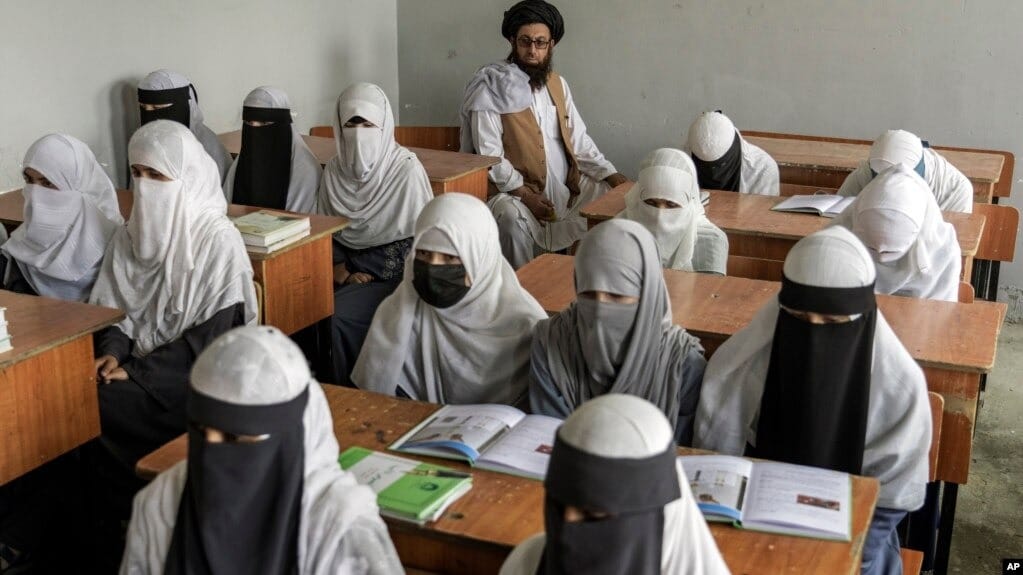
Afghanistan is a country where girls face severe restrictions on education beyond the sixth grade and women face sweeping restrictions on public life. Yet some people who speak most loudly about Afghanistan’s future live comfortably outside the country, including in Western countries and elsewhere.
The contradiction should be addressed honestly.
Pakistan also has no reason to occupy Afghanistan.
Why would Pakistan want Afghanistan’s mountains when Pakistan already has enormous economic, security and development challenges of its own? The claim that Pakistan wants to take over Afghanistan does not make sense in the context of Pakistan’s own problems.
Afghanistan has repeatedly been the site of wars involving major international powers. Pakistan did not choose those wars. After 9/11, Pakistan was drawn into a conflict that produced enormous consequences for Pakistan itself.
Pakistan has paid a heavy price for wars fought on Afghan soil.
The people of Afghanistan should therefore ask themselves whether Pakistan’s objective is really to control Afghanistan or whether Pakistan is demanding that Afghan territory no longer be used for terrorism against Pakistan.
Pakistan’s strikes are not the entire story.
Afghan civilians have also suffered during years of conflict, but there is another problem: there is limited independent reporting from many areas of Afghanistan. When a strike occurs, the Taliban authorities issue their version of events, while independent verification can be difficult.
Their narrative is their right, and propaganda is part of their political strategy. But a realistic approach requires asking what the underlying problem is.
Why is Pakistan being targeted?
Why are terrorist organizations being allowed to maintain infrastructure on Afghan territory?
Why are weapons and fighters moving toward Pakistan?
And why should a country be expected to tolerate attacks simply because the attackers operate from across an international border?
Pakistan has repeatedly said that it wants peace, trade and stable relations with Afghanistan. But peace cannot mean accepting terrorism.
The Taliban regime needs to decide what kind of relationship it wants with Pakistan.
It cannot ask for trade and economic engagement while allowing terrorist organizations to operate against Pakistan. It cannot demand international recognition while ignoring terrorist infrastructure on its territory.
Pakistan should continue its pressure until the threat is removed and the objectives of counterterrorism operations are achieved.
The objective should be clear: terrorist networks must be dismantled, their infrastructure eliminated and their leadership prevented from continuing to direct attacks against Pakistan.
This is not a conflict with the Afghan people.
It is a question of whether the regime controlling Afghan territory will allow that territory to be used as a base for terrorism against Pakistan.
That is the question the Taliban leadership must answer.