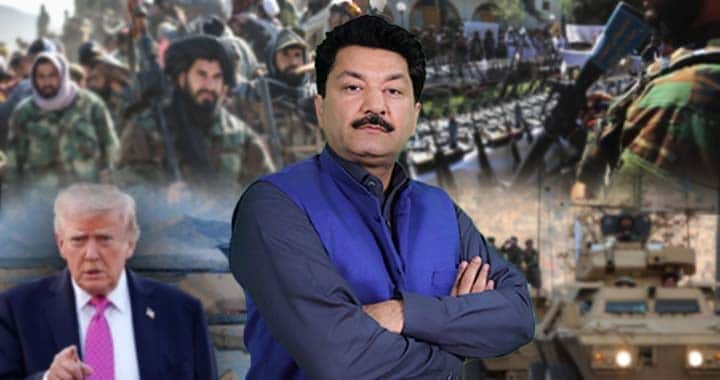
The relationship between the Afghan Taliban and the United States may appear hostile on the surface, but when we look closely, it is clear that some matters continue behind the scenes. The recent developments surrounding Afghanistan’s demand for American investment and the question of US weapons left behind after the withdrawal show that the relationship is much more complicated than public statements suggest.
The Afghan Taliban has proposed that the United States invest in Afghanistan’s mineral resources, including rare earth minerals, agriculture and infrastructure. At the same time, the Taliban has entered into a major agreement with Saudi Delta Energy International, reportedly involving a 25-year plan worth around $50 billion.
There are many dimensions to such an agreement. The involvement of a Saudi company naturally matters to Iran, particularly given the history of relations between Iran and Saudi Arabia. China also has interests in Afghanistan and will closely watch these developments. Pakistan, too, has to assess how increasing engagement between Afghanistan and our friendly countries could affect our own interests and security concerns.
The recent defence agreement between Pakistan, Saudi Arabia and Turkey is also relevant in this context. If the engagement of our friendly countries with the Afghan Taliban increases, Pakistan can potentially benefit from that engagement, particularly if it contributes to resolving our security concerns with Afghanistan.
The Weapons America Left Behind
The question of American weapons in Afghanistan is much more complicated.
Donald Trump has repeatedly criticized the way the United States withdrew from Afghanistan. He has also repeatedly pointed to Bagram Air Base and questioned why it was abandoned. He has expressed anger over seeing the Afghan Taliban displaying American tanks and weapons during its military parades.
The value of the military equipment left behind was enormous. The United States had spent huge amounts of money on equipment for the Afghan security forces. If Washington had simply been fighting its own war and decided to leave, it could have taken its military equipment with it.
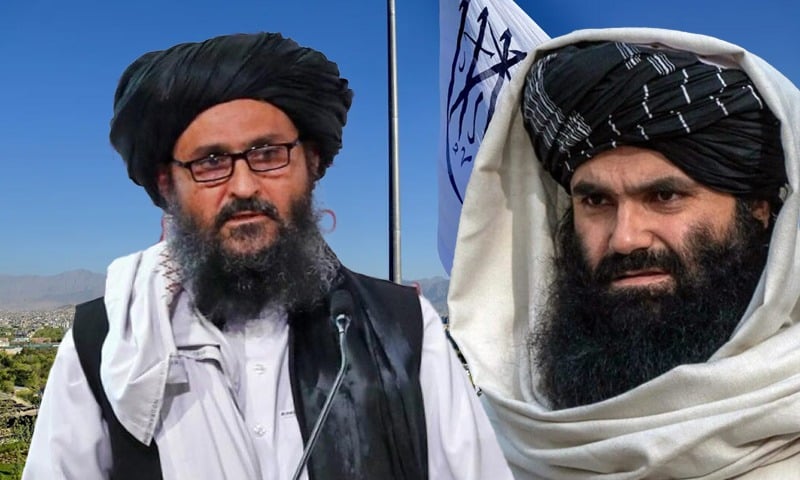
But the United States negotiated with the Taliban for 18 to 20 months. There were extensive discussions, and the final agreement was signed by Mullah Abdul Ghani Baradar and Zalmay Khalilzad. So the question arises: was the subsequent outcome really unexpected?
The Americans knew what kind of organization they were negotiating with. They knew that the Taliban had its own objectives. They also knew that the Taliban was unlikely to establish the kind of inclusive political system that had been discussed.
Why, then, were negotiations conducted primarily with the Taliban? Why were other Afghan political groups and political figures not given the same importance? Why was the process structured in a way that ultimately allowed the Taliban to take control of the entire country?
These are legitimate questions.
Today, we can see where some of those American weapons have ended up. Weapons, night-vision equipment and other sophisticated military equipment originally supplied to Afghan forces have appeared in the hands of terrorist organizations. Some have reportedly reached terrorist groups operating against Pakistan in Balochistan and Khyber Pakhtunkhwa, while other equipment has entered the black market.
This is not a theoretical issue for Pakistan. The same type of modern equipment that was supplied during the US presence in Afghanistan is now being encountered in the region.
The Taliban Was Prepared for the Takeover
The events surrounding the Taliban takeover also raise questions about how prepared the group was for what happened.
For 20 years, the United States and its allies were involved in Afghanistan. Governments under Hamid Karzai and Ashraf Ghani came and went. An Afghan National Army was built, but it ultimately collapsed with astonishing speed. Efforts were also made to establish and strengthen Afghan police forces.
Yet outside Kabul, the situation was very different. Large parts of eastern, southern and northern Afghanistan remained under Taliban influence or the control of other groups.
When the Taliban advanced rapidly toward Kabul, the collapse happened with extraordinary speed. The scenes at the airport, with Afghans desperately trying to leave the country as the final US forces departed, demonstrated the extent of the breakdown.
If the agreement had already been negotiated and the consequences were known, then the question remains: did nobody understand what would happen when the Taliban entered Kabul?
The Taliban had clearly prepared for the possibility of taking power.
There was no meaningful Loya Jirga afterward that produced an inclusive political settlement. There was no genuinely inclusive government. Today, the Taliban dominates the political system and no meaningful representation has been given to women.
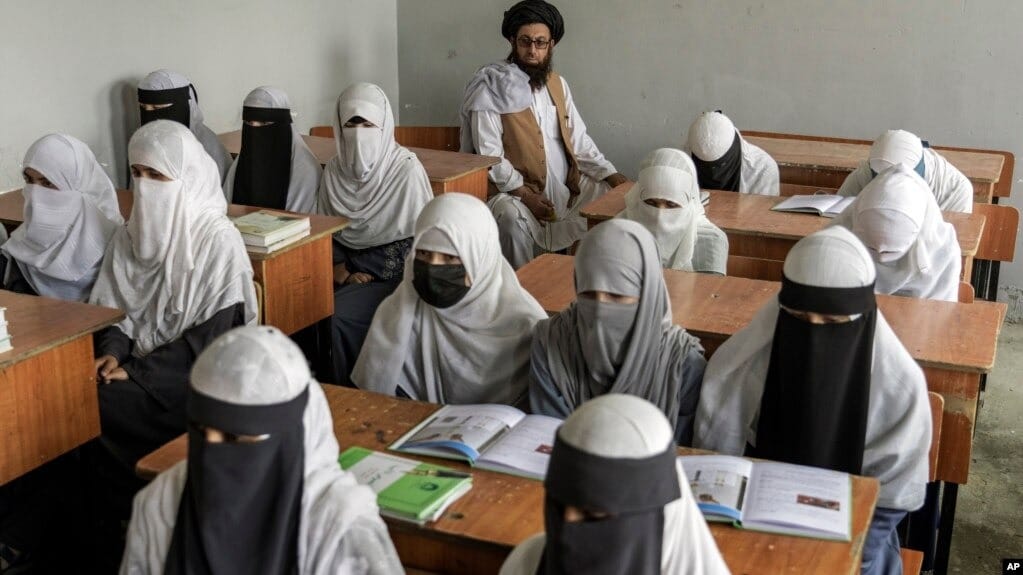
Restrictions on women’s employment, restrictions on girls’ education and restrictions on the media are all part of the system that has emerged.
What Happened to the American Weapons?
The Taliban has now rejected the demand to return American military equipment.
The position expressed by Taliban officials is straightforward: these weapons are now government property and belong to Afghanistan. They have also made clear that they do not intend to return them.
One Taliban statement went even further, warning that anyone attempting to take those weapons would face confrontation with those very weapons.
But there is a practical problem with recovering them.
These weapons are no longer sitting together in one location. Some have been sold on the black market. Some have reportedly been transferred to different terrorist organizations. Some are in Afghanistan, while other weapons have crossed the border and appeared in terrorist activity in Pakistan.
You cannot simply put tanks, Humvees, night-vision equipment and sophisticated weapons on display and hand them back.
The Taliban itself has also learned how to use much of this modern equipment. For an organization accustomed to older weapons, access to night-vision devices and sophisticated military equipment naturally gives those weapons enormous value.
They have become commodities.
This issue could therefore become a major dispute between the Taliban and the United States in the future. If Donald Trump or another US administration insists that these weapons must be returned because they were purchased with American taxpayers’ money, negotiations will inevitably become difficult.
The Taliban’s response will be that the United States spent 20 years in Afghanistan, killed people and caused destruction.
So both sides already have arguments prepared.
The Taliban has rejected negotiations on the issue for now, but that does not mean the matter has disappeared. If Washington continues to press the issue, it could become another serious point of confrontation.
The Taliban’s Claim About Shariah Does Not Explain the Ban on Education
The same contradiction exists in the Taliban’s approach to women’s education.
The Taliban has been restricting girls’ education and higher education since returning to power. It presents these restrictions as part of its system and repeatedly says that it has implemented Shariah according to its own interpretation.
But Islam does not say that education is obligatory for men only up to a particular grade while women must stop there.
If the Taliban says that it needed time to change its system before allowing girls to continue their education, then enough time has already passed. The promised change has not happened.
The consequences will become increasingly serious.
Look at Afghanistan’s hospitals today. Female nurses and female doctors are still present because they were educated before the current restrictions. But what happens after 15, 20 or 30 years if Afghan girls are prevented from becoming doctors, nurses and other professionals?
How will Afghan women receive medical treatment?
In Afghan society, there are already concerns about women being examined by male doctors. People may not want a male doctor to perform an ultrasound or even examine a woman with a stethoscope. So where will female medical professionals come from in the future if girls are denied education?
There is no justification for refusing to find a workable solution.
If the Taliban does not want mixed education, it can establish separate colleges and universities for women. Pakistan itself has separate institutions for women. There are women’s universities where female teachers teach female students.
The issue is not whether education can be organized according to cultural or religious sensitivities. It can.
The issue is whether the Taliban is willing to provide Afghan women with education at all.
Afghanistan Is Choosing Isolation
Reports from the United Nations, UNAMA, the European Union and international human rights organizations have repeatedly highlighted restrictions on girls’ education and women’s rights.
The question, therefore, is why the Afghan Taliban wants to remain isolated.
If Afghanistan needs investment, capital, economic development and international trade, then it must change its policies. It needs reforms that give the international community reasons to engage with it rather than continually adding negative points to its record.
There are positive developments that should also be acknowledged. The large-scale war that once devastated Afghanistan has ended, and overall violence between competing armed groups has declined compared with the years of open conflict involving foreign forces. Some social problems have also been reduced.
But the Taliban itself must now move beyond its identity as an armed movement.
For years, the Taliban was fighting against the United States and other foreign forces. That was the mindset of an insurgent organization. Now it claims to be the government of Afghanistan.
A government requires a different mindset.
The Taliban needs to broaden its thinking, change its policies and understand that governing a country is different from fighting a war.
Recognition Cannot Be Demanded, It Has to Be Earned
The Taliban also needs to understand why Afghanistan remains internationally isolated.
No Islamic country has fully accepted the Taliban system in the way the Taliban wants. No neighboring country has simply endorsed its political model.
Russia has moved toward recognition, but even that engagement has its own strategic calculations, including the Taliban’s role in confronting Daesh Khorasan.
The reality is that Afghanistan is becoming increasingly isolated.
The Taliban cannot demand the benefits of international engagement while rejecting the responsibilities that come with being a government. It cannot demand that the world recognize its sovereignty while refusing to address the concerns of its neighbors. It cannot ask for foreign investment while maintaining policies that push away investors and international institutions.
And it cannot claim that its interpretation of Shariah requires restrictions on girls’ education when those restrictions are creating a generation that will be less educated and less capable of rebuilding Afghanistan.
Afghanistan needs capital. It needs trade. It needs investment. It needs international engagement. It needs a functioning economy and educated people.
For that to happen, the Taliban must leave behind the mindset of the battlefield and develop a genuine government mindset.
If it wants Afghanistan to progress, it has to change its policies.
The choice ultimately belongs to the Taliban. It can continue treating the outside world as an adversary, maintain restrictions, reject international demands and remain isolated, or it can recognize that governing Afghanistan requires compromise, responsibility and engagement.
The longer it refuses to make that choice, the greater the cost will be for Afghanistan and its people.