
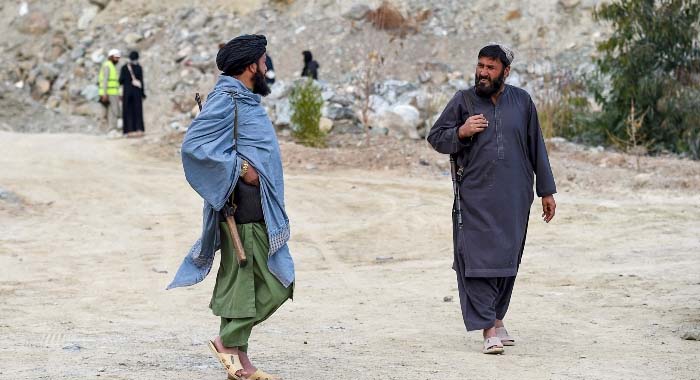
Afghanistan’s vast mineral and natural-resource wealth is emerging as an increasingly important source of competition within the Taliban administration, as powerful factions seek greater influence over mining operations, commercial contracts, border revenues and the financial resources generated by the country’s natural wealth.
The struggle is increasingly moving beyond the question of whether Afghanistan can attract international investment. At its core lies a more consequential issue: who controls Afghanistan’s resources, who collects the resulting revenue and who ultimately benefits from the country’s mineral wealth?
Afghanistan is believed to possess enormous deposits of valuable natural resources, with some estimates placing their potential value at hundreds of billions of dollars and, under certain assessments, approaching $1 trillion.
The country is known to possess deposits of copper, lithium, rare earth elements, coal, natural gas, gemstones and other commercially and strategically significant resources. Yet transforming that potential into actual revenue requires control over territory, mining rights, contracts, transportation routes, customs mechanisms and government institutions.
That reality is creating a powerful incentive for competing factions within the Taliban system to seek influence over Afghanistan’s emerging resource economy.
Afghanistan’s mineral resources are distributed across a wide geographic area, including Bamiyan, Daykundi, Badakhshan, Balkh and Sar-e Pol, as well as parts of eastern Afghanistan. Many of these areas have historically faced economic disadvantage and political marginalization, creating an additional layer of complexity around the ownership, management and distribution of resource revenues.
While mineral deposits are spread across the country, political and religious authority within the Taliban remains heavily concentrated around its leadership in Kandahar, under Supreme Leader Hibatullah Akhundzada.
This geographical separation between the location of resources and the concentration of political authority creates an important dynamic. The question is not simply who controls the mines physically. It is also who possesses the authority to award contracts, regulate extraction, collect revenues and determine how those revenues are distributed.
The Taliban administration is not necessarily a monolithic structure. Different networks and factions possess varying degrees of political, security and economic influence. At the center of the Taliban’s political structure is the Kandahar-based leadership under Hibatullah Akhundzada, which has sought to maintain ultimate authority over major national decisions.
At the same time, the Haqqani Network has emerged as one of the most influential power centers within the Taliban administration. Figures associated with the Haqqani network have reportedly developed significant influence over important security and revenue-generating institutions, including areas connected to border crossings and customs.
This distribution of influence has potentially significant financial consequences.
Control over customs and mining revenues can provide more than economic benefits—it can translate into political influence. Afghanistan’s landlocked geography makes border crossings and customs collection particularly important sources of government revenue. Whoever exercises substantial influence over these mechanisms can potentially gain access to significant financial resources and strengthen political networks.
Mining offers another potentially enormous source of income. As Afghanistan seeks to expand extraction and commercialize its natural resources, mining contracts could generate substantial revenues through licensing, taxation, royalties and related commercial activity. Control over both sectors could therefore provide powerful financial leverage to whichever faction or network is able to influence them.
Afghanistan’s natural-resource potential has attracted international attention for years. Deposits of copper, lithium and rare earth elements are particularly significant in an era of growing global demand for materials used in energy systems, electronics, batteries and advanced technologies. The country also possesses coal, natural gas, gemstones and other resources capable of generating economic activity if developed at scale.
However, possessing mineral deposits and successfully developing them are two very different propositions. Large-scale resource extraction requires infrastructure, investment, technical expertise, transportation networks, regulatory institutions and a predictable legal environment. It also requires confidence among investors that contracts will be honored and that revenues can be transferred and managed transparently.



