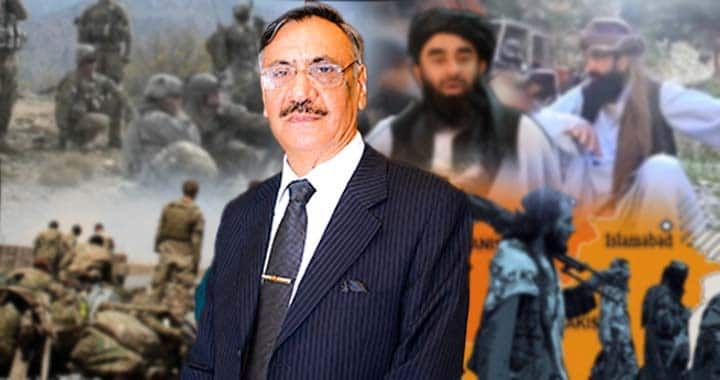
The relationship between the Afghan Taliban and the Tehreek-e-Taliban Pakistan is not something that emerged yesterday, nor can it be understood simply through the statements being issued today. Its roots go back to the period when the war in Afghanistan was underway and people from Pakistan’s tribal areas would cross into Afghanistan, join Taliban training camps and later return to carry out attacks.
At that time, the Afghan Taliban themselves made it clear that they did not want Pakistani Taliban groups coming to Afghanistan for such activities. I remember an instance when two people returning from Afghanistan were apprehended and a letter attributed to Mullah Muhammad Omar was recovered from them. The letter, written in Pashto, instructed the Pakistani Taliban not to fight the Pakistani government, describing Pakistan as an Islamic government that had previously helped the Afghan Taliban.
That historical episode is important because it demonstrates that the relationship between the two sides has never been as simple as today’s official statements suggest.
There was also an economic dimension to the movement of people and foreign fighters between Pakistan and Afghanistan. Some individuals from the tribal areas became involved in transporting foreign fighters, arranging their food and accommodation and taking them onward to Afghanistan. For them, this was also a source of income.
The networks created during that period eventually became connected with the people who later formed the TTP.
The Unemployed Foot Soldiers
After the Taliban returned to power in Afghanistan, many senior figures became ministers, advisers and government officials. Others found positions within the new administration. But what happened to the ordinary foot soldiers?
Many of them were left without jobs or a defined role. This created a pool of people who could be drawn into militant activities, particularly when TTP networks were already present in Afghanistan.
There have also been reports of recruitment for attacks against Pakistan from Afghan territory. A significant number of those recruited, in my assessment, are Afghans, alongside Pakistani members of the TTP.
This is why the argument that the TTP and Afghan Taliban are completely separate entities becomes difficult to sustain when we examine what is happening on the ground.
Pakistan has repeatedly been told that Afghan soil will not be used against it. But the real question is not what is said verbally. The real question is what is actually being done to stop these activities.
The Meeting That Raises More Questions
Reports of a meeting between Taliban spokesperson Zabiullah Mujahid and TTP chief Noor Wali Mehsud, along with the allegation that drones were provided to the TTP chief, naturally raise serious questions.
Even if we temporarily put that particular reported meeting aside, the broader relationship remains visible.
The TTP is fighting Pakistan in the name of its own organization, but the Afghan Taliban cannot simply claim that whatever happens is entirely unrelated to them. There is ideological proximity, communication, movement across the border and, according to allegations and reports, varying forms of assistance.
When Pakistan raises this issue with Kabul, assurances are repeatedly offered that Afghan territory will not be used against Pakistan. But assurances alone are not enough.
If the Taliban genuinely want good relations with Pakistan, they have to provide a mechanism that can be verified.
They have to show us how they will prevent the TTP from using Afghan territory, how they will stop cross-border movement and how they will ensure that those operating against Pakistan cannot continue doing so from Afghanistan.
Relocation Is Still an Option
One practical solution is the relocation of TTP members away from Pakistan’s border.
There is plenty of land in Afghanistan and comparatively few people in many areas. TTP members could be relocated to places such as Kunduz, given land and houses, and provided an opportunity to work and cultivate that land.
Instead of keeping these people near the Pakistani border, where they can maintain contact with networks operating against Pakistan, they could be moved deep inside Afghanistan and separated from the infrastructure used for cross-border attacks.
I have previously heard a demand of Rs10 billion in connection with such a relocation proposal. If such a demand was genuinely made, it raises another question: is this about solving the security problem or creating a financial arrangement around it?
Pakistan cannot accept a situation in which terrorists are allowed to operate against it and then their relocation becomes a matter of bargaining for money.
The Wider Regional Equation
There is another dimension that cannot be ignored.
The TTP and elements within the Afghan Taliban are operating in an environment where outside funding and support have to be examined carefully. India has its own interests in exploiting instability against Pakistan, while Afghanistan remains awash with weapons left behind by the United States and NATO forces.
Those weapons have found their way into different networks. If weapons are being sold and money is being generated through such channels, those resources can ultimately contribute to the ability of terrorist groups to operate.
Pakistan therefore has every right to defend itself.
If the Afghan Taliban want friendship with Pakistan, they must understand that friendship cannot coexist with attacks being launched from Afghan territory.
Pakistan cannot be expected to sit quietly while its people and security forces are attacked and then accept another verbal assurance from Kabul.
The Battle Over the Narrative
There is also a battle taking place inside Pakistan, and it concerns the narrative surrounding terrorism and the sacrifices of our security forces.
Our soldiers and officers are making enormous sacrifices in this war. Young officers and soldiers are being martyred while performing their duties, often leaving behind young families and children.
Mocking these sacrifices or attempting to portray the security forces as somehow responsible for the terrorism they are fighting is deeply damaging.
There should be no room for narratives designed to defame the army while terrorists are attacking Pakistan.
The same applies to the terminology of “good Taliban” and “bad Taliban.” Terrorism is terrorism. A group attacking Pakistan cannot become acceptable simply because someone chooses to give it a different label.
Our security forces are fighting a real war, and the sacrifices being made in that war are real.
Pakistan Needs Proof, Not Promises
The fundamental issue between Pakistan and the Afghan Taliban is therefore not whether Kabul can issue another statement promising friendship.
The issue is whether those promises will be translated into action.
If the Taliban want good relations with Pakistan, they need to demonstrate it through concrete measures. They need to dismantle TTP infrastructure, prevent its members from operating against Pakistan, stop cross-border infiltration and, if necessary, relocate them to areas where they cannot threaten Pakistan.
There can be no ambiguity on this point.
Pakistan is willing to have good relations with Afghanistan. Pakistan has always had deep historical, cultural and economic links with the Afghan people.
But friendship requires trust, and trust requires evidence.
If Afghan soil continues to be used against Pakistan while Kabul continues to deny responsibility or offer assurances without a workable mechanism, then the contradiction will remain.
The choice ultimately lies with the Afghan Taliban.
They can demonstrate that Pakistan is genuinely their friend by taking verifiable action against those attacking it, or they can continue with statements that are contradicted by developments on the ground.
For Pakistan, the distinction is no longer difficult to understand.
We need action, not assurances.