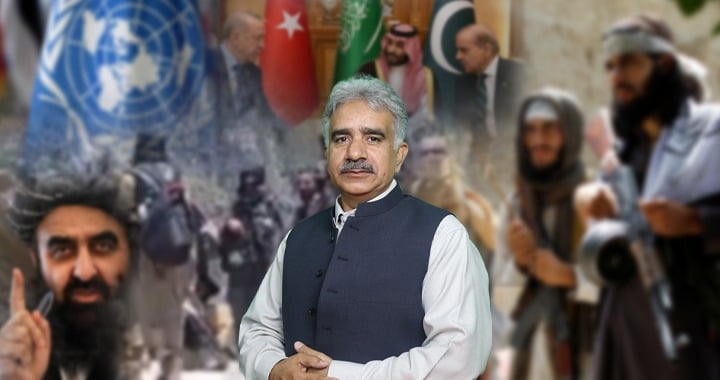
Five years after the Afghan Taliban returned to power, the central question is no longer simply whether they can retain control of Kabul. They have demonstrated that they can maintain control through a highly centralized security structure. The more consequential question is what kind of Afghanistan that control has produced, and whether the policies pursued since 2021 can deliver lasting stability.
The answer remains deeply contested.
The Taliban continue to present Afghanistan as a country that has achieved peace after decades of war. Yet the persistence of terrorist networks, restrictions on women and girls, economic hardship, political exclusion and growing tensions with neighboring states have created a far more complicated picture.
For Pakistan, one issue stands above the rest: Afghan soil must not be allowed to become a launching pad for terrorism.
The debate over recent reports of pressure on Tehreek-e-Taliban Pakistan, or TTP, therefore deserves scrutiny rather than immediate acceptance or dismissal. Reports of arrests, searches and restrictions on TTP figures would be significant if verified and sustained. But isolated actions, temporary relocations or administrative pressure cannot be equated with dismantling a terrorist infrastructure.
The real test is operational.
If the Taliban are genuinely prepared to prevent Afghan territory from being used against Pakistan, that commitment must translate into sustained action against TTP leadership, facilitators, training infrastructure, financing networks and cross-border movement.
A Narrative Must Be Measured Against Results
The emergence of a narrative portraying the Afghan Taliban as taking action against TTP comes at a time when pressure on Kabul has intensified.
That pressure is not exclusively Pakistani.
Afghanistan continues to face scrutiny over the presence of multiple terrorist organizations, its internal security environment and the consequences of policies that have isolated large sections of its population from education and economic activity.
A recently emerged list has also raised questions about the distribution of funding and the networks receiving it.
This is where the distinction between narrative and policy becomes crucial.
A government can announce arrests. It can relocate individuals. It can inspect houses or restrict movement. But counterterrorism credibility is established when terrorist networks lose their ability to recruit, communicate, finance themselves, train personnel and conduct attacks.
For Pakistan, therefore, the appropriate response is neither premature applause nor automatic dismissal.
Results must determine credibility.
Pakistan has consistently maintained that a peaceful and stable Afghanistan is in its own interest. But stability cannot mean stability for one government while terrorist networks retain the ability to threaten another country from Afghan territory.
That is not regional stability. It is merely the relocation of insecurity.
Afghanistan’s Internal Contradictions
The security question cannot be separated from Afghanistan’s broader governance crisis.
The Taliban inherited a devastated country after decades of conflict, but five years in power is long enough for a government to be judged not merely on what it inherited, but on what it has done with the authority it acquired.
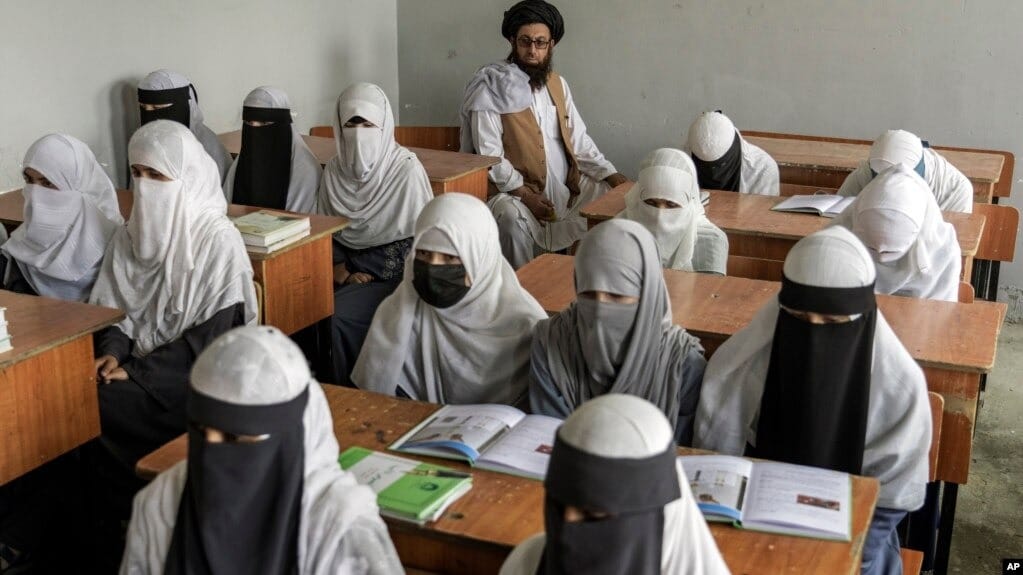
The exclusion of women and girls from education and large sections of the economy has imposed a structural cost on Afghanistan. Restrictions on political participation have narrowed the country’s governing base, while tensions involving ethnic and regional communities continue to raise questions about inclusivity.
The consequences are not confined to Afghan society.
A country where young people lack economic opportunity, women are excluded from productive activity and political space remains narrow can become increasingly vulnerable to radicalization, migration and instability.
Afghanistan cannot build durable prosperity by leaving a substantial portion of its human capital outside the economy.
Nor can it establish durable peace by treating political disagreement exclusively as a security problem.
Pakistan’s Position Is Fundamentally Different
Pakistan’s position should also be understood clearly.
Pakistan is not seeking an unstable Afghanistan. Nor does Pakistan benefit from another prolonged Afghan civil war, another mass displacement crisis or the emergence of competing armed factions across its western border.
Pakistan’s interest is straightforward: a stable, peaceful Afghanistan that respects the sovereignty of its neighbours and prevents its territory from being used for terrorism.
That is also why Pakistan’s counterterrorism campaign should not be framed as a conflict of choice.
For years, Pakistan has borne the human and economic consequences of terrorism while fighting groups operating inside the country and confronting threats emanating from beyond its borders.
The broader War on Terror also demonstrates why terrorism cannot be treated as a purely domestic phenomenon. Networks move across borders, exploit safe havens, obtain weapons and financing, recruit locally and use modern technology to extend their reach.
Pakistan’s security response therefore has to remain firm, intelligence-driven and capable of addressing threats wherever their support infrastructure exists.
Five Years Later, Actions Matter More Than Assurances
The Taliban now face a simple test.
If they claim that Afghan territory will not be used against Pakistan, the claim must be demonstrated through sustained action.
If TTP commanders are arrested, their networks must remain disrupted.
If terrorists are relocated, they must not simply reappear somewhere else.
If houses and facilities are searched, the resulting intelligence must lead to dismantling operational structures.
And if assurances are offered to Pakistan, they must be measurable and verifiable.
This is particularly important because terrorism is adaptive. A network under pressure does not necessarily disappear. It can fragment, change locations, alter its communications, recruit through new channels or shift toward drones, explosives and other low-cost technologies.
The objective, therefore, cannot be the temporary disruption of individuals.
It must be the permanent denial of operational space.
Five years after the Taliban’s return to Kabul, Afghanistan stands at a crossroads. It can continue presenting control as stability while unresolved security, political and economic problems accumulate, or it can begin addressing the structural causes that keep Afghanistan trapped in cycles of conflict and isolation.
For Pakistan, the principle is clear.
Afghanistan’s internal political arrangements are ultimately for Afghans to determine. But the moment Afghan territory is used to launch attacks against Pakistan, it becomes a matter of Pakistan’s national security.
That is where rhetoric ends and responsibility begins.
The reported pressure on TTP, if genuine, should therefore be judged by what follows next. A few arrests cannot settle the question. A sustained campaign that dismantles terrorist networks, restricts their financing and denies them sanctuary would.
Five years after taking Kabul, the Taliban are no longer being judged only by whether they can hold power. They are being judged by whether their rule can prevent Afghanistan from once again becoming a source of insecurity for the region.
The reported pressure on TTP remains unproven, so its significance depends on whether subsequent evidence shows a sustained campaign that dismantles networks rather than temporarily relocating them.