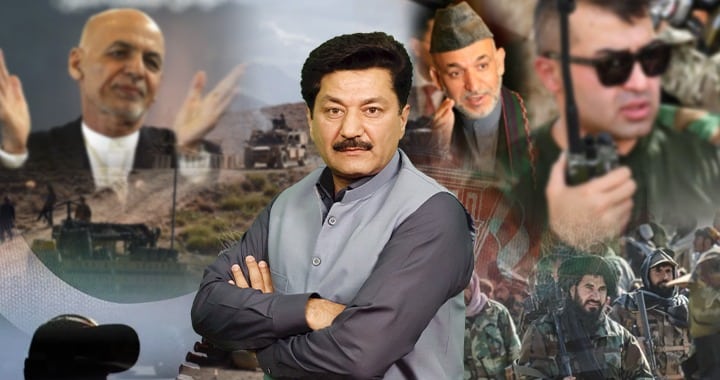
Five years ago, the Taliban returned to Kabul promising that Afghanistan would enter a new era. They spoke of amnesty, reconciliation, security and a government capable of bringing stability after decades of war.
Five years later, the most important question is no longer whether the Taliban can retain power. They have demonstrated that they can. The more consequential question is what they have done with that power, and whether their model of governance can deliver the stability and legitimacy they promised.
The answer is increasingly difficult to reconcile with the Taliban’s own claims.
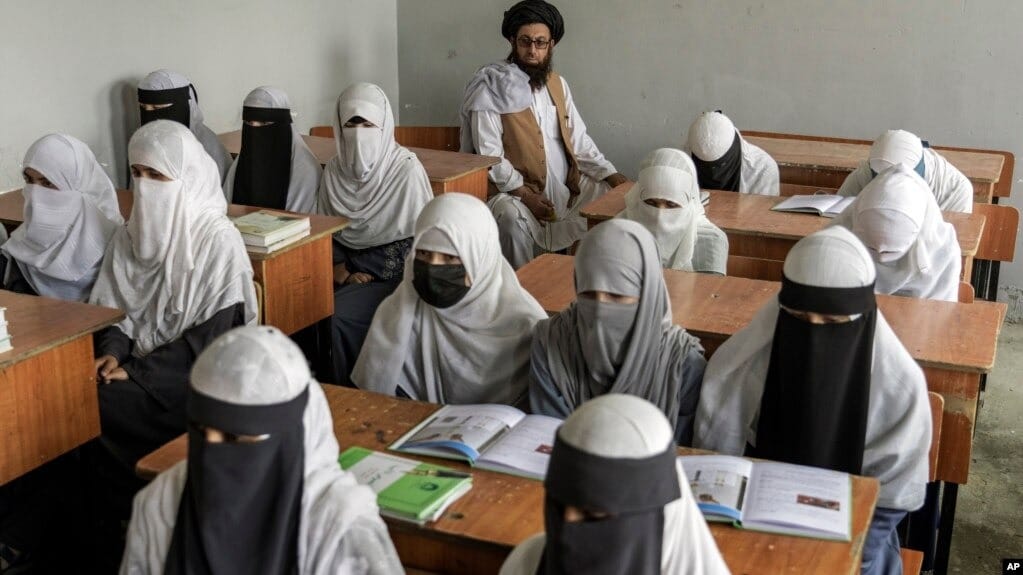
The regime has maintained territorial control, but control is not the same thing as stability. Afghanistan continues to face profound economic, humanitarian and social pressures, while women and girls have been pushed out of education and large parts of public and economic life. Recent assessments marking five years of Taliban rule have also highlighted continuing repression, economic hardship and the regime’s limited international recognition.
Perhaps most revealing is the contrast between the Taliban’s promise of a broad amnesty and the continuing climate of fear surrounding opponents, former officials and those perceived as disloyal.
The Amnesty Promise and the Reality of Repression
The Taliban’s assurances of a general amnesty were among the most important promises made after their return to Kabul.
Yet an amnesty means little if people remain afraid of arrest, retaliation or punishment because of their previous affiliations.
The recent developments surrounding Juma Khan Fateh and his followers in Badakhshan illustrate this contradiction sharply. Fateh’s surrender was followed by reports of arrests, house searches and pressure on people suspected of having links with his forces. Whatever allegations may exist against individual members of his group, the treatment of surrounding communities matters because it determines whether surrender actually produces reconciliation or merely creates a new cycle of fear.
That distinction is fundamental.
A government confident in its legitimacy does not need to govern every disagreement through intimidation. If surrender is followed by predictable legal proceedings, due process and genuine reconciliation, armed opposition loses much of its justification.
If surrender is followed by collective punishment, arbitrary detention and fear of retaliation, the opposite message is sent.
The Taliban therefore face a test of their own promise of amnesty.
The question is not whether they can defeat an isolated armed group militarily. The question is whether they can convince Afghans that laying down arms will not expose them or their families to revenge.
Badakhshan Is More Than a Local Dispute
The situation surrounding Fateh also exposes the deeper political tensions within Afghanistan.
Badakhshan is geographically remote but strategically important. Its location near Tajikistan, China and Pakistan gives it significance beyond its immediate local politics. Its mineral wealth adds another layer to disputes over control, resources and local authority.
Fateh’s stated objections to outside control over local mineral resources and the composition of security personnel at checkpoints point toward a broader question: who controls Afghanistan’s resources and institutions, and how much political space exists for local communities to influence those decisions?
These questions cannot simply be dismissed as an armed group’s grievances.
At the same time, armed opposition groups should not be romanticized. Afghanistan does not need another cycle of war. But neither can stability be defined merely as the absence of open fighting while political dissent is suppressed and communities remain fearful.
The Taliban’s challenge is therefore political as much as military.
The 15-Day Ultimatum Adds a New Pressure Point
The 15-day ultimatum reportedly issued by General Sami Sadat’s Afghan United Front adds another dimension to the evolving situation.
The warning is directed at former Afghan military personnel, pilots, engineers, technical specialists and others who previously worked with the former Afghan government and international forces and are now serving under the Taliban.
The significance of such an ultimatum lies not simply in the deadline itself.
It exposes the Taliban’s dependence on a pool of professional expertise inherited from the previous Afghan state.
The Taliban may possess ideological cohesion and battlefield experience, but governing a modern state requires pilots, engineers, technicians, administrators, medical professionals and security specialists. If experienced personnel begin leaving because they fear retaliation from either side, Afghanistan’s institutional capacity suffers.
The reported threat of targeting individuals accused of collaboration therefore creates a dangerous dilemma. The Taliban need these professionals, but the professionals themselves may not feel secure under Taliban rule.
That is hardly a recipe for institutional stability.
Recent Taliban statements themselves have devoted considerable attention to opposition groups, urging opponents to abandon armed resistance, an indication that the issue remains a live concern for the regime.
The Taliban Still Hold Power, But Pressure Is Growing
It would nevertheless be misleading to suggest that armed opposition groups are currently capable of overthrowing the Taliban.
They are fragmented, lack a unified command structure and have not demonstrated the capacity to dislodge the Taliban from control of Afghanistan. The Taliban retain control over the country’s territory and major state institutions.
That reality should be acknowledged.
But political stability cannot be measured only by whether an armed group can seize Kabul.
A government can remain in power while facing growing dissatisfaction, diplomatic isolation, economic pressure, internal disputes and resistance in peripheral regions.
This is where the Taliban’s five-year record becomes particularly important.
They have survived.
But survival is only the first test of governance.
The harder test is whether they can build institutions that Afghans trust, create an economy capable of absorbing its young population, protect minorities, allow women to participate meaningfully in society and establish relations with neighbors based on mutual security rather than confrontation.
On these fronts, the record remains deeply troubling.
Afghanistan’s Problems Cannot Be Exported
For Pakistan, the issue is even more consequential because Afghanistan’s internal instability does not remain confined within Afghan borders.
Pakistan has consistently maintained that a peaceful and stable Afghanistan is in its own interest. But stability must mean more than Taliban control over Kabul.
Afghan territory must not be used by terrorists against Pakistan.
That is the central security issue between the two countries.
Pakistan does not benefit from another Afghan civil war. It does not benefit from the Taliban collapsing into another prolonged conflict. Nor does Pakistan benefit from armed groups using Afghanistan as a launching pad for attacks across the border.
What Pakistan requires is straightforward: a stable Afghanistan that prevents its territory from being used against its neighbors.
The same principle should apply in reverse.
A stable Pakistan is also in Afghanistan’s interest.
The two countries share geography, trade, migration and deep social links. Their populations cannot simply be separated by a line on a map and told to ignore one another’s security.
This is why accusations that Pakistan seeks instability in Afghanistan are strategically unconvincing. A prolonged Afghan conflict would create precisely the kind of refugee pressure, terrorism and cross-border instability that Pakistan has spent years trying to contain.
The Next Five Years Will Be Defined by Choices
The Taliban have now had five years to demonstrate what their system of government means in practice.
The coming period will show whether they can move beyond the logic of battlefield victory.
They can continue to treat every opponent as an enemy, every criticism as a threat and every demand for political space as a challenge to their authority.
Or they can recognize that governing Afghanistan requires something more durable than coercion.
That means credible amnesty rather than conditional forgiveness, lawful accountability rather than collective punishment, political inclusion rather than permanent exclusion, and security cooperation rather than allowing Afghan territory to become a sanctuary for terrorists.
For Pakistan, the principle should remain equally clear.
Pakistan does not need a weak Afghanistan. It needs a peaceful Afghanistan.
It does not need regime change in Kabul. It needs responsible governance in Kabul.
It does not seek instability across the border. It seeks an Afghanistan that neither threatens its own population through repression nor permits terrorists to threaten neighboring countries.
Five years after the Taliban’s return, the real question is therefore not whether they can celebrate five years in power.
They can.
The question is whether, after five years, they are prepared to govern in a way that makes Afghans feel secure rather than intimidated, gives their institutions strength rather than dependence, and assures neighboring countries that Afghanistan’s soil will not be used against them.
Until that happens, the Taliban’s greatest achievement remains the retention of power.
Their greatest unfinished task remains turning power into legitimate, responsible and sustainable governance.
The piece now has the argument and structure, but its publication readiness still depends on
verifying the factual claims and citations line by line before release.