Aqeel Yousafzai
Five years after the Taliban returned to power in Afghanistan, the most important question is no longer whether they can control Kabul. They clearly can. The harder question is whether they have been able to build a state that can govern Afghanistan, protect its people, satisfy its neighbours and convince the wider world that the country will not again become a sanctuary for transnational militancy.
The answer, in my view, is deeply complicated. The Taliban have achieved something significant: they ended the two-decade presence of U.S. and NATO forces, consolidated control over most of Afghanistan, reduced the scale of the nationwide war and established a degree of physical security in many parts of the country. But security is not the same thing as good governance, and the absence of a conventional civil war is not the same thing as peace.
As Afghanistan approaches the fifth anniversary of the Taliban takeover on August 15, 2021, the country presents a paradox: the rulers are more firmly entrenched than many predicted, yet the political, economic, humanitarian and diplomatic foundations of their government remain fragile. Even Afghan citizens who acknowledge improved security continue to demand jobs, education and a future for their children. The Taliban’s greatest weakness is therefore not necessarily that they are about to collapse. It is that they have struggled to transform military victory into a sustainable political order.
The Taliban came back to power promising that Afghanistan would be different from the Afghanistan of the 1990s. Their commitments were repeatedly presented through the language of Islam, Shariah, national sovereignty and responsible governance. The movement also made assurances during the diplomatic process that preceded the U.S. withdrawal. Yet the central criticism is that many of those promises have not translated into an inclusive political system.
The fundamental issue is human freedom. Whatever terminology one prefers human rights, civil liberties, Islamic rights or constitutional rights the ordinary Afghan has legitimate expectations: the right to education, the right to work, the right to speak, the right to disagree, the right to practise a profession, the right to seek protection from arbitrary abuse and the right to participate in the political life of society.
A journalist needs room to work. A teacher needs the freedom to teach. A shopkeeper needs security. A citizen needs some mechanism through which he or she can question authority. A political opponent should not automatically become an enemy of the state.
This is where the Taliban’s record becomes difficult to defend.
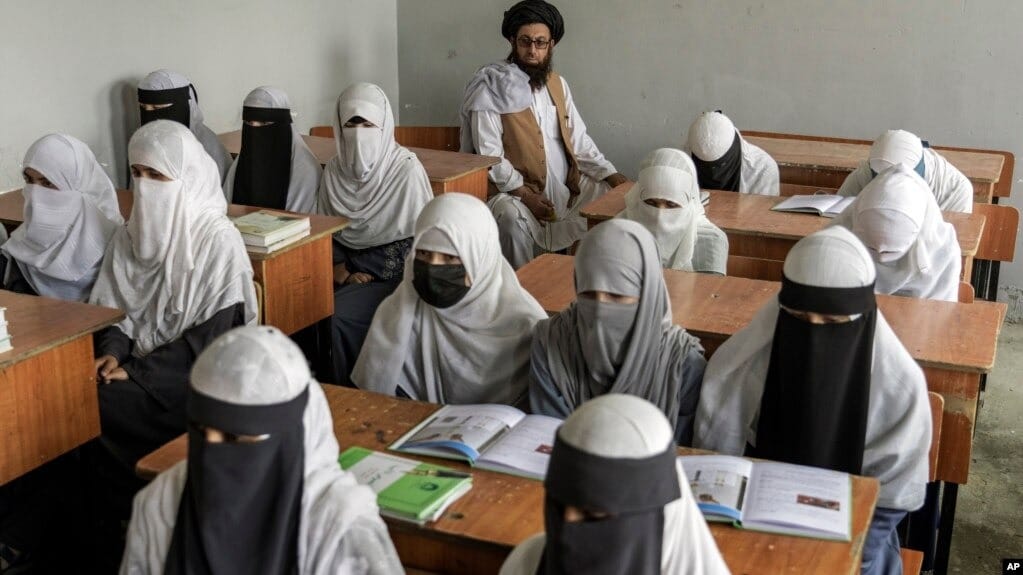
The restrictions imposed on women and girls have become the most visible symbol of that failure. Girls have remained excluded from secondary and higher education, while women have faced sweeping restrictions on employment and public life. The United Nations has warned that continuing these policies could cost Afghanistan thousands of female teachers and health workers by 2030 and impose a substantial economic cost on the country.
This is not merely a question of clothing or cultural preference. A society can have its own religious and cultural traditions. People in Peshawar may dress differently from people in Istanbul, Tehran, Riyadh or Kabul. Islamic societies themselves demonstrate considerable diversity in interpretation, practice and social norms.
The problem begins when the state turns personal religious interpretation into compulsory social regulation. If women are forced into a particular form of dress, if girls are prevented from attending school, if women are removed from workplaces and public institutions, then the issue is no longer simply culture. It becomes the exercise of state power over individual lives.
And this is where the Taliban must answer a much larger question: Can a government claim to represent Islam while denying an entire generation of girls access to education? The United Nations says Afghanistan is entering its fifth consecutive year in which girls have been denied secondary and higher education. The consequences are not theoretical. They affect doctors, teachers, engineers, administrators, entrepreneurs and mothers of the next generation. A country cannot build a modern economy while deliberately shrinking half of its human capital.
The debate is sometimes reduced to symbols: the beard, the burqa, women’s clothing and public morality. But the deeper question is who gets to decide. Afghanistan has a long history of religious and cultural diversity. Islam in Afghanistan is not necessarily practised in exactly the same social manner as Islam in Iran, Saudi Arabia, Turkey or Pakistan. Even within Afghanistan, traditions differ from province to province and community to community. Therefore, the state’s responsibility should be to protect citizens rather than micromanage every aspect of their appearance and private lives.
The same principle applies to physical abuse. Raising a hand against women cannot be justified simply because the perpetrator is a government official, a cleric or a powerful man. Such conduct is inconsistent not only with contemporary human-rights principles but also with the moral traditions that many Afghans themselves associate with Islam and Pashtunwali.
The Taliban cannot demand obedience from society while simultaneously refusing to accept scrutiny of their own conduct. That contradiction lies at the heart of their five-year record.
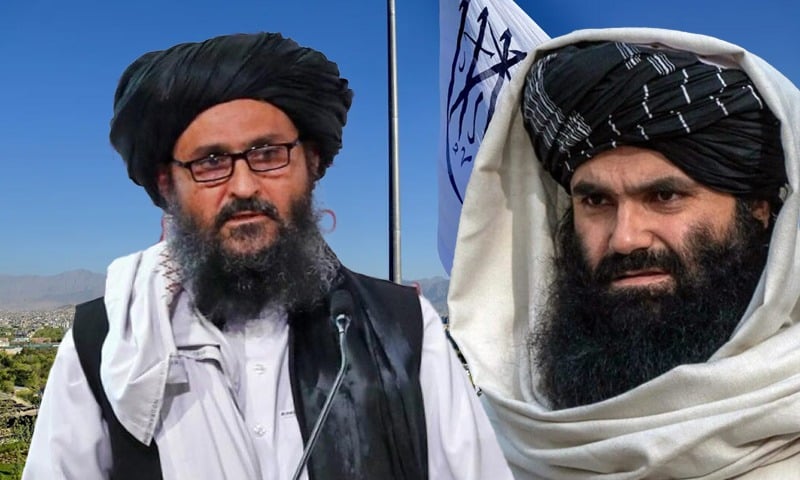
There is another problem: internal cohesion. The Taliban are not a perfectly unified political machine. The movement contains different power centres, networks and personalities. The influence of Kandahar, the Haqqani network and other factions has produced competing priorities and, at times, competing interests. The important question is not whether every disagreement represents an imminent split. It does not. The Taliban have repeatedly demonstrated an ability to suppress or manage internal disputes. But the existence of internal tensions matters because a government that does not trust its own factions will find it harder to develop coherent national policy. Afghanistan’s history demonstrates how dangerous factionalism can become. The Taliban themselves rose partly because Afghans were exhausted by fragmentation, warlords and competing armed groups. If the movement reproduces internal divisions under a different name, it risks repeating the political failures it once promised to overcome.
There is also a historical lesson that the Taliban appear unwilling or unable to escape. During the first Taliban era, under Mullah Omar, the movement’s international relationships, treatment of militant groups and approach to diplomacy contributed to Afghanistan’s isolation. The post-2021 leadership risks repeating some of those mistakes.
The greatest danger is the question of armed groups operating from Afghan territory.
UN assessments have repeatedly raised concerns about the presence of multiple militant organizations in Afghanistan. The United Nations has described the environment as one in which a range of terrorist groups continue to operate, with IS-Khorasan remaining a particularly serious regional and international threat. This is why Afghanistan’s neighbours—Pakistan, Iran, Tajikistan, Uzbekistan, China and others—cannot view the issue simply as an internal Afghan matter. A militant group based in Afghanistan does not remain an Afghan problem when its attacks cross an international border.
This brings us to the reports concerning the Tehrik-i-Taliban Pakistan, or TTP. There have been reports that TTP-linked families and fighters have been moved from eastern Afghanistan, including Kunar, toward provinces such as Ghazni and other areas. Earlier reporting and U.S. government oversight material have also referred to Taliban efforts to relocate TTP elements away from border areas toward Ghazni. More recent Afghan reporting has described TTP settlements in Ghazni and subsequent evacuation or relocation following increased Pakistan-Afghanistan tensions and airstrikes. These reports should be treated cautiously because independent verification of the full scale and purpose of such movements remains difficult. But even if the relocation is genuine, an uncomfortable question remains:
Pakistan has repeatedly demanded that the Afghan Taliban prevent TTP from using Afghan territory to conduct attacks against Pakistan. The ideal outcome, from Islamabad’s perspective, would be the dismantling of militant infrastructure or the surrender and prosecution of individuals involved in terrorism.
If that cannot happen, geographical relocation may temporarily reduce pressure along one section of the border. It does not necessarily eliminate the threat.
And there is another practical problem. TTP is not simply a collection of isolated individuals living in tents. It has networks, commanders, finances, ideological links and local influence. A commander accustomed to controlling 20, 30 or 50 fighters cannot simply be told to relocate hundreds of kilometres away and remain politically irrelevant.
This is why claims that the TTP has simply been “shifted” from Kunar to Laghman or Ghazni should not be treated as the end of the story. At best, relocation could represent a temporary tactical adjustment. It cannot substitute for a political and security solution.
The Taliban also face an ideological dilemma. Their relationship with the TTP cannot be compared to an ordinary relationship between two foreign governments. There are ideological, historical and personal connections between sections of the two movements.
That does not mean the Afghan Taliban support every TTP attack. It does mean that expecting them to turn overnight into an uncompromising enemy of TTP is unrealistic.
Nowhere is the question of Taliban capacity more interesting than Badakhshan.
The recent clashes in Badakhshan have produced conflicting casualty claims, and those claims should be treated carefully. The Afghanistan Freedom Front has claimed substantial Taliban casualties in fighting around Zebak, while Taliban officials have provided much lower figures and their own account of the clashes. Independent verification of competing battlefield claims is often extremely difficult.
Yet one fact is difficult to dismiss: armed opposition activity in Badakhshan has intensified.
Fighting continued for days in parts of Zebak, Yaftal and Darayem, while the Afghanistan Freedom Front claimed attacks on Taliban positions and convoys. There have also been reports of the Taliban struggling with local dissident commanders and internal disputes in the province.
The killing of senior Badakhshan Taliban official Zabihullah Amiri in a targeted attack in July, followed by the killing of Faizabad mayor Habib Ur Rahman Mansoor this week, has further highlighted the security pressures facing the province.
But does this mean the Taliban are about to lose Afghanistan? No. That would be an exaggeration.
Badakhshan is strategically important, but a guerrilla campaign in one or several northern provinces does not automatically translate into regime change. The Taliban have substantial military networks and remain much stronger than most armed opposition groups in terms of national organization.
The bigger lesson is different: the Taliban’s military grip is not synonymous with total political control.
One of the most important arguments in this debate is that resistance among non-Pashtun communities alone may not be enough to seriously challenge Taliban rule.
The Taliban’s social base remains deeply connected to Afghanistan’s Pashtun belt. That is why a significant political or armed challenge emerging from Pashtun-majority areas could create a fundamentally different strategic environment.
Nangarhar is particularly important in this regard because of its geography, population, history and connections to the wider eastern region.
But again, caution is necessary.
It is tempting to predict an imminent Taliban collapse whenever fighting occurs in Badakhshan, Panjshir or elsewhere. Afghanistan’s history teaches us to avoid such simplistic predictions.
The Taliban fought for years against a vastly better-equipped coalition and survived. Their opponents should therefore not be underestimated—but neither should the Taliban.
Former Afghan leaders such as Hamid Karzai and Gulbuddin Hekmatyar remain politically relevant in different ways, and the possibility of new Pashtun political activity cannot be ignored. At the same time, northern anti-Taliban groups have yet to demonstrate the unified leadership and territorial capacity required to mount a nationwide challenge.
The argument that resistance will eventually grow may prove correct. But it will take organization, political legitimacy, resources and patience.
The Taliban’s future will also depend on what happens outside Afghanistan.
Pakistan, Iran, Tajikistan, Uzbekistan, Kazakhstan, Turkey and China all have reasons to worry about instability, terrorism, refugees and militant networks emanating from Afghanistan. Russia also has direct security concerns regarding Central Asia and extremist organizations.
The idea of these states increasingly coordinating their policies toward Afghan militant groups should therefore not be dismissed.
At the same time, Western and Arab states retain significant economic and humanitarian leverage. Afghanistan’s economy remains dependent on international assistance and humanitarian support. The United Nations and its partners continued to provide essential services to millions of Afghans in 2025 despite declining global assistance.
That creates an uncomfortable paradox.
The Taliban want sovereignty without external interference, but Afghanistan’s economic survival still depends substantially on international engagement.
They want diplomatic recognition, but many countries demand political and human-rights reforms first.
They want security cooperation, but their alleged tolerance of militant groups remains a major concern.
They want investment, but investors require predictable laws, institutions and international confidence.
These contradictions cannot be solved through rhetoric.
The violence in Khyber Pakhtunkhwa makes the Afghan question even more urgent for Pakistan.
Recent operations in Lower Dir demonstrate that Pakistan’s security forces and police continue to confront militant networks. In June, a joint CTD and police operation in Lower Dir killed six suspected militants described by authorities as among the district’s most-wanted terrorists.
Bannu has also remained under pressure. In January, Pakistani security forces conducted a major operation in Domel in which five militants, including a wanted commander, were reported killed; the operation also caused civilian casualties.
More recently, attacks in Dir and Bannu again demonstrated how closely Pakistan’s security environment is connected to developments across the Afghan border.
The lesson is obvious: Pakistan cannot treat cross-border militancy as an abstract diplomatic disagreement.
For Islamabad, the southern and western security environment is connected the tribal districts of KP, the Pashtun belt of Balochistan and the Afghan border form parts of one wider security theatre.
Pakistan has repeatedly argued that TTP attacks originate from sanctuaries in Afghanistan, while the Afghan Taliban deny providing such support. That disagreement has become one of the most serious sources of tension between the two countries.
And Pakistan’s patience is unlikely to be unlimited.
The most interesting question about the Taliban is therefore not whether they will survive the next few months.
It is whether they can change.
They have already demonstrated that they can survive international pressure, military opposition and diplomatic isolation. What they have not yet demonstrated is that they can build a political system that Afghans themselves regard as legitimate and sustainable.
They need to answer five fundamental questions.
Can girls return to secondary and higher education?
Can women participate meaningfully in the economy and public life?
Can political disagreement exist without becoming a security offence?
Can Afghanistan prevent terrorist groups from using its territory against neighbouring countries?
And can the Taliban create a political system broad enough to include Afghanistan’s ethnic, tribal, religious and regional diversity?
Until credible answers emerge, recognition will remain difficult and isolation will continue to impose costs.
The most balanced assessment is neither “the Taliban are finished” nor “the Taliban have completely succeeded.”
Both claims are too simplistic.
The Taliban have achieved military dominance. They have maintained control of the state apparatus, prevented a nationwide conventional insurgency from overthrowing them and improved security in some areas compared with the years of open warfare.
But they have paid a tremendous price for that stability. Afghanistan remains economically vulnerable. Women and girls face extraordinary restrictions. Political pluralism is extremely limited. Armed opposition continues in parts of the country. Islamic State-Khorasan remains a serious threat. Relations with Pakistan have deteriorated sharply. And the international community remains deeply concerned about governance and human rights. Badakhshan therefore matters—not because a few clashes prove that the Taliban are about to disappear, but because they expose the limits of the movement’s claim to absolute control.
TTP relocation matters—not because moving fighters from one Afghan province to another automatically solves Pakistan’s security problem, but because it reveals how difficult it is for the Taliban to reconcile ideological relationships with the demands of responsible statehood.
And Khyber Pakhtunkhwa matters because every militant attack there reminds Pakistan that Afghan policy is no longer a distant foreign-policy question. It is a matter of national security. The circle around the Taliban may indeed be tightening. But history suggests that Afghanistan changes slowly, suddenly and unpredictably.
Five years ago, the Taliban entered Kabul and stunned the world. Five years later, they remain in Kabul—but the harder battle has begun. It is the battle to prove that a movement built to fight a war can also govern a country. So far, the Taliban have shown that they can seize power. The next five years will determine whether they can learn how to exercise it responsibly.