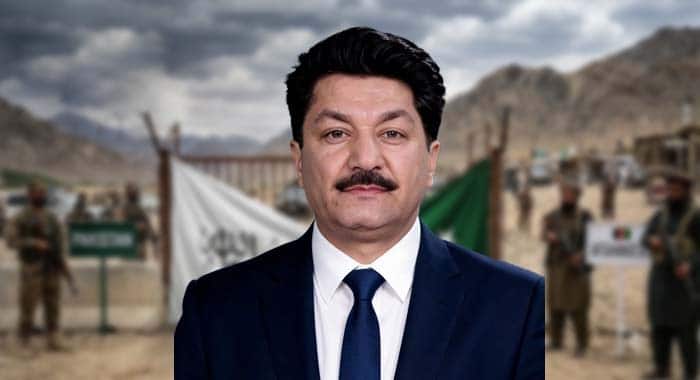
Fida Adeel
For months, relations between Pakistan and Afghanistan have remained trapped in a dangerous cycle of accusations, border tensions, militant violence, and stalled diplomacy. Border crossings have witnessed prolonged closures, trade has suffered enormous losses, and security concerns have overshadowed the centuries-old social and economic ties shared by the two neighboring countries. Yet, despite repeated failures of previous diplomatic initiatives, China has once again stepped forward to revive negotiations between Islamabad and Kabul.
At first glance, skeptics may dismiss another round of talks as merely another diplomatic exercise destined to produce familiar statements but few tangible outcomes. Previous attempts in Doha, Istanbul, Riyadh, Urumqi and other venues did not fundamentally alter the deteriorating security environment. The fundamental questions therefore remain: Why is China investing diplomatic capital once again? Why now? And what has changed since earlier attempts failed?
The answer lies not only in Pakistan-Afghanistan relations but also in the rapidly evolving strategic environment of South Asia, China’s regional ambitions, Afghanistan’s internal pressures, and the growing realization that continued confrontation serves no one’s long-term interests.
At the same time, events unfolding inside Pakistan particularly in Khyber Pakhtunkhwa and Balochistan demonstrate that diplomacy cannot be separated from internal security. Terrorism, governance challenges, political polarization, and civil-military coordination have become interconnected issues that require comprehensive solutions rather than isolated responses. Unlike many external powers whose engagement has primarily revolved around security concerns, China approaches Afghanistan through a broader strategic lens. Beijing has enormous investments in Pakistan through the China-Pakistan Economic Corridor (CPEC), one of the flagship projects of the Belt and Road Initiative. For China, peace between Pakistan and Afghanistan is not simply desirable it has become economically indispensable.
Every terrorist attack against infrastructure, every closure of border crossings, and every escalation in bilateral tensions threatens regional connectivity projects worth billions of dollars. China also understands a simple geopolitical reality: CPEC cannot reach its full potential if Afghanistan remains isolated and unstable. There has been increasing discussion about expanding regional connectivity through what many analysts describe as the next phase of CPEC, potentially involving Afghanistan. However, such ambitions remain impossible if the original corridor itself continues to face persistent security threats. Before any discussion of broader regional integration, the first phase of CPEC must be protected and completed successfully.
This explains why Beijing continues investing diplomatic effort despite previous disappointments. Unlike symbolic mediation, China appears determined to build a structured negotiation process first creating political space for dialogue, then encouraging confidence-building measures such as reopening border crossings and restoring trade. However, even Chinese diplomacy recognizes one undeniable fact: security must come before economics.
History repeatedly demonstrates that wars eventually end at negotiating tables rather than battlefields. Pakistan has consistently maintained that dialogue remains open despite repeated security incidents. Previous diplomatic efforts have been held in multiple international venues including Doha, Istanbul, Riyadh and Urumqi. While these initiatives produced limited breakthroughs, they established an important principle that communication channels must never disappear entirely.
Today, circumstances appear somewhat different. The prolonged closure of border crossings lasting many months has imposed enormous economic costs not only on Pakistan but also on Afghanistan’s fragile economy. Afghan traders have suffered. Pakistani exporters have suffered. Ordinary citizens living near border regions have suffered. The pressure is no longer merely diplomatic; it has become economic and social. Within Afghanistan itself, questions are reportedly being raised about the consequences of allowing militant organizations to operate in ways that provoke regional confrontation. Every escalation creates new economic hardships for Afghan businesses and ordinary families already struggling under severe financial constraints.
That internal pressure matters. Governments often become more willing to negotiate when domestic costs begin exceeding political benefits.
Pakistan is not the only country expressing concerns about militant groups operating from Afghan territory. China has repeatedly voiced concerns regarding militants associated with the East Turkestan Islamic Movement (ETIM), arguing that such groups pose direct security challenges to Chinese interests.
Russia has also expressed concerns regarding the continued presence of extremist organizations inside Afghanistan despite maintaining diplomatic engagement with the Taliban administration. This convergence of concerns significantly changes Kabul’s strategic environment. Rather than facing criticism from a single neighboring country, Afghanistan increasingly finds itself under regional pressure. Equally important are Afghanistan’s internal dynamics.
Reports of growing resistance activity in different provinces, including announcements by opposition groups such as the United Front Afghanistan under former General Sami Sadat regarding renewed military operations, suggest that the Taliban administration is also confronting internal security pressures. Whether these movements significantly alter Afghanistan’s internal balance remains uncertain. However, their emergence reinforces an important reality: Kabul cannot indefinitely ignore both internal and external challenges simultaneously.
Despite fluctuations in diplomatic tone, Pakistan’s principal demand has remained remarkably consistent. Islamabad insists that Afghan territory must not be used by terrorist organizations to launch attacks against Pakistan. This position has been repeatedly articulated in bilateral discussions. One of the major sticking points reportedly concerned written assurances. Pakistan has sought formal commitments that Afghan soil would not be allowed to host militant groups targeting Pakistan.
Reports suggest previous disagreements even extended to terminology, particularly regarding references to terrorist organizations and the Tehreek-e-Taliban Pakistan (TTP). Recent diplomatic signals indicate there may now be greater willingness within the Afghan Taliban to provide more explicit written assurances, including commitments specifically mentioning the TTP alongside other militant organizations.
Whether these assurances eventually translate into practical enforcement remains the decisive question. Diplomatic language alone cannot restore confidence. Implementation will determine credibility. The coming months carry symbolic and political significance for Afghanistan. Nearly five years have passed since the Taliban returned to power. Five years is sufficient time for both domestic populations and neighboring countries to begin evaluating governance not merely through ideological promises but through measurable outcomes. Questions inevitably emerge.
Has security improved? Has the economy stabilized? Have international relations expanded? Has investment increased? Have ordinary Afghans experienced meaningful improvements in daily life? These questions create additional pressure upon Kabul. Even if official narratives remain optimistic, governments cannot remain entirely insulated from economic realities and regional expectations.
This changing environment helps explain why renewed engagement with Pakistan may appear increasingly attractive.
China’s renewed initiative is not beginning from scratch. Rather, it seeks to revive and complete a negotiation process that had already been initiated during earlier discussions in Urumqi. Those earlier meetings reportedly made significant progress before remaining incomplete. Beijing now appears determined to resume rather than reinvent that diplomatic framework. Recent meetings between China’s Special Representative for Afghanistan and Pakistan’s Special Representative, Ambassador Mohammad Sadiq Khan, in Islamabad indicate serious preparatory work is already underway. The anticipated discussions in Kabul could therefore become considerably more important than routine diplomatic exchanges. China’s approach appears sequential.
First, establish confidence. Second, revive negotiations. Third, resolve security concerns. Fourth, reopen borders. Finally, restore trade and regional economic integration. Such sequencing reflects practical realism rather than diplomatic optimism.
No meaningful diplomatic breakthrough will survive if violence continues across the Pakistan-Afghanistan border. This remains the central challenge confronting every mediator. Pakistan argues that militant infiltration originating from Afghan territory continues to threaten national security. Afghanistan seeks broader engagement without excessive political conditions. China seeks regional stability that protects economic investments. Each actor enters negotiations with different priorities. Yet all three ultimately require the same outcome: sustained security. Without effective action against militant networks, no amount of diplomatic ceremony will generate lasting peace. Border crossings may reopen temporarily. Trade may briefly recover. Meetings may produce encouraging joint statements.
But unless security concerns are addressed through credible mechanisms, mistrust will quickly return. That is why the success of China’s latest mediation effort will not be judged by photographs of delegations or carefully drafted communiqués. It will be judged by measurable reductions in cross-border violence, restored commercial activity, and the gradual rebuilding of strategic trust between Islamabad and Kabul. For the first time in many months, however, regional circumstances suggest that all stakeholders have stronger incentives to compromise than to continue confrontation.
Whether that opportunity is seized—or squandered—will shape not only Pakistan-Afghanistan relations but also the future of regional stability across South and Central Asia. If diplomacy represents Pakistan’s external security challenge, then Khyber Pakhtunkhwa (KP) reflects its internal test of resilience. The province has once again emerged as the frontline in Pakistan’s battle against terrorism, with sporadic militant attacks, intelligence-based operations, and renewed concerns over extremist infiltration dominating the security landscape. What makes the current situation particularly troubling is that areas once considered largely stabilized are again witnessing reports of militant activity.
The conversation about Pakistan’s security cannot, therefore, be confined to border diplomacy alone. Even if negotiations between Islamabad and Kabul produce positive outcomes, the effectiveness of those agreements will ultimately depend on governance, coordination among institutions, and the state’s ability to address the political, economic, and security challenges that continue to fuel instability within its own borders.
One of the most alarming developments has been the reported presence of militants in areas of Swat and other parts of Khyber Pakhtunkhwa that had previously witnessed significant improvements after years of counterterrorism operations. For many Pakistanis, Swat symbolized a hard-earned victory against extremism. The suggestion that militants are once again attempting to establish a presence naturally raises public concern and prompts difficult questions about intelligence, border management, and the evolving tactics of militant groups. Equally concerning are reports from districts such as Bannu, where security operations continue to demonstrate that terrorism remains an active threat rather than a challenge of the past.
The broader issue extends beyond isolated incidents. It is about whether Pakistan can sustain long-term stability while simultaneously dealing with political polarization, regional instability, and cross-border militant networks.
One of the strongest criticisms emerging from public discourse relates to political priorities. Many observers have questioned whether sufficient administrative attention has been devoted to addressing the deteriorating security situation compared with the considerable focus placed on political mobilization, including preparations surrounding the August 5 public rally. Critics argue that government resources appeared heavily concentrated on political activities at a time when many citizens expected an even stronger emphasis on security, public safety, and transparent communication regarding ongoing counterterrorism operations.
This perception matters. Public confidence is strengthened not merely through successful security operations but through the belief that governance remains focused on protecting citizens above all else. At the same time, it is important to recognize that political mobilization is an established feature of democratic politics. The challenge for every government is ensuring that political activity does not overshadow the urgent requirements of public security.
Counterterrorism is often viewed primarily through a military lens. In reality, successful counterterrorism depends equally on governance. The former Federally Administered Tribal Areas (FATA), now merged with Khyber Pakhtunkhwa, remain central to this discussion. The merger created opportunities for mainstream political participation and institutional integration, but it also created enormous administrative responsibilities. Development commitments made during the merger including long-term financial allocations, infrastructure development, institutional strengthening, education, healthcare, and employment generation remain essential components of lasting peace.
Military operations may eliminate immediate threats. Only governance can eliminate the conditions that allow extremism to regenerate. This distinction is crucial. Every school built, every road completed, every employment opportunity created, and every functioning public institution reduces the space in which militant narratives can take root.
The security operations conducted in Bannu illustrate another important reality. Modern counterterrorism is rarely the work of a single institution. Military formations, Frontier Corps personnel, Counter Terrorism Department (CTD) units, intelligence agencies, and local police increasingly operate together. Where heavy military assets become necessary, civilian law enforcement simultaneously performs its own responsibilities. The sacrifices made during such operations are shared across institutions. Soldiers lose their lives. Police officers lose their lives. Frontier Corps personnel make sacrifices. Intelligence officials operate under constant risk. Recognizing this shared burden is essential because terrorism itself does not distinguish between uniforms. Every institution becomes a target. That reality makes institutional coordination not simply desirable but indispensable. Pakistan now stands at an important strategic crossroads.
Externally, renewed diplomatic engagement between Pakistan and Afghanistan facilitated by China offers an opportunity to reduce tensions, restore trade, and address longstanding security concerns. Success, however, will depend on verifiable action against militant groups and a sustained commitment by both sides to honour any agreements reached.
Internally, the challenge is equally demanding. Khyber Pakhtunkhwa’s security environment highlights the need for stronger governance, enhanced policing, closer civil-military coordination, and greater investment in the socioeconomic development of communities most affected by conflict.
Political competition will always remain part of democratic life, but national security requires a level of consensus that rises above partisan divides. Terrorist groups exploit uncertainty, institutional gaps, and political polarization. Conversely, they are weakened when the state presents a united front combining effective diplomacy, capable security institutions, accountable governance, and inclusive economic development.
Ultimately, Pakistan’s future stability will not be determined by military operations alone, nor by diplomatic meetings in Beijing, Islamabad, or Kabul. It will depend on whether the country can simultaneously secure its borders, strengthen its institutions, address public grievances, and create opportunities that make peace sustainable.
China’s renewed mediation has opened a diplomatic window. Whether that window becomes the beginning of a more stable regional order or another missed opportunity will depend on decisions taken in Islamabad, Kabul, and beyond. The stakes extend far beyond bilateral relations; they touch the future of regional connectivity, economic integration, and the security of millions who live on both sides of one of Asia’s most sensitive frontiers.
The lesson is clear: diplomacy can open doors, security can protect them, but only good governance and sustained cooperation can keep them open.