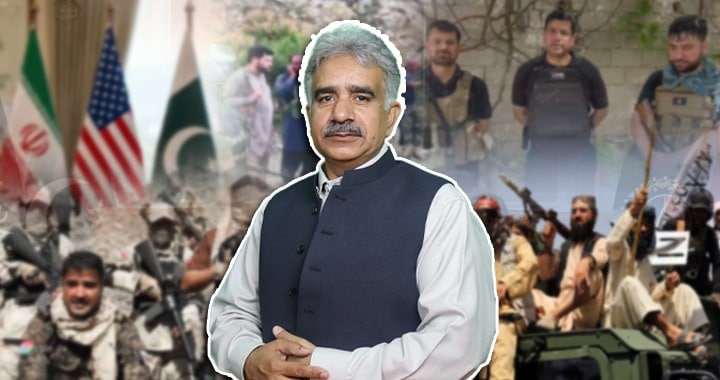
Nearly five years after the Taliban returned to Kabul, Afghanistan stands at one of the most decisive moments in its contemporary history. The armed conflict that transformed the country’s political order has ended, yet peace has not translated into stability. Instead, Afghanistan finds itself struggling with a different set of crises, economic hardship, diplomatic isolation, governance challenges, internal disagreements within the Taliban movement, humanitarian concerns, and growing regional security implications. These developments are no longer Afghanistan’s internal matter alone. Every neighboring country now has a direct stake in the country’s future.
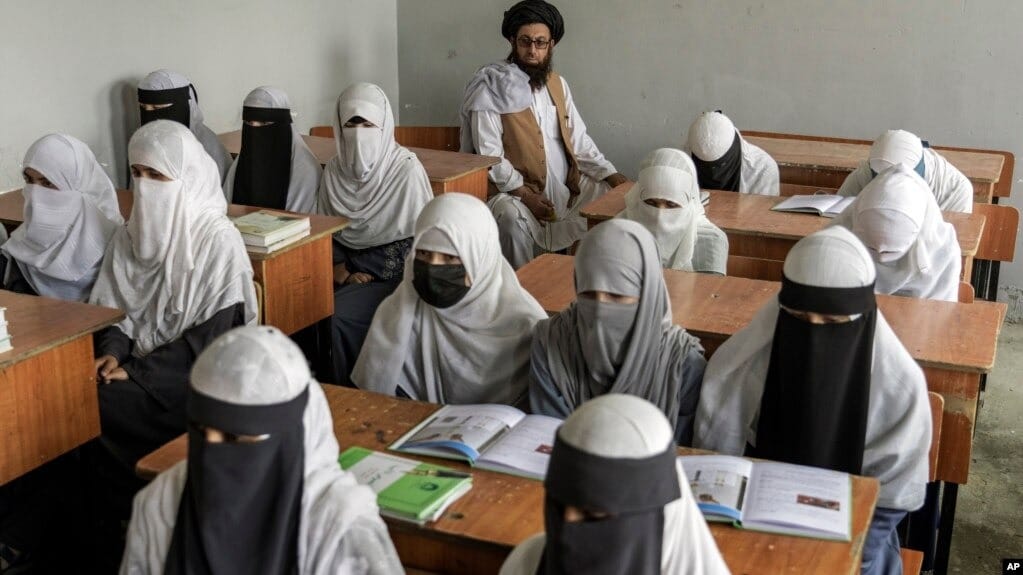
One of the most significant developments in recent months has been the emergence of increasingly visible debate within Afghanistan itself. Voices that were once cautious are becoming more open regarding governance, economic management, education, and the country’s future direction. Former political leaders continue to advocate wider educational opportunities, particularly for girls, while segments of Afghan society increasingly argue that long-term national development cannot be separated from education, economic participation, and institutional reform.
International pressure has simultaneously intensified. Discussions regarding legal initiatives before international judicial forums, continued criticism from humanitarian organizations, and repeated calls from Muslim countries for broader educational opportunities have collectively increased diplomatic pressure on Kabul. Whether these initiatives ultimately produce legal consequences remains uncertain, but politically they reinforce Afghanistan’s continuing international isolation.
The education issue has become far more than a domestic policy debate. It now directly influences Afghanistan’s diplomatic engagement, humanitarian assistance, investment prospects, and international legitimacy. Many countries continue engaging Kabul on practical issues, including humanitarian assistance and regional security, yet remain reluctant to normalize relations while fundamental governance concerns remain unresolved.
Economic realities present an equally serious challenge. International humanitarian funding has steadily declined, placing additional pressure on millions of Afghans already facing unemployment, food insecurity, and limited economic opportunities. Emergency assistance cannot substitute for sustainable economic growth. Without investment, regional connectivity, functioning financial institutions, and expanding private enterprise, Afghanistan will continue relying heavily upon external humanitarian support.
These economic pressures also influence internal political dynamics. No administration can indefinitely maintain stability if economic opportunities continue shrinking while expectations continue rising. History repeatedly demonstrates that prolonged economic hardship often magnifies political disagreements rather than containing them.
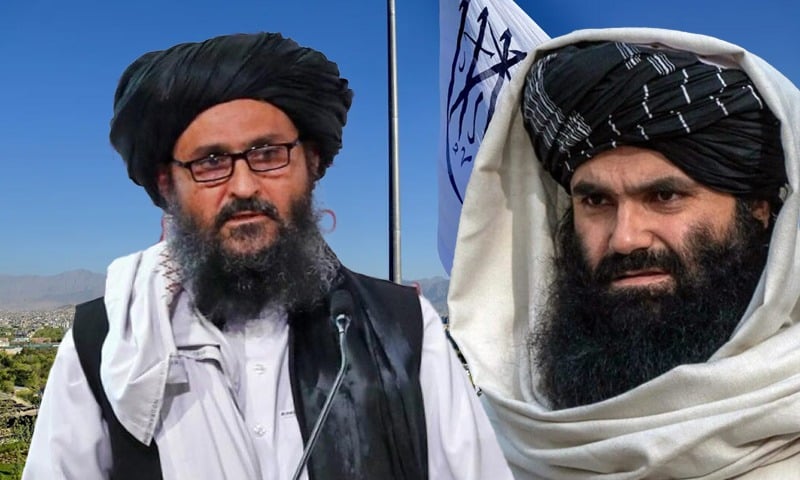
Another important development deserves careful attention. Reports and public discussions surrounding differences among senior Taliban figures have become increasingly frequent. While disagreements within political movements are not unusual, they become strategically significant when they concern governance, decision-making, regional relations, and national priorities. Such reports should be assessed carefully, yet they illustrate that Afghanistan’s internal political landscape is more complex than often portrayed.
The recent developments in Badakhshan further highlight these complexities. The temporary fall of the provincial headquarters during unrest and the continuing emergence of armed resistance in parts of northern Afghanistan demonstrate that challenges to the Taliban’s authority have not disappeared. Resistance groups remain fragmented and lack nationwide organizational capacity, yet recurring security incidents indicate that complete political consolidation remains an unfinished process.
Badakhshan possesses strategic importance far beyond its population size. Its proximity to Tajikistan, the Wakhan Corridor linking Afghanistan with China, its mineral wealth, and its geographic position connecting Central and South Asia make it one of Afghanistan’s most sensitive provinces. Any prolonged instability there inevitably attracts regional attention because of its implications for border security, trade routes, and future connectivity projects.
Northern Afghanistan more broadly has witnessed periodic signs of dissatisfaction among various ethnic and political constituencies. While these developments should not be exaggerated into predictions of nationwide conflict, they nevertheless demonstrate that Afghanistan’s long-term cohesion depends not only upon military control but also upon political inclusion, administrative effectiveness, and economic opportunity.
For Pakistan, these developments carry immediate security implications. Islamabad has consistently maintained that terrorist organizations, particularly Fitna al-Khwarij, continue using Afghan territory to facilitate attacks inside Pakistan. Pakistan has repeatedly called upon the Afghan authorities to fulfill counterterrorism commitments by ensuring that Afghan soil is not used against neighboring states.
This issue remains central to bilateral relations. Counterterrorism cooperation is not merely a diplomatic expectation but a practical necessity for regional stability. Effective border management, intelligence cooperation, and verifiable action against terrorist sanctuaries would significantly improve mutual confidence while strengthening broader regional security.
Pakistan’s position on this issue has remained consistent. A peaceful, stable, and economically connected Afghanistan serves Pakistan’s strategic interests far more effectively than an unstable neighbor vulnerable to extremist exploitation. Regional connectivity initiatives, trade corridors, energy projects, and commercial integration all depend upon sustained security on both sides of the border.
Unfortunately, terrorist organizations continue attempting to exploit Afghanistan’s security environment. Reports over recent years have repeatedly indicated operational cooperation between Fitna al-Khwarij and certain Baloch terrorist organizations. While their ideological objectives differ, their operational coordination, training exchanges, logistics, and tactical cooperation have increasingly become matters of concern for Pakistani security institutions.
The evolving relationship between these terrorist entities demonstrates that modern terrorism no longer operates through isolated organizations. Instead, extremist groups increasingly share expertise, communications, financing methods, propaganda techniques, and operational experience across ideological boundaries. This makes counterterrorism considerably more complex than confronting individual organizations separately.
Equally important is the broader geopolitical environment surrounding Afghanistan. The country once again finds itself positioned at the center of competing regional and international interests. China, Russia, Iran, Central Asian states, Western countries, and regional powers all view Afghanistan through different strategic lenses. Competition among external actors should not be allowed to transform Afghanistan once again into an arena for proxy rivalries.
Pakistan has perhaps experienced this reality more than any other regional country. For decades, instability inside Afghanistan has produced direct consequences for Pakistan through terrorism, refugee flows, illicit trafficking, and economic disruption. This historical experience explains why Pakistan continues emphasizing that sustainable peace in Afghanistan is inseparable from regional security.
At the same time, Pakistan itself remains on the front line of the global fight against terrorism. Its Armed Forces, law enforcement agencies, intelligence institutions, and civilian population have paid an enormous price over the past two decades in confronting extremist violence. Thousands of lives have been sacrificed while security institutions have continued adapting to evolving terrorist tactics.
The nature of terrorism itself has also changed dramatically. Contemporary terrorist organizations increasingly employ drones, encrypted communications, sophisticated propaganda, improvised explosive devices, precision reconnaissance, and coordinated cross-border logistics. Conventional responses alone are no longer sufficient against such evolving threats. Modern counterterrorism requires technological superiority, intelligence integration, aerial surveillance, precision operations, and real-time coordination among all national institutions.
The fight against terrorism has entered a new phase where speed, intelligence, technology, and coordination determine success. Pakistan’s security institutions have repeatedly demonstrated their ability to adapt to changing threats, from large-scale militant attacks in the past to intelligence-based operations targeting terrorist networks today. However, defeating terrorism permanently requires a comprehensive national approach in which security, governance, development, and public participation move together.
One of the biggest lessons from years of counterterrorism experience is that security operations alone cannot provide a permanent solution unless the state’s administrative presence is strengthened simultaneously. Areas affected by terrorism require effective policing, functional institutions, economic opportunities, education, and infrastructure development alongside security measures.
This principle is particularly important for regions bordering Afghanistan. These areas have historically faced unique challenges due to difficult terrain, limited economic opportunities, and the movement of armed groups across porous borders. Strengthening the state’s writ in these regions remains essential for preventing terrorist organizations from exploiting local vulnerabilities.
Pakistan’s experience in tribal districts demonstrates that successful counterterrorism is not only about clearing areas from terrorist elements but also about restoring normal life. Once security improves, the next challenge is ensuring that communities receive sustainable development opportunities and that young people have alternatives to extremist narratives.
The same approach is required in Balochistan. The province is strategically important because of its location, natural resources, and connectivity projects linking Pakistan with regional markets. Terrorist organizations targeting Balochistan are not only attacking security institutions but also attempting to undermine economic development, public confidence, and regional connectivity.
The recent designation of Baloch terrorist organizations by international partners is an important acknowledgment that terrorism cannot be justified through political slogans or propaganda. Organizations involved in violence against civilians, security personnel, and national infrastructure must be treated as terrorist entities regardless of the narratives they attempt to build.
For years, some extremist organizations have attempted to present themselves internationally through carefully prepared propaganda campaigns. They operate social media networks, produce content in foreign languages, and attempt to influence audiences unfamiliar with ground realities. However, the reality on the ground remains clear: any group that uses violence, targets civilians, attacks development projects, or intimidates communities cannot claim political legitimacy.
The same principle applies to all terrorist organizations operating in the region. There can be no distinction between groups based on their preferred narratives. Terrorism remains terrorism whether it is carried out under religious, ethnic, or political slogans.
The Need for a Clear Regional Security Strategy
The evolving situation in Afghanistan requires a realistic and coordinated regional strategy. Pakistan cannot afford uncertainty on its western borders because instability there directly affects its national security. At the same time, regional countries must recognize that Afghanistan’s stability is a shared responsibility.
A stable Afghanistan benefits Pakistan, Iran, China, Central Asian countries, and even the international community. An unstable Afghanistan, however, creates space for terrorist organizations, criminal networks, and external actors seeking to exploit regional tensions.
The international community must therefore encourage responsible governance in Afghanistan while ensuring that Afghan territory is not used against neighboring states. Engagement and accountability should move together. Ignoring security concerns or overlooking terrorist activities only creates greater challenges in the future.
Pakistan’s own policy has always been based on the principle of peaceful coexistence and regional cooperation. A peaceful Afghanistan connected with regional economies remains in Pakistan’s interest. However, peace cannot be built on denial. Security commitments must translate into practical action.
The challenge before Pakistan is not limited to one border or one organization. It is part of a wider global struggle against terrorism, where states are confronting increasingly sophisticated non-state actors supported by modern technology and transnational networks.
Modern Threats Require Modern Responses
The traditional methods of fighting terrorism have changed because terrorist organizations have changed. A small group equipped with drones, advanced communication systems, improvised explosive devices, and digital propaganda capabilities can create challenges far beyond its size.
Therefore, counterterrorism strategies must continue evolving. Investment in surveillance systems, intelligence capabilities, specialized training, aerial assets, and modern equipment is no longer optional. It is a necessity.
Pakistan’s Armed Forces and law enforcement institutions have extensive experience in this field. From major military operations against terrorist networks to continuous intelligence-based operations across the country, Pakistan has developed significant expertise in counterterrorism. The sacrifices of security personnel and civilians have created a foundation on which today’s security gains stand.
However, the fight against terrorism cannot depend on one institution alone. Police forces, civil administration, intelligence organizations, political leadership, and communities all have important roles. Terrorists attempt to exploit gaps between institutions, and those gaps must be eliminated through coordination.
Khyber Pakhtunkhwa’s security situation particularly highlights this requirement. The province has remained at the frontline of terrorism for more than two decades. Its police force and security institutions have suffered enormous losses while continuing to defend communities against terrorist threats.
Strengthening local law enforcement, improving border management, enhancing intelligence coordination, and ensuring effective governance are essential components of a long-term strategy.
Pakistan’s Role in a Changing Region
The current regional environment is witnessing another phase of strategic competition. Afghanistan’s geography once again places it at the center of international attention. Different global and regional powers have their own interests, but Pakistan’s priority remains clear: peace, stability, and security along its borders.
Pakistan has repeatedly demonstrated that it seeks stability rather than confrontation. Its counterterrorism efforts are aimed at protecting its people, preserving regional peace, and preventing terrorist organizations from gaining space.
The country has already paid a heavy price in this struggle. Thousands of Pakistanis, including soldiers, police officers, and civilians, have sacrificed their lives in the fight against terrorism. These sacrifices are a reminder that Pakistan’s security challenges are not theoretical debates but a reality faced by its people every day.
The international community must also recognize that Pakistan’s security concerns are legitimate. A country that has remained on the frontline against terrorism for decades deserves cooperation, understanding, and support rather than uncertainty or selective approaches toward terrorist organizations.
Afghanistan’s future will ultimately depend on whether its leadership chooses confrontation or cooperation, isolation or regional integration, and uncertainty or stability. The region cannot afford another prolonged cycle of instability.
Pakistan remains committed to peace, but peace requires responsibility from all stakeholders. Terrorist groups cannot be allowed to exploit political differences, humanitarian challenges, or regional rivalries. The international community must work collectively to prevent Afghanistan from once again becoming a safe haven for extremist networks.
The road ahead is challenging, but the solution is not impossible. Through effective governance, regional cooperation, modern counterterrorism strategies, and collective responsibility, the region can move toward a more secure future.
Pakistan will continue playing its role as a responsible state, defending its sovereignty, protecting its citizens, and contributing to regional peace. The fight against terrorism is a long one, but with determination, professionalism, and national unity, the forces of stability will prevail over those seeking to spread violence and insecurity.