
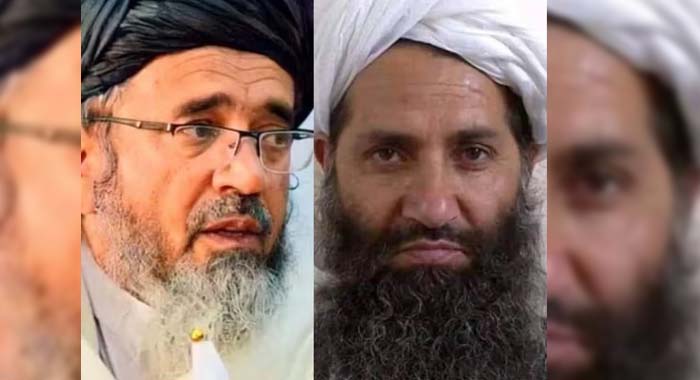
One year after the International Criminal Court (ICC) issued arrest warrants for Taliban Supreme Leader Hibatullah Akhundzada and Taliban Chief Justice Abdul Hakim Haqqani, the legal action continues to carry international and political implications, despite the absence of any arrests.
On 8 July 2025, the ICC announced that it had issued warrants for the two senior Taliban officials over allegations related to the persecution of women, girls, and other groups in Afghanistan on gender and political grounds.
According to the ICC, the warrants were issued after reviewing extensive material, including reports from human rights organisations, witness and victim statements, media documentation, and official Taliban decrees.
The ICC stated that there were reasonable grounds to believe that, following the Taliban’s return to power on 15 August 2021, Hibatullah Akhundzada and Abdul Hakim Haqqani played roles in implementing policies and decisions that resulted in the systematic deprivation of fundamental rights. According to the court, these alleged actions involved restrictions affecting women and girls, including access to education, employment, freedom of movement, freedom of expression, and freedom of belief.
The ICC prosecutor stated that the evidence indicated these policies were not isolated decisions but part of a broader organised approach that resulted in the removal of women from significant areas of public life. The court described the alleged conduct as potentially amounting to gender-based persecution and crimes against humanity under international law.
The ICC’s case was reportedly developed through a combination of sources, including documentation from international and local human rights organisations, accounts provided by witnesses and victims, media reports, and official government-related orders and statements.
After reviewing the available material, the ICC prosecutor concluded that the restrictions imposed on women and girls represented a coordinated policy framework rather than separate administrative decisions. The court highlighted measures such as restrictions on girls’ education, limitations on women’s employment opportunities, controls on freedom of movement, and actions against protesters and civil society activists.
The ICC stated that, as the highest-ranking authority within the Taliban leadership structure, Hibatullah Akhundzada bears primary responsibility for policies and decisions issued under the group’s administration. The warrant for Abdul Hakim Haqqani was linked to his position as Taliban Chief Justice and his alleged role in the judicial framework through which certain policies were implemented.
Following the announcement, the Taliban rejected the ICC warrants and stated that it does not recognise the authority of the court in The Hague. The Taliban has repeatedly denied international criticism regarding its governance policies and has maintained that its decisions are based on its interpretation of Afghanistan’s laws and values.
The ICC decision received support from several international human rights figures and Afghan activists. Among those welcoming the move were Richard Bennett, the United Nations Special Rapporteur on the situation of human rights in Afghanistan; Heather Barr, Associate Women’s Rights Director at Human Rights Watch; Nobel Peace Prize laureate Malala Yousafzai; and Afghan women’s rights advocates.
Supporters of the ICC action described the warrants as an important step toward accountability and justice for alleged violations affecting women, girls, and other affected communities in Afghanistan.
Despite issuing the arrest warrants, the ICC does not have its own enforcement mechanism. Responsibility for executing ICC arrest warrants rests with countries that are parties to the Rome Statute, the treaty that established the court. So far, no arrests have been made. The Taliban leaders remain in Afghanistan, where the group continues to maintain control, including in Kandahar, the Taliban’s traditional centre of authority.
A year after the ICC announced the warrants, they remain active and continue to carry legal and diplomatic consequences. Although the immediate enforcement of the warrants remains uncertain, the decision has added further international pressure on the Taliban leadership and continues to influence discussions surrounding Afghanistan’s relations with the international community. The case remains a significant development in the ongoing debate over accountability, human rights, and international justice in Afghanistan.



