
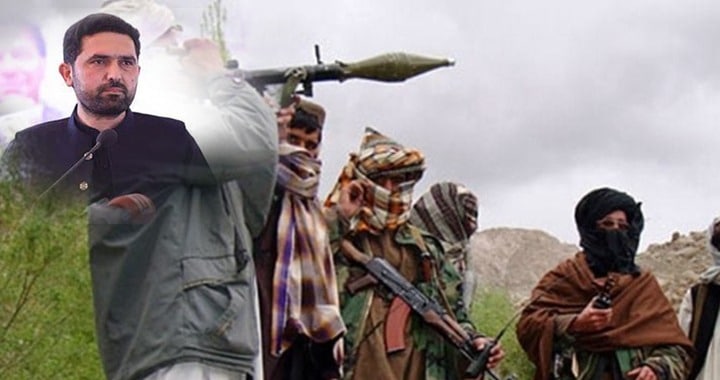
Khyber Pakhtunkhwa is currently facing not only a surge in terrorism but also a dangerous collapse of governance and counterterrorism narrative clarity, raising serious questions about the provincial leadership’s priorities at a time when police personnel, tribal elders, civilians and security officials continue to come under attack across the province.
Security analysts warn that terrorism cannot be defeated through military operations alone. According to observers, the battle is now being fought on two fronts simultaneously: one on the ground where soldiers, police and security institutions are sacrificing lives, and another in the domain of governance and narrative building, where political leadership, religious scholars, media and public representatives are expected to draw a clear line against terrorism.
However, critics argue that this clarity appears increasingly absent in Khyber Pakhtunkhwa.
While security institutions continue conducting operations against terrorist networks, questions are being raised over what analysts describe as a weak, ambiguous and politically distracted provincial response. Observers say the provincial government’s focus appears tilted more toward political alignments, protests and internal party affairs rather than standing visibly beside victims of terrorism, families of martyrs and communities directly affected by violence.
Experts believe this vacuum creates a highly dangerous environment where terrorism, criminality and political confusion begin intersecting.
According to analysts, weak governance itself becomes fertile ground for terrorism. In conflict-affected districts where basic services, development and state visibility remain limited, terrorist propaganda gains traction by portraying the state as absent or indifferent toward suffering populations. This perception, experts warn, directly benefits anti-state elements attempting to undermine public trust in national institutions.
Analysts further caution that when terrorism is not called out clearly and instead becomes buried beneath political blame games, center-versus-province disputes or vague conspiracy narratives, the real beneficiary is the terrorist itself. They argue terrorists do not succeed only through bullets and bombings, but also when public confusion spreads, when moral distinctions between aggressor and victim are blurred, and when the sacrifices of security personnel fade behind political noise.
Questions are also being raised regarding the visibility of provincial leadership during moments of tragedy. Critics ask why political mobilization, consultations and party-centered activities appear energetic and organized, while the same intensity is often missing when it comes to visiting grieving families, attending funerals of martyrs or publicly reinforcing solidarity with victims of terrorism.
According to security observers, such silence gradually creates suspicion among the public, and that suspicion becomes space where terrorist narratives attempt to grow.
Analysts stress that there can be no middle ground on terrorism. They argue that silence, ambiguity or reluctance to take a firm position ultimately strengthens terrorist propaganda and weakens national unity at a time when Pakistan faces coordinated security challenges from hostile networks operating both internally and from across the border.
They maintain that Pakistan’s position remains unambiguous: terrorism in any form, under any slogan, flag or political cover, is unacceptable. Those targeting Pakistani civilians, police personnel, soldiers, teachers, laborers and tribal communities deserve no political soft corner or narrative justification.
Observers say the people of Khyber Pakhtunkhwa want peace, security, education, employment and state stability, not prolonged political distractions while terrorism continues claiming lives across the province.
Analysts emphasize that the provincial government must now stand openly and decisively with the families of martyrs, reinforce public confidence in police and security institutions, and reject every narrative that attempts to soften, rationalize or politically camouflage terrorism.
The urgency of such unity became even more visible after recent terrorist activity in Balochistan, including the attempted sabotage attack on LPG tankers in Qalat, where security forces responded swiftly and neutralized two Fitna al-Hindustan terrorists allegedly involved in efforts to disrupt economic activity and development projects in the province. Security experts believe such attacks reflect a broader strategy aimed at spreading instability, economic disruption and psychological fear simultaneously across multiple regions of Pakistan.



