
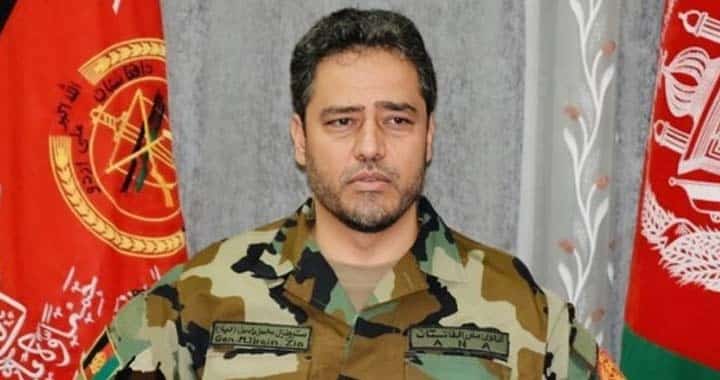
Former Afghan military chief General Yasin Zia has rejected Taliban assertions denying Afghan territory is being used for cross-border militancy, stating that multiple armed groups continue to operate freely from within Afghanistan.
In his remarks, Zia asserted that militant organizations, including the Tehrik-e-Taliban Pakistan (TTP) and other extremist networks, have for years used Afghan soil as a safe haven to plan and launch attacks not only against Pakistan but also against other regional countries, including China, Iran, and Tajikistan.
He further claimed that the Taliban administration has failed to fully dismantle or eliminate these groups, which he described as entrenched militant infrastructures operating with varying degrees of freedom across different regions of Afghanistan.
According to General Zia, despite repeated official denials by the Taliban authorities, intelligence and security assessments suggest that extremist networks remain active and capable of conducting coordinated operations beyond Afghanistan’s borders.
He alleged that these groups continue to target regional interests, including Chinese nationals and infrastructure projects, raising concerns over broader regional security implications. Zia also stated that the presence of foreign-linked militant elements and transnational extremist networks further complicates the security landscape, making Afghanistan a continuing focal point of regional instability.
The former Afghan military chief emphasized that states affected by cross-border militancy have the inherent right to defend their national security interests. He stated that Pakistan, in particular, has the right to take necessary measures, including targeting militant camps allegedly responsible for attacks on its civilians and security forces, if threats continue to originate from Afghan territory. His remarks come amid ongoing tensions in the region over border security, militant activity, and counterterrorism operations.
General Zia also issued an appeal to the Afghan population, urging citizens to raise their voices against extremism and reject militant violence. He stressed that the Afghan people deserve long-term peace, stability, and economic development rather than continued conflict and insurgent activity. He pointed to recent public gatherings and demonstrations reportedly seen in parts of Panjshir Valley as an example of growing resistance to militant influence, calling for similar peaceful civic movements in other regions of the country.
Security analysts note that such statements reflect continuing regional concerns about the presence and mobility of armed groups within Afghanistan’s borders, as well as the broader implications for neighboring countries. The situation continues to attract attention from regional stakeholders amid ongoing debates over counterterrorism cooperation and border security enforcement. Further developments are expected as regional governments and security institutions respond to the evolving security discourse.



