
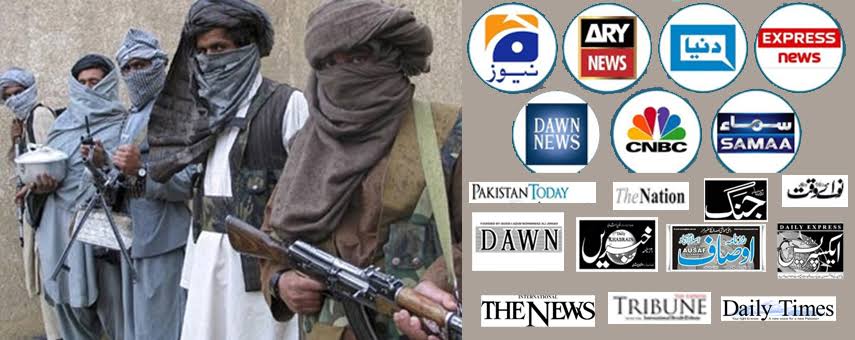
Since the change of government in Kabul in 2021, the outlawed Tehreek-e-Taliban Pakistan (TTP) has overhauled its media and propaganda strategy, building a more structured and technologically advanced digital network.
In its early years, the group’s communication strategy was highly limited. The TTP primarily relied on emails to international journalists or occasional video messages. At that time, internet access was restricted, and reporters often depended on direct phone calls for verification of incidents.
These technical constraints slowed down information flow and kept the group’s ideological outreach—particularly among youth—relatively limited.
During that period, propaganda was largely confined to illegal FM radio stations. In Swat, the example of Maulana Fazlullah, also known as “Mullah Radio,” stood out, who used FM broadcasts to disseminate his narrative.
From FM Radio to Digital Dominance: TTP’s Social Media Expansion
The digital revolution fundamentally reshaped the propaganda landscape for extremist groups. Following developments in Kabul, the TTP significantly expanded its presence across social media and encrypted messaging platforms.
Through Facebook, X (formerly Twitter), TikTok, Telegram, WhatsApp, and Signal, the group is now directly targeting young audiences and local populations.
The TTP is no longer limited to written statements. It now runs a multi-layered propaganda campaign through videos, podcasts, digital newspapers, and magazines. Reports suggest the group operates more than 20 media programs and products that are regularly published.
In 2026, the TTP further expanded its media outreach by introducing new video series, including “Al-Khandaq Operations” and “Aiqaz,” which highlight militant activities and training narratives.
Narrative Building, Recruitment and Psychological Warfare: Inside TTP’s Media Model
The TTP’s current media structure is highly organized and multi-dimensional, comprising videos, podcasts, radio broadcasts, newspapers, magazines, and digital posters.
The purpose of this propaganda ecosystem goes far beyond information dissemination. It is designed for:
Ideological influence
Youth recruitment
Promotion of attacks
Challenging state narratives
Shaping public perception
Different programs serve different strategic objectives.
“Ma’raka Hai Tez” highlights attacks,
“Tayyar Hain Hum” focuses on recruitment and training,
while “Zair-e-Nazar” attempts to justify violence by framing it within social and political grievances.
Similarly, programs like “Main Jihad Ka Musafir” and “Rasm-e-Mohabbat” promote narratives of martyrdom and sacrifice, while initiatives such as “Kafalat-ul-Yateem” are used to project a softened image of the group.
Religious justification remains the central pillar of this strategy, with programs like “Dawat-ul-Jihad” framing militancy in religious terms. Separate magazines and content streams are also being developed to target women and youth, indicating a long-term strategic approach.
The TTP’s media network has now evolved into a full-fledged information warfare model, where conflict is no longer confined to the battlefield but extends into narratives, perception shaping, and digital influence operations.
This transformation underscores how extremist groups are leveraging modern technology not only to expand reach but also to construct alternative narratives, further complicating the state’s counter-extremism challenge.



