Whenever a government does something, it has a purpose. If there is an assembly, its purpose is legislation. If there are ministers, secretaries and officials, their purpose is governance. But when governance itself begins to collapse, when institutions become stages for optics rather than service delivery, then the public has every right to ask what exactly their rulers are doing.
Khyber Pakhtunkhwa today presents a troubling picture of administrative failure, political theatrics and worsening insecurity.
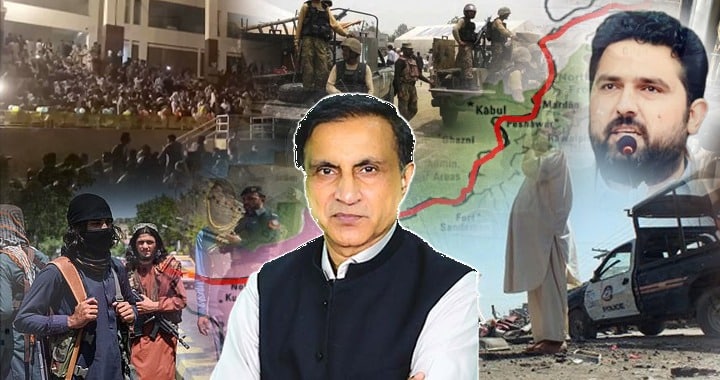
The province is grappling with severe governance challenges. Education is deteriorating, healthcare problems remain unresolved, infrastructure is crumbling and security threats are intensifying. In such circumstances, holding an assembly session in a cricket stadium raises more questions than answers.
What was the logic behind it?
The government claimed it was meant to send a message of transparency and openness, to show that governance was not confined to closed rooms. Yet the reality on the ground told a different story. The stadium remained largely empty. The public did not show up in significant numbers. Those who did come were reportedly protesters or individuals hoping to meet the chief minister regarding their own grievances, only to return disappointed.
Even within the ruling party’s own circles, criticism surfaced. Questions were raised over the expenditure involved in arranging the venue, transporting assembly furniture, setting up screens, and making elaborate cooling arrangements, only for the session to be disrupted by bad weather. A storm reportedly damaged the setup, cut electricity and forced speeches to end abruptly.
If this was meant to project strength, it instead projected disorganization.
The claim that such a session was held for the release of PTI’s founder only made matters more puzzling. If symbolic political gestures are replacing governance, then the province is being pushed further toward instability. Public sentiment is already shifting. Workers may still attend rallies, but ordinary citizens are increasingly disillusioned.
There is another issue that cannot be ignored, internal fractures within PTI itself.
There are growing reports of unease among party ranks. Questions are being asked about leadership, corruption allegations, commissions and poor governance. Reports suggest some leaders are even reluctant to meet Imran Khan for fear of being asked difficult questions, including resignations or accountability over their performance.
This reflects a party distracted by internal anxieties while the province faces an escalating security crisis.
The return of TTP terrorists and their movement into different parts of Khyber Pakhtunkhwa is perhaps the gravest issue of all.
Reports indicate that as certain negotiations and developments unfolded in Afghanistan, some TTP elements were either displaced or pressured, leading them to move into North Waziristan, South Waziristan, Orakzai, Bajaur and Khyber districts.
Security forces have already launched operations in areas like Khyber, yet what appears missing is a coordinated provincial response.
Where is the emergency planning?
Where is the coordination between the provincial government, law enforcement and the military?
The chief minister is the chief executive of the province. It is his responsibility to ensure peace, to provide governance and to prepare for looming threats. This is not merely KP’s issue, it is Pakistan’s issue. But leadership at the provincial level must still initiate coordination. Meetings with the Corps Commander, the IG Police, the administration and federal authorities should be taking place urgently.
The police remain the frontline force. If terrorism escalates, they will be the first target.
At the same time, internally displaced persons from Tirah continue their protests. Promises of rehabilitation and return have not been fulfilled. Relief funds meant for them have reportedly vanished. They remain stranded, while the terrorist threat around them grows.
This is the cost of political distraction.
On the regional front, Afghanistan’s interim Taliban authorities appear once again to be reviving rhetoric over the Durand Line.
This is not new.
The Durand Line is an internationally recognized border and has been accepted through multiple agreements over the last two centuries. Reviving this issue now appears less about historical legitimacy and more about political narrative.
The Taliban regime remains deeply inexperienced in governance and faces mounting internal and external pressures. Instead of addressing its own economic collapse, humanitarian crisis and internal divisions, it appears to be reviving external disputes to rally support.
But the regional landscape is changing.
Pakistan has increasingly diversified its trade routes toward Central Asia through China and other regional partners. New trade corridors are reducing Pakistan’s dependency on Afghanistan as a transit route.
This changes the equation.
Afghanistan stands to lose more economically if tensions rise.
At the same time, recent diplomatic engagements involving China and discussions reportedly held in Urumqi suggest efforts are underway to address the issue of TTP sanctuaries and cross-border terrorism.
There are indications that Afghan authorities may have taken limited action against certain TTP figures, including arrests or restrictions. But Pakistan remains cautious.
And rightly so.
There is a deep trust deficit.
The Taliban have made promises before and failed to deliver. Pakistan appears unwilling to issue celebratory statements before seeing concrete action on the ground. Verification and monitoring will be essential.
China may play a critical role here.
There are reports of proposed monitoring mechanisms involving satellite systems, digital mapping and joint oversight to track cross-border movement and ensure commitments are implemented.
That may provide a practical path forward.
But Pakistan knows that agreements on paper are not enough. The real test comes when implementation begins in the field.
Pakistan cannot afford another reversal.
It has become clear that Islamabad is proceeding carefully, avoiding premature declarations while assessing whether recent Taliban actions are genuine or temporary tactical moves.
As for the renewed Durand Line rhetoric, Pakistan is unlikely to compromise.
The world recognizes it as an international border. Pakistan’s sovereignty is non-negotiable.
Pakistan has shown restraint in recent months while managing multiple regional fronts, including Iran and Afghanistan. But restraint should not be mistaken for weakness.
If provocations continue, or if commitments regarding terrorism are violated, Pakistan will respond fully and decisively.
That is the reality.
And until political leaders in Khyber Pakhtunkhwa shift their focus from optics to governance, from rallies to reforms and from symbolism to security, the province will remain dangerously exposed, both from within and beyond its borders.