In Afghanistan, internal divisions within the Taliban are no longer confined to speculation. They are increasingly visible through developments that suggest growing political and organizational strain within the group.
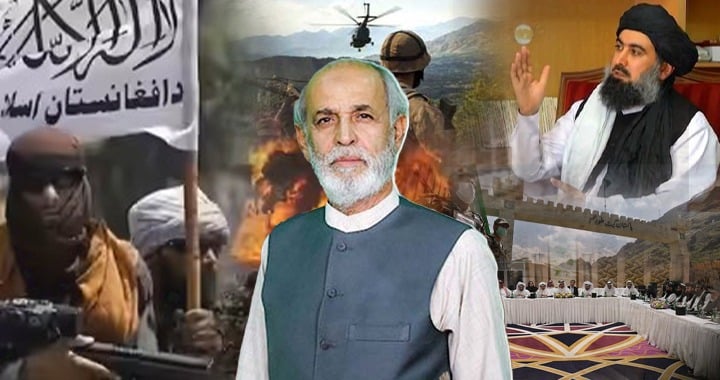
One of the clearest recent examples is the reported arrest of senior Taliban figure Agha Jan Motasim. His detention has raised questions about the internal direction of the Taliban, the nature of policy disagreements, and the widening space of differences within the leadership structure.
Agha Jan Motasim has been described as one of the important Taliban figures since the 1990s. He remained a close associate and advisor of Mullah Omar and continued to hold influence during later leadership phases. He is also seen as someone who played a role in shaping internal policies of the group.
He has previously faced detention and underground conditions, including periods after 9/11, but continued to remain part of the Taliban structure. According to the guest, his current arrest in Kandahar has not been officially confirmed or denied by the Taliban, a pattern that has also been seen in several other major incidents since August 2021.
The absence of confirmation is described as consistent with the Taliban’s approach of withholding official statements while internal inquiries are said to continue. However, according to the assessment shared, the arrest itself reflects internal disagreements within the group.
These disagreements are linked to criticism that Agha Jan Motasim is said to have expressed regarding Taliban policies. This includes internal governance decisions, political direction, and relations with Pakistan. He is also described as having raised concerns about internal political treatment within the structure.
The broader context of these developments, according to the guest, includes pre-existing internal divisions within the Taliban that were already being reported before recent escalations in regional tensions. Different groups within the Taliban are said to have held differing views on leadership decisions and policy direction.
These internal differences, however, became less visible during periods of external conflict, particularly when tensions with Pakistan escalated. At that stage, internal criticism reportedly receded as various elements aligned under a unified external posture.
Alongside this, developments in the Arandu region were highlighted, an area connecting Chitral and Kunar and serving as a strategic junction between multiple border regions. Local elders from both sides are said to have engaged in discussions and reached a ceasefire understanding, with Pakistan’s position indirectly reflected in those discussions.
Local representatives, according to the guest, also urged the Taliban administration to take action against banned groups operating in the area and to prevent cross-border attacks into Pakistan. This is presented as part of ongoing local-level pressure related to security concerns.
Despite temporary alignment during conflict situations, internal dissatisfaction within Afghan society is described as continuing. According to the guest, criticism of Taliban policies exists beneath the surface even if it does not always appear publicly.
External actors, while at times seen as engaging with or supporting the Taliban in regional political contexts, are described as not necessarily endorsing their governance model or internal policies. The administrative and political structure is presented as a source of difficulty for the population.
On regional security concerns, attention is drawn to a Pakistan–European Union engagement focused on Afghanistan-related threats. The discussion is framed around the presence of armed groups operating inside Afghanistan and the broader regional implications of their activity.
According to the assessment, groups such as the TTP and other organizations are active within Afghan territory, contributing to cross-border security concerns. The presence of multiple militant networks is described as a factor complicating regional stability.
The lack of diplomatic recognition and limited formal international engagement is also highlighted as a contributing factor to Afghanistan’s isolation and governance challenges.
Reference is made to recent violent incidents, including attacks affecting civilian populations, as indicators of continuing instability. The overall situation is described as affecting not only Afghanistan but also neighboring regions including Pakistan and Central Asia.
Pakistan’s position in these discussions is described as consistently focused on demanding strict action against militant organizations operating from Afghan territory. This includes groups involved in cross-border attacks.
It is further stated that Pakistan views its security environment as being affected by threats originating from multiple directions, with Afghanistan forming a central component of that concern.
On ongoing negotiations in China, discussions are described as continuing with participation from both sides, with support from Chinese mediation. No final outcome has been announced so far.
China’s interest is presented as focused on regional stability and trade connectivity, which is linked to improved relations between Afghanistan and Pakistan.
The guest also notes that militant activity in the region often operates in fragmented patterns, with smaller splinter groups carrying out operations without formal acknowledgment from larger organizations.
In this context, responsibility for incidents is sometimes diffuse, but operational linkages remain a key concern in assessing security dynamics.
On negotiations overall, it is stated that multiple rounds of dialogue in different countries have taken place previously without definitive outcomes. The process is ongoing, and no official success or failure has been declared.
The assessment concludes that progress in talks depends on continued engagement and gradual movement toward agreement, with outcomes expected only through sustained dialogue over time.