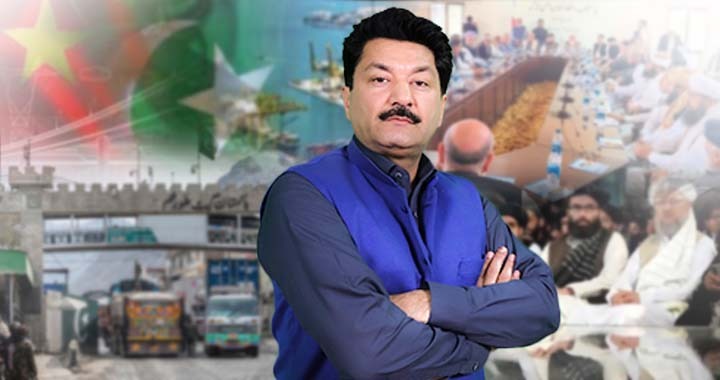
In the briefing, it was stated that Operation Ghazab Lil Haqq has resumed. The ceasefire had been announced on the occasion of Eid-ul-Fitr, and Pakistan made it clear that operations would continue within that framework. However, we have seen certain individuals and some religious figures take more aggressive positions.
There were delegations of scholars, eleven from Afghanistan and eleven from Pakistan, and one of the delegates demanded that the ceasefire be extended until Eid-ul-Adha. Alongside this, we observed involvement from other countries. The ceasefire itself came at the request of Qatar, Saudi Arabia, and Turkey, and even the Afghan Taliban acknowledged these three countries while announcing it.
Now we are seeing that China has become actively engaged in pushing for a more permanent ceasefire and facilitating negotiations. There are indications that future rounds of talks may take place in China. Previously, we saw dialogue efforts in Doha, Istanbul, and Riyadh, along with strong statements from both sides. At this stage, there appears to be continuity, with China showing clear interest due to its strategic stakes in both Afghanistan and Pakistan.
China has ongoing investments and projects in Pakistan, including CPEC, and there is also discussion around Afghanistan’s potential inclusion in the next phase. For all of this, peace and reconciliation are essential.
Regarding the jirga in Peshawar, it was organized by two groups and included prominent figures such as former Chief Secretary Arbab Shehzad. I attended the session myself, which lasted around five to six hours. It brought together former parliamentarians, scholars, political representatives, intellectuals, writers, journalists, and tribal elders. It was notable that participants were largely from Pakhtunkhwa, gathered under the title of a Pakistan-Afghanistan Peace Jirga, despite there being no direct Afghan representation.
When asked about this, it was explained that in the next phase the initiative would be expanded to a national level jirga, with participation from Balochistan and other regions. The declaration issued at the end called for a temporary ceasefire, reopening of the border, restoration of trade, facilitation of cross-border movement, and easing the process for Afghan repatriation. It also proposed making visa procedures easier for Afghan citizens.
However, the key question is whether such a jirga has the authority or capacity to ensure implementation of its proposals. At best, it serves as an appeal to both governments, urging restraint and mutual understanding, since prolonged conflict is not in the interest of either side.
It was also highlighted that the impact of the conflict is being felt most strongly by Pashtun populations, whether in Balochistan, Khyber Pakhtunkhwa, or across the border, while other communities are comparatively less affected. This was reflected in the composition and language of the jirga itself.
At the same time, the issue goes beyond trade or border closures. It is fundamentally a security concern for Pakistan. The core problem remains the presence of groups operating from Afghan territory against Pakistan. Individuals who have previously been part of negotiations were also present at the jirga. When asked about claims that such elements are not present in Afghanistan, a senior participant remarked that past negotiations in Kabul were held directly with these same figures, indicating clear awareness of their presence.
Such gatherings do have importance, particularly in building dialogue and consensus, but their effectiveness depends on implementation. Even when large assemblies of scholars in Afghanistan have issued declarations stating that Afghan territory should not be used against other countries, attacks have still occurred. This raises questions about enforcement and authority.
If leadership figures state that armed activity outside Afghanistan is not permissible, yet such incidents continue, then the issue becomes one of control and internal coherence. Claims of full territorial control are difficult to reconcile with the continued presence and activities of armed groups targeting neighboring countries.
There also appears to be a division within the Afghan Taliban. One perspective supports distancing from the banned Tehreek-e-Taliban Pakistan (TTP), recognizing the long-term consequences. The other perspective emphasizes past cooperation, arguing that these groups fought together against foreign forces. This historical linkage, combined with tribal and familial ties across the border, makes separation complex.
These relationships are not only ideological but also social, with intermarriages and shared networks strengthening connections. This is why some analysts describe the Afghan Taliban and the TTP as closely intertwined, despite official distinctions.
At the same time, there is a contradiction. While allegiance may be claimed by certain groups, formal acknowledgment from Afghan authorities is absent. Official statements are typically directed at Afghan Taliban members, advising against cross-border activity, but these do not appear to influence the behavior of external groups. This again raises questions about the extent of control and the credibility of assurances.
On the ground, developments in areas like Bara illustrate the situation. In some cases, local jirgas have asked militants to leave, and when they refused, targeted operations became necessary. In other areas, militants attempt to create an impression of control through brief appearances, checkpoints, or symbolic acts, but these are often followed by swift counteractions.
This pattern shows that while militants attempt to project influence, their presence is neither stable nor uncontested. At the same time, it is not feasible to maintain a constant security presence in every remote location, which allows such temporary incidents to occur.
The broader concern is that those engaging in such actions appear disconnected from the larger regional context. At a time when the Muslim world is facing multiple challenges, including tensions in the Middle East, internal divisions only weaken collective stability. Pakistan, in particular, is managing multiple fronts, internal security challenges, border tensions, and evolving regional dynamics.
In this environment, groups using religious narratives to justify violence raise serious questions about intent and awareness. Pakistan has itself been a victim of terrorism, despite persistent propaganda to the contrary. The reality is that the country is simultaneously dealing with internal threats and external pressures.
In recent years, Pakistan’s approach has shifted from restraint to a more assertive counterterrorism posture. Diplomatic channels remain open, and multiple rounds of talks have been facilitated in different capitals. However, the central issue remains unchanged: commitments must be verifiable. Statements alone are insufficient without demonstrable action.
There is also reluctance to formalize commitments in written agreements, likely due to the risk of contradiction by ground realities. Incidents continue to emerge that challenge official positions, further complicating trust-building efforts.
Pakistan’s position has remained consistent. A stable and secure Afghanistan is in Pakistan’s own interest, but this requires responsible state behavior. Transitioning from an insurgent movement to a governing authority requires adherence to commitments and accountability in actions.
If these expectations are not met, tensions will persist, not only with Pakistan but with the broader international community.
On trade and border management, progress is possible, but it cannot come at the expense of security. Temporary openings, such as those at Torkham, demonstrate that limited cooperation can work when conditions are respected. However, even minor violations can quickly reverse these gains.
Recent coordination between border officials, including agreements to avoid provocative actions and facilitate movement, shows that incremental steps can build confidence. If these measures continue, there is potential for broader normalization, including trade. But ultimately, everything depends on consistency and trust built through actions, not just intentions.