
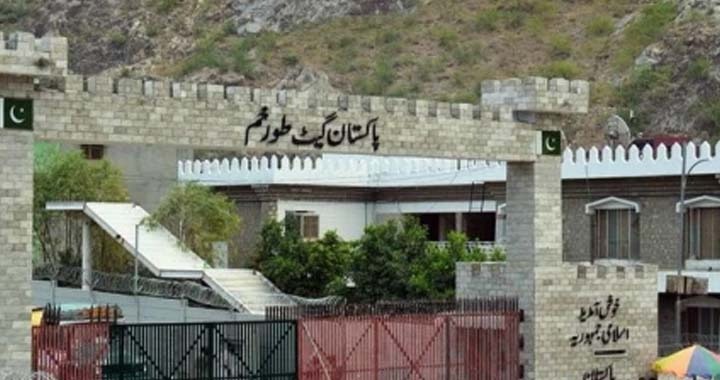
The repatriation of undocumented Afghan nationals through the Torkham border crossing was abruptly suspended after a cross-border attack wounded a Pakistani security official, underscoring escalating security risks and what officials describe as increasingly aggressive behavior from the Afghan side.
The crossing, which had reopened only a day earlier after nearly a month-long closure, was facilitating the return of undocumented Afghans as part of Pakistan’s ongoing repatriation policy. However, the situation deteriorated late Thursday evening when gunfire from across the border targeted Pakistani personnel near the Awal Khan post, prompting immediate suspension of operations.
Security officials confirmed that border forces were placed on high alert following the incident. Despite the presence of multiple state institutions, including immigration, law enforcement, and logistical authorities managing the process, instructions were issued to halt all registration and deportation activities. Around 220 individuals had been processed and returned before the situation escalated.
The incident is being viewed not as an isolated flare-up but as part of a broader and deeply concerning pattern. Pakistani officials argue that Afghanistan has effectively become a sanctuary for more than twenty militant organizations, including the banned Tehreek-e-Taliban Pakistan (TTP), the banned Balochistan Liberation Army (BLA), its Majid Brigade faction, and Al-Qaeda. These groups continue to exploit ungoverned spaces and permissive conditions to plan and execute attacks against Pakistan.
Officials maintain that such cross-border aggression directly reflects the operational freedom enjoyed by these groups. The presence of these organizations inside Afghanistan has repeatedly been flagged as a core obstacle to border stability and counterterrorism efforts.
At the same time, Pakistani authorities have rejected assertions from the Afghan Taliban that Islamabad seeks to destabilize Afghanistan. Security analysts describe this narrative as strategically flawed and detached from ground realities. A destabilized Afghanistan, they argue, would inevitably spill over into Pakistan, triggering security, economic, and humanitarian consequences that Islamabad can ill afford.
Instead, Pakistan’s position remains centered on securing its borders and neutralizing threats emanating from across the frontier. The suspension of repatriation, officials say, is a direct response to immediate security concerns rather than a policy reversal.
The latest developments come amid already strained relations between the two sides, with tensions intensifying following the end of the Eid ceasefire and the continuation of counterterrorism operations under Operation Ghazab-il-Haq.
For now, the Torkham crossing remains under heightened security, with authorities indicating that the resumption of repatriation will depend entirely on the stabilization of the border environment and verifiable assurances against further hostile actions.



