
Hassam Uddin
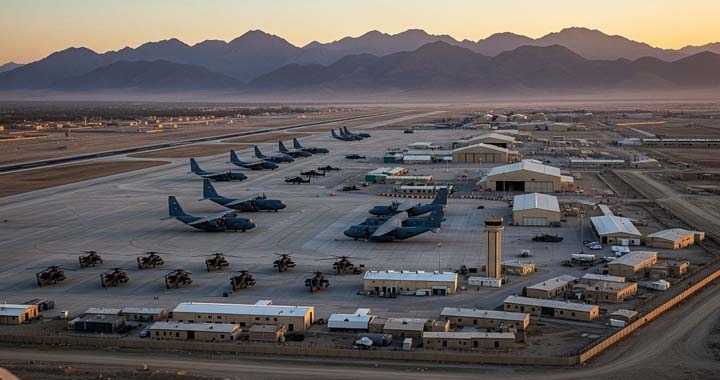
Russia has firmly opposed any potential re-establishment of United States military infrastructure in Afghanistan, particularly at the strategically significant Bagram Air Base, signaling heightened geopolitical sensitivities surrounding the region.
In a recent interview with RIA Novosti, Zamir Kabulov, Special Representative of the Russian President for Afghanistan and adviser to the Foreign Ministry, stated that the return of US or NATO military presence in Afghanistan is “absolutely unacceptable.”
“We consider the establishment of US and NATO military infrastructure on Afghan soil or in neighboring countries under any pretext to be categorically unacceptable,” Kabulov said, emphasizing Moscow’s firm stance on the issue. He further expressed hope that the current Afghan authorities would maintain a similar position regarding foreign military deployments.
Kabulov’s remarks come amid renewed speculation about potential US interest in regaining strategic access to Bagram Air Base, particularly as American forces have increased their presence in the Middle East in response to rising tensions involving Iran.
The Russian envoy noted that calls to reassert control over Bagram are not new, referencing previous statements made during the administration of Donald Trump. “There is nothing new in these demands,” he added, suggesting a continuity in US strategic thinking regarding Afghanistan’s military infrastructure.
The United States withdrew from Afghanistan in August 2021, ending nearly two decades of military presence and relinquishing control of key installations, including Bagram Air Base. Since then, the issue of foreign military re-engagement has remained a point of contention among regional and global powers.
Analysts suggest that Russia’s unequivocal opposition reflects broader concerns over the reintroduction of Western military influence in the region, which could alter the strategic balance and impact regional security dynamics. Moscow has consistently advocated for a regional approach to Afghan stability, emphasizing sovereignty and non-interference.
The development underscores ongoing geopolitical competition and the complex security landscape in and around Afghanistan, as major powers continue to navigate evolving threats and strategic interests.



