
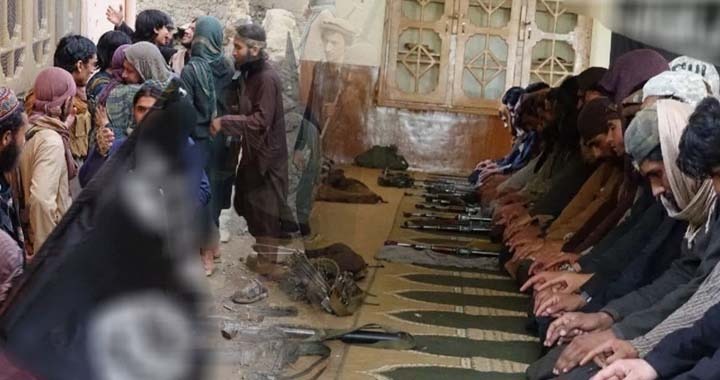
Emerging security reports have raised serious concerns about the presence and operational activities of the Islamic State Khorasan Province (ISKP) in northern Afghanistan, calling into question claims by the Afghan Taliban regarding their efforts to combat the group.
According to credible information from security sources, an active ISKP hub is allegedly operating in the Yaka Khaji area of Faryab under the leadership of Shafiqullah, also known as Qari Hikmat. The facility is reported to host between 20 to 30 fighters on a continuous basis and is described as a structured center for coordination, logistics, and movement of militants across regions.
The reports further allege that senior ISKP figures, including Saif ul Bahar (alias Sheikh Maqbool) and Abu Bakr al-Iraqi (alias Abu Saad al-Iraqi), were present during a recent gathering marking Eid al-Fitr. Additional individuals reportedly linked to the network include Muawiya Abu Saad Uzbeki, Shah Zor Khairi, and Haji Jan Syed (alias Momin).
Security sources indicate that the facility is facilitating the relocation and movement of fighters from eastern Afghan provinces such as Kunar, Nuristan, and Nangarhar into other parts of the country. The site is described as functioning as a logistical hub supporting broader militant coordination.
The reports also claim that individuals associated with the Tehreek-e-Taliban Pakistan (TTP) have utilized this network for transit and operational support, further intensifying concerns about cross-group linkages and regional security implications.
Additionally, the gathering in Faryab reportedly included the presence of high-profile militant figures such as Umar al-Khorasani, Luqman al-Khorasani, Muhammad Abu Hamza Turkistani, and Abu Yasir. Observers suggest that such meetings point toward a level of organization and coordination that contradicts official narratives of active suppression of ISKP by Taliban authorities.
Security analysts warn that if these reports are substantiated, they indicate not only the continued presence of ISKP but also the possibility of structured facilitation, which could significantly undermine regional stability. The alleged ability of such groups to operate within Afghan territory raises broader concerns about Afghanistan’s trajectory as a potential safe haven for regional and transnational militant networks.
There has been no official response from Taliban authorities regarding these specific allegations. However, the claims are likely to intensify scrutiny from regional stakeholders and the international community, particularly regarding counterterrorism commitments and enforcement on the ground.
Experts emphasize the need for transparent verification, coordinated international monitoring, and sustained diplomatic engagement to address the evolving security landscape. They caution that failure to effectively counter such networks could have far-reaching implications for both regional and global security.



