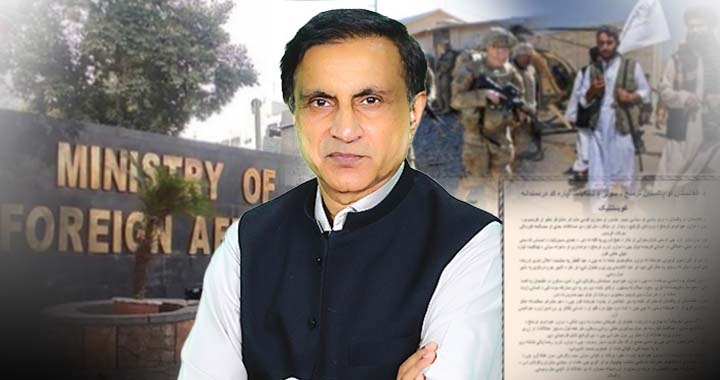
(Arshad Aziz Malik)
For decades, the relationship between Pakistan and Afghanistan has been marked by tension, mistrust, and violence. The news of a temporary ceasefire during Eid‑ul‑Fitar, supported by religious scholars from both countries, might seem like a small gesture, but it is an important development that deserves careful attention. On the surface, it represents hope a rare period of calm in a region long marred by conflict. But as I look closer, I am compelled to ask: can this ceasefire really be the foundation of lasting peace, or is it just another temporary pause that will soon dissolve once the holiday celebrations end?
Recently, a jirga consisting of twenty-two religious scholars eleven from Pakistan and eleven from Afghanistan issued a joint statement appealing to their respective governments to extend the Eid ceasefire. These scholars are not ordinary figures; they are highly respected, influential, and well-known personalities in their societies. Their appeal reflects the collective desire of civil society to see an end to the ongoing cycle of violence. It is encouraging to see religious voices rise above political divides to advocate for peace. Yet, I must be honest: despite the symbolic weight of this effort, history and political realities make me skeptical about its potential success.
The ceasefire was agreed upon in principle on the 19th of the Islamic month, and it was supposed to continue for five days, potentially extending beyond Eid‑ul‑Fitar. This is a positive signal, but we must understand the deeper context. The Taliban-led Afghan government is politically weak, internationally isolated, and ideologically rigid. In the past, even appeals from over a thousand scholars asking Afghanistan to stop harboring terrorists targeting Pakistan were ignored. If a thousand scholars could not influence the regime, what impact can eleven hope to have? This is not to undermine their effort, but to highlight the limitations imposed by political realities.
Pakistan has maintained a clear stance for years: it does not seek conflict with Afghanistan and has repeatedly demonstrated restraint, even when its checkpoints were attacked by militants operating from Afghan soil. Yet, this restraint has often been met with skepticism. The ongoing ceasefire, while a welcome relief, is not yet a guarantee of peace. The underlying trust deficit remains profound. For any lasting ceasefire to succeed, both sides must feel secure and see tangible benefits in cooperation, which, unfortunately, remains uncertain at this stage.
International dynamics further complicate the situation. Qatar, the United States, Iran, and Gulf states have strategic interests in the region and play influential roles. Qatar, for instance, has mediated between the United States and the Taliban and reportedly warned the Afghan government that any attacks on Pakistan could jeopardize financial support. Such external pressure, rather than internal moral appeals, may be the real driver of any compliance. Pakistan, meanwhile, has managed a delicate balancing act, simultaneously gaining trust from the United States, Iran, and Gulf countries, while positioning itself as a mediator in the broader Middle Eastern diplomatic landscape. This is an unprecedented level of international confidence in Pakistan, yet it also underscores the fragility of the ceasefire, which relies not only on domestic but also on external dynamics.
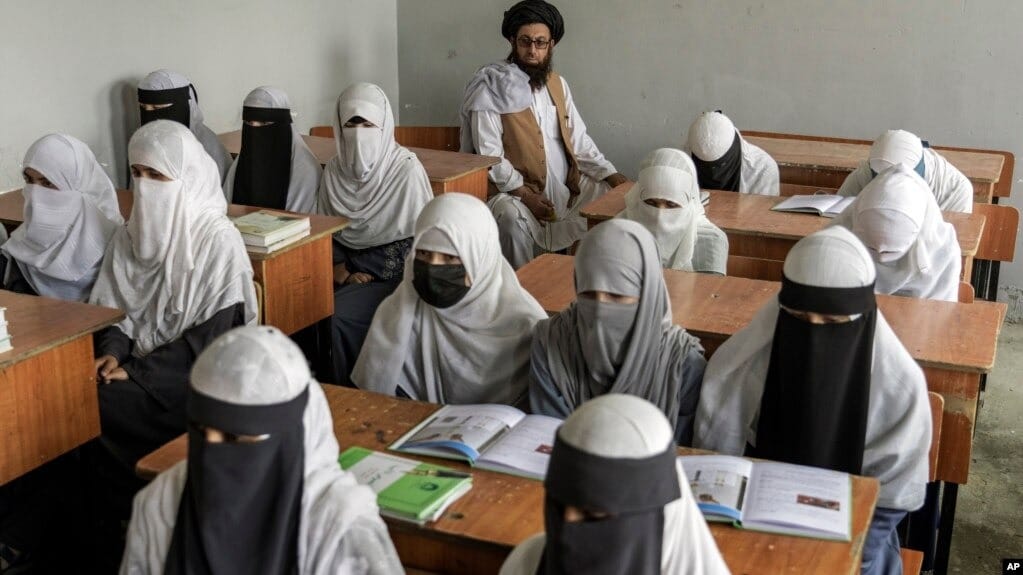
The Afghan government is in a state of extreme isolation. Its economy has collapsed, trade routes are blocked, and nearly sixty percent of the population faces extreme poverty. Education, especially for women, has been severely restricted. Hospitals struggle without trained staff, and schools remain closed or under threat of attack. Under these conditions, the government is primarily occupied with sustaining control rather than pursuing peace. Its ideological rigidity and inability to respond to civil society appeals limit the prospects for a sustained ceasefire. External investment, such as that from China, provides some economic relief, but it does not address the political and social paralysis that hinders meaningful engagement.
From a human perspective, the stakes are enormous. In Pakistan’s Khyber Pakhtunkhwa, attacks on schools underscore the urgent need for lasting peace. Families live in constant fear, and children’s education is under threat. In Afghanistan, the population suffers from hunger, unemployment, and lack of access to basic services. A ceasefire, even temporary, provides a brief respite, but it does not solve the systemic problems that perpetuate conflict. The ceasefire, while symbolically significant, cannot alone bring about the structural changes needed to protect lives, rebuild society, and foster mutual trust.
The joint statement by the scholars, therefore, should be seen for what it is: a noble, moral effort that seeks to influence the political process, but one that cannot substitute for policy, diplomacy, or enforceable incentives. The Afghan Taliban leadership, in its current form, is unlikely to respond to religious appeals alone. Non-state actors like the Tehreek-i-Taliban Pakistan continue to operate independently, undermining official agreements. And the incentives of the Afghan government, often tied to ideology and survival rather than constructive cooperation, do not align with sustained peace.
For a lasting solution, a multidimensional approach is essential. Political engagement must include clear incentives for both sides, ensuring that cooperation leads to tangible benefits. Economic integration, including reopening trade routes and transit commerce, could reduce the strategic and financial motivations for conflict. Social reforms in Afghanistan, especially regarding education and women’s rights, are crucial for long-term stability. And the international community, including the United States, Gulf countries, China, and regional powers, must maintain consistent engagement and pressure, rather than episodic intervention.
The Eid ceasefire, brief as it may be, carries a valuable lesson: peace is possible, even if temporarily. It demonstrates that both countries can choose restraint over violence and that civil society, religious scholars, and international actors can influence the trajectory of conflict. But temporary calm must be transformed into sustained engagement, structural reform, and mutual trust if it is to have any lasting impact.
As I observe the unfolding events, I remain cautiously hopeful. The ceasefire may continue for a few more days, possibly even beyond Eid‑ul‑Fitar, but without significant political, economic, and social reforms, it risks being another fleeting interlude. Pakistan’s diplomatic efforts, particularly in facilitating talks between the United States and Iran, have shown its capacity for mediation and restraint. This international trust, combined with internal civil society pressure, could create opportunities for longer-term peace initiatives. Yet, history warns us to temper hope with realism.
Ultimately, the success of any ceasefire depends on shared commitment, accountability for non-state actors, and structural incentives that make peace the preferred path. The Eid truce is a step in the right direction, but it is only a first step. Pakistan and Afghanistan, supported by the international community, must seize this moment to move beyond symbolic gestures toward actionable, lasting solutions. For millions of families living in fear and uncertainty, this is not just an abstract goal it is a necessity. Temporary calm gives hope, but only sustained engagement can deliver peace.
In conclusion, while the Eid‑ul‑Fitar ceasefire is a positive development, its true significance lies not in the days of quiet it brings, but in its potential to catalyze broader peace-building measures. Religious scholars have made their appeal, civil society voices are raising their concerns, and Pakistan has engaged both regional and global actors to encourage restraint. Yet, without concrete incentives, accountability, and structural reform, this ceasefire may remain a symbolic pause rather than a turning point. The world must watch closely, support carefully, and act decisively if this moment is to transform into lasting peace. The path ahead is difficult, but the alternative continued conflict and human suffering is far worse.