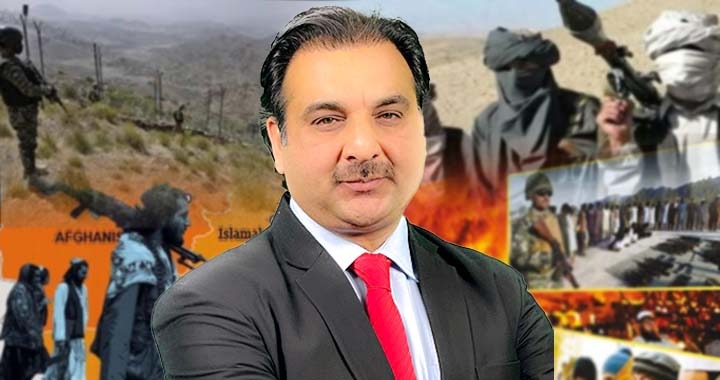
Pakistan has been ranked among the most terror-affected countries in the world, according to the Institute for Economics and Peace in its Global Terrorism Index 2026. The report identifies 2025 as one of the deadliest years for the country, with 1,149 people martyred in terrorist incidents.
It raises fundamental questions about the roots of terrorism in Pakistan, the factors sustaining it, and the external dimensions involved, including the use of foreign soil, financial assistance, logistical backing, and the existence of training centers.
According to the report, after a relative decline post-2013, terrorist incidents surged again by 2025. A total of 1,045 attacks were recorded, reflecting a 24 percent increase compared to the previous year. Khyber Pakhtunkhwa is identified as the most affected province, bearing the highest number of casualties and martyrs.
The report attributes the majority of attacks to banned organizations operating from Afghan territory, particularly the Tehreek-e-Taliban Pakistan and the Balochistan Liberation Army, both of which have repeatedly claimed responsibility for attacks inside Pakistan. It further notes that TTP is among the most dangerous militant groups globally and has been responsible for a significant proportion of attacks since 2009, making it considerably more active than BLA in terms of operational capacity, recruitment, and funding.
At least 637 people have been martyred in attacks attributed to TTP alone, marking one of the highest tolls since 2011. The report evaluates 163 countries based on their exposure to terrorism, placing Pakistan among those most severely affected.
There are, however, critical gaps and inconsistencies in the report. The number of attacks and the scale of damage presented appear lower than figures indicated in security briefings and ground assessments. Certain aspects of the threat landscape remain either underreported or insufficiently contextualized.
A central factor highlighted is the shift following the return of the Afghan Taliban to power in August 2021. Since then, Pakistan’s security environment has deteriorated significantly, with a marked rise in cross-border militancy.
Militant groups, including TTP and BLA, continue to operate from Afghan territory, where they are provided safe havens, recruitment opportunities, and training facilities. The report also points toward external involvement, including financial and logistical support linked to Research and Analysis Wing and Israel.
These elements collectively indicate the presence of an organized structure, where militant groups are not only sustained but strengthened through coordinated support. Recruitment, indoctrination, and training mechanisms are actively feeding into operations that target Pakistan.
Recent developments, including the circulation of propaganda material involving young recruits being prepared for attacks, further reinforce concerns about the systematic nature of this threat. The pattern suggests that these networks are not limited to isolated acts of violence but are part of a broader design.
The evidence and references presented point toward a sustained effort to destabilize Pakistan through coordinated militant activity supported by external actors. The structure, intent, and scale of these operations indicate that such support systems are being used to enable attacks not only within Pakistan but also across other neighboring countries.