
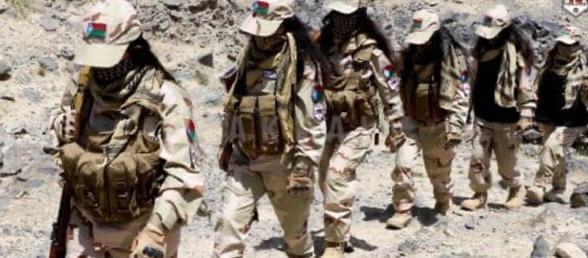
The January 31 wave of coordinated attacks in Balochistan, claimed under the Baloch Liberation Army’s (BLA) so-called “Operation Herof-2,” marked a dangerous escalation in terrorist violence, resulting in the killing of at least 18 civilians and exposing the group’s evolving and deeply troubling tactics, including the calculated use of female operatives under the banner of Fitna-al-Hindustan.
According to official accounts, the attacks targeted multiple locations, including state infrastructure and public spaces, in a series of carefully coordinated assaults designed to spread fear and disrupt stability in the province. The scale and synchronisation of the operation highlighted the group’s continued reliance on violence and intimidation to pursue its agenda.
A particularly alarming dimension of this phase of violence was the expanding role of the BLA’s suicide wing, the Majeed Brigade, which has increasingly incorporated female operatives into its ranks. Propaganda material circulated following the attacks prominently showcased women as symbols of resistance, attempting to portray their involvement as a sign of ideological commitment and equality within the organisation.
Security and defence analysts strongly challenge this portrayal, describing it as a calculated attempt to mask exploitation under the guise of empowerment. In traditionally conservative Baloch society, where women have historically been excluded from direct combat roles, this shift represents a deliberate and cynical strategy by Fitna-al-Hindustan to manipulate social norms for operational gain.
Historically, women in Baloch communities have played important roles in peaceful political mobilisation, advocacy, and raising awareness on social and human rights issues. Their involvement, however, remained non-violent and outside militant structures. The recent use of women in suicide operations signals a stark and dangerous departure from these norms, driven not by progress but by tactical necessity.
Analysts point to several factors behind this shift. The use of female attackers generates heightened psychological impact, as it challenges deeply ingrained societal perceptions and amplifies fear and uncertainty. Such attacks attract significant attention, extending the impact of violence beyond immediate targets and serving the group’s propaganda objectives.
Additionally, the tactic exploits gender-based assumptions in security environments, particularly in conservative settings where cultural sensitivities may limit the extent of physical searches. This provides the group with opportunities to bypass security measures and enhance the effectiveness of its attacks.
The inclusion of women also reflects an attempt to expand the group’s recruitment base as sustained counterterrorism operations continue to disrupt its networks. By drawing women into its ranks, the organisation seeks to compensate for operational losses and project an image of resilience, despite increasing pressure.
Despite its propaganda claims, the internal structure of the BLA remains overwhelmingly male-dominated, with women largely absent from leadership and decision-making roles. Their portrayal as central figures in the struggle serves primarily as a tool for recruitment and psychological influence, rather than a reflection of genuine inclusion or empowerment.
Experts emphasise that female participation in such violence often stems from a complex mix of personal grievances, exposure to conflict, and targeted ideological conditioning. However, within the framework of Fitna-al-Hindustan, these factors are systematically exploited to sustain a campaign rooted in fear, coercion, and destabilisation.
The January 31 attacks underscore the BLA’s continued reliance on indiscriminate violence and its willingness to weaponise vulnerable segments of society to achieve its objectives. The growing use of women in militant operations highlights not strength, but a dangerous escalation and moral decline, reinforcing the group’s image as a destabilising force that thrives on manipulation and brutality rather than legitimate political engagement.



