
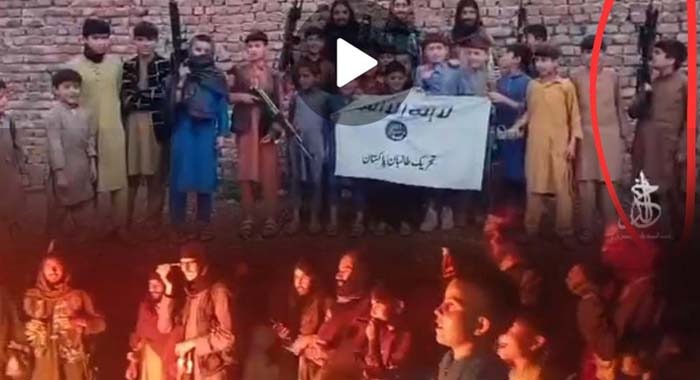
A video circulating on social media platforms showing armed children in Khyber district represents a shocking and morally reprehensible attempt at propaganda by Fitna-al-Khawarij. Staged in a confined and controlled setting, the footage is a desperate effort by these elements to project influence across Pakistan’s vast 800,000-square-kilometer territory, despite lacking any substantive operational control in the region.
The exploitation of innocent minors as instruments of violence underscores the ethical bankruptcy of Fitna-al-Khawarij and their willingness to sabotage the nation’s future for short-term psychological impact. This psychological warfare is intended to instill fear and sow instability, yet it simultaneously exposes the group’s growing vulnerability and desperation.
Equally concerning is the apparent absence and ineffectiveness of civil governance in the area. The district administration, provincial authorities of Khyber Pakhtunkhwa, and elected representatives, including MNAs and MPAs, have failed to assert the writ of the state or provide meaningful leadership in response to such blatant violations. The lack of visible oversight raises serious questions about administrative accountability and governance standards.
Civil administration exists to maintain law and order, enforce state authority, and safeguard citizens—tasks that have clearly been neglected. When local leadership remains silent and inactive, the burden of ensuring security often falls disproportionately on the military, creating an unsustainable dynamic that blurs the boundaries of civil-military responsibility.
Observers argue that if provincial authorities are unwilling or unable to address such threats effectively, it may necessitate intervention from the federal government to restore the writ of the state and protect the population. Ensuring accountability and proactive governance is essential not only to counter Fitna-al-Khawarij propaganda but also to prevent the normalization of extremism in vulnerable communities.
The use of children for armed propaganda by Fitna-al-Khawarij is both a humanitarian and security crisis, exposing their moral decay and tactical desperation. Simultaneously, it highlights systemic weaknesses in local governance that, if unaddressed, risk emboldening Fitna-al-Khawarij networks and undermining public confidence in state institutions. Immediate, coordinated action by civil authorities is essential to reaffirm the state’s authority, protect civilians, and deny these groups any opportunity to exploit Pakistan’s youth and communities.



