
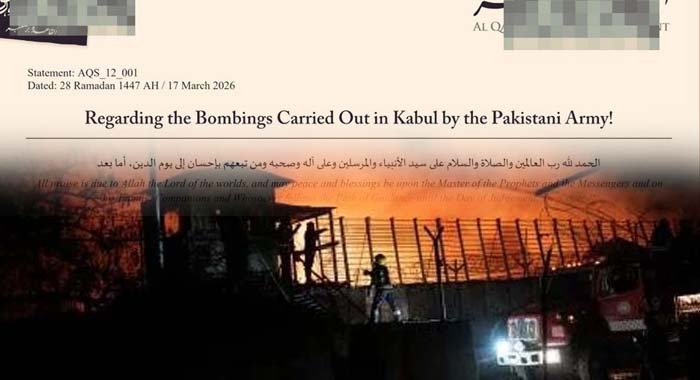
As tensions continue to simmer along the Pakistan-Afghanistan border, a fresh development has added new layers of complexity to the controversy surrounding an alleged airstrike in Kabul.
Hamdullah Fitrat, Deputy Spokesperson for the Islamic Emirate of Afghanistan, has released a detailed statement on his official X account along with a list containing the names of 492 individuals. According to the statement, these individuals, described as former patients or residents of the Omid Drug Rehabilitation Center, are alive, safe, and have been shifted to undisclosed secure locations following a reported incident at the facility.
The disclosure comes days after conflicting claims emerged regarding an alleged strike on the Omid Addiction Treatment Hospital, a large state-run drug rehabilitation complex in Kabul, late on March 16, 2026.
Earlier, Taliban officials, including Fitrat, had accused Pakistani forces of carrying out the strike, claiming it resulted in at least 400 fatalities and approximately 250 injuries. They further alleged that substantial portions of the facility were destroyed, with rescue efforts continuing in the aftermath.
However, the newly released list has raised critical questions. The document naming 492 individuals does not reference any deaths or missing persons, nor does it identify those allegedly killed or injured in earlier Taliban statements. The absence of such details has deepened uncertainty around the accuracy of the initial casualty figures.
Analysts note a growing discrepancy. If nearly 500 individuals associated with the facility have been accounted for as safe and relocated, it remains unclear how the reported figures of over 400 deaths and 250 injuries were calculated, and who exactly those victims might be.
The Omid Center itself has a complex history. Originally a former NATO training base, it was later converted into a drug rehabilitation facility and, at times, reportedly used for detention purposes. While officially designed to accommodate around 2,000 individuals, various reports suggest that the number of occupants has occasionally exceeded this capacity due to large-scale crackdowns on drug users in Kabul.
This context has further fueled skepticism. Observers question how a facility of this nature could simultaneously account for hundreds of confirmed safe relocations while also being the site of mass casualties on the scale initially claimed.
On the other side, Pakistani authorities have firmly rejected the allegations. Officials have described the claims as “false and misleading propaganda,” maintaining that any cross-border military actions were strictly aimed at militant infrastructure and terrorist hideouts, and not civilian or medical facilities.
The unfolding situation has intensified debate over the credibility of competing narratives, with some analysts suggesting the possibility of inflated figures being used to shape public perception during a period of heightened geopolitical strain.
Independent verification remains elusive. Limited access to the site, combined with an evolving security environment, has made it difficult for neutral observers to confirm either the casualty figures or the current condition of the facility.
As both sides stand by their respective claims, further clarity is expected to depend on additional disclosures from official channels, as well as assessments by international organizations and humanitarian agencies monitoring the situation.



