(Irfan Khan)
In the fog of modern conflict, truth is often the first casualty. Competing narratives emerge not merely as interpretations of events, but as strategic tools crafted, amplified, and weaponized. The recent claims surrounding Pakistan’s alleged airstrikes in Kabul offer a textbook example of how information, misinformation, and propaganda collide in a volatile geopolitical landscape.
At the center of this controversy lies a stark contradiction. On one hand, officials from the Afghan Taliban regime assert that Pakistan targeted a rehabilitation center in Kabul an institution purportedly housing vulnerable civilians. On the other hand, emerging testimonies, inconsistencies in official statements, and questionable use of visual evidence suggest a far more complex reality. The divergence between these narratives raises an urgent question: what truly happened, and who benefits from the version being told?
The initial claim, voiced by Taliban spokesperson Zabihullah Mujahid, framed the airstrike as an attack on a civilian rehabilitation facility. This assertion was further reinforced by references to a similar incident in Kandahar, where another “rehabilitation center” was allegedly struck. The repetition of this narrative across two separate incidents immediately invites scrutiny. Is it a coincidence or a carefully constructed storyline designed to evoke international sympathy and condemnation?
The credibility of this claim begins to unravel when examined against its own internal inconsistencies. Mujahid himself acknowledged that the Kabul facility in question was a 100-bed rehabilitation center. Yet, astonishingly, Taliban officials simultaneously claimed that over 400 people were killed in the same strike. This discrepancy is not a minor oversight; it fundamentally undermines the plausibility of the narrative. A facility with a capacity of 100 beds cannot logically account for four times that number in casualties unless additional, unacknowledged factors are at play.
Further complicating the narrative is testimony from individuals on the ground. A hospital patient, reportedly a security guard, stated that the targeted site was located approximately 200–300 meters away from the rehabilitation center. According to his account, the injuries sustained were a result of proximity not a direct hit on the facility itself. This statement aligns with an alternative explanation: that the intended target was not a civilian institution, but a nearby location of strategic significance.
Reports suggest that this nearby site may have functioned as a base camp housing weapons depots, ammunition stockpiles, and possibly drone operations infrastructure. If true, this would fundamentally shift the framing of the incident from an attack on civilians to a targeted strike against militant assets. It also raises a critical question: would any government, in any part of the world, establish a rehabilitation center in such close proximity to a sensitive military installation?
The answer, based on global norms, is almost certainly no. Across countries, including Pakistan, highly sensitive zones military bases, intelligence facilities, and diplomatic enclaves—are deliberately segregated from civilian infrastructure. The idea of placing a medical rehabilitation center adjacent to a weapons depot defies both logic and standard security protocols. This incongruity further weakens the Taliban’s claim and strengthens suspicions that the “rehabilitation center” narrative may serve as a cover for something else.
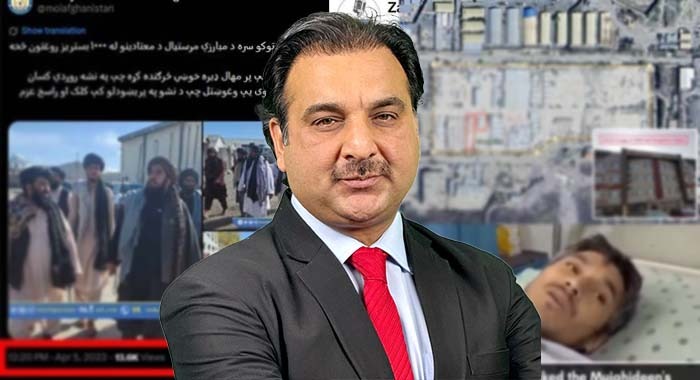
Equally troubling is the role of digital media in shaping perceptions of the incident. A video allegedly released by Taliban sources was later deleted after questions arose its authenticity. Screenshots of the video, however, continue to circulate, fueling further debate. The deletion itself raises important questions: if the content was accurate and verifiable, why remove it? The absence of a clear explanation only deepens skepticism.
Even more revealing is the use of imagery. A photograph shared by Taliban officials in connection with the recent attack was traced back to a 2023 incident, originally published by Afghanistan’s Ministry of Interior. The recycling of old images to depict new events is a classic hallmark of disinformation campaigns. It not only misleads audiences but also erodes the credibility of those who employ such tactics.
Beyond the immediate incident, a broader pattern emerges one that speaks to the control and suppression of information within Afghanistan. The Taliban regime has imposed strict restrictions on media coverage, particularly regarding sensitive security matters. The General Directorate of Intelligence (GDI) has reportedly warned citizens against capturing or sharing images of targeted locations, labeling such actions as crimes against the state.
This approach creates a paradox. On one hand, the regime actively disseminates its own narrative to the international community. On the other, it silences independent voices that might challenge or verify that narrative. In such an environment, the flow of information becomes one-sided, carefully curated to serve political objectives rather than reflect objective reality.
This information asymmetry also affects how international media reports on events in Afghanistan. With limited access to independent verification and increasing restrictions on journalists, global coverage often relies on official statements or secondhand accounts. This raises legitimate concerns about the accuracy and completeness of reporting particularly when dealing with claims as serious as civilian casualties.
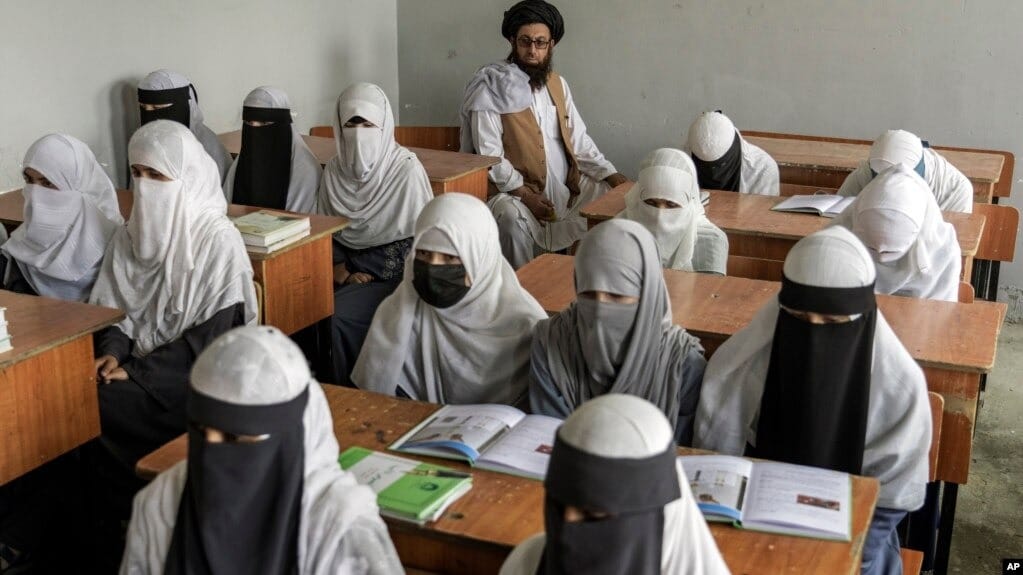
At the same time, the international community must grapple with its own inconsistencies. Issues such as restrictions on women’s education, human rights violations, and suppression of dissent in Afghanistan have been widely documented. Yet, the level of sustained attention and outrage often appears uneven. This inconsistency can inadvertently create space for selective narratives to gain traction, especially when they align with broader geopolitical tensions.
Returning to the Kabul airstrike, the key issue is not merely whether Pakistan conducted the operation, but whether the target and its characterization have been accurately represented. If militant infrastructure was indeed present at or near the site, then the framing of the strike as an attack on a rehabilitation center becomes deeply misleading. Conversely, if civilian facilities were knowingly placed in proximity to military assets, that itself raises serious ethical and legal concerns.
Ultimately, the truth likely lies beneath layers of competing claims, strategic messaging, and restricted access to independent verification. What is clear, however, is that the current narrative landscape is shaped as much by information control as by events on the ground.
For observers, analysts, and policymakers, this situation underscores the importance of critical thinking and evidence-based assessment. Accepting any single narrative at face value whether from state actors or non-state entities risks perpetuating misinformation and obscuring the realities of conflict.
In an era where digital content can be manipulated, recycled, or selectively presented, the burden of discernment falls not only on journalists and governments but also on the global audience. Every claim must be weighed against available evidence, every image scrutinized for context, and every statistic examined for consistency.
The Kabul airstrike controversy is not just a localized dispute; it is a reflection of a broader struggle over truth in modern warfare. As long as narratives remain contested and information remains controlled, the line between fact and fiction will continue to blur.
And in that blurred space, accountability becomes elusive, justice becomes complicated, and the real victims often civilians caught in the crossfire risk being overshadowed by the very narratives meant to represent them.
Only through transparency, independent verification, and a commitment to truth can that cycle be broken. Until then, the world is left navigating a landscape where every headline demands a deeper question: what are we really being told and what is being left out?