(Arshad Aziz Malik)
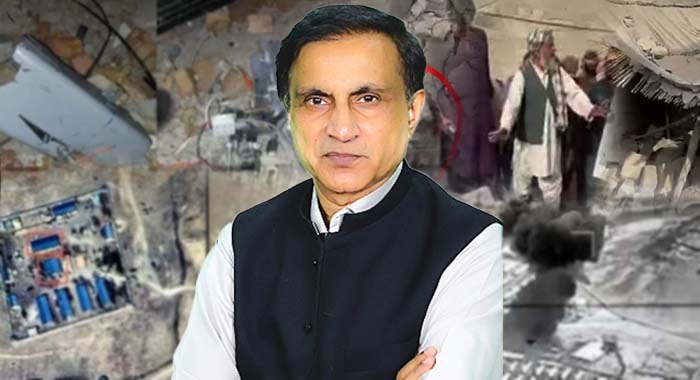
Pakistan is confronting a complex and evolving security environment in which emerging technologies, regional rivalries and internal governance challenges intersect. The recent targeting of drones by Pakistani security forces in the Kohat region of Khyber Pakhtunkhwa has once again raised fundamental questions about the sources of modern weaponry used by militant groups operating along the Pakistan-Afghanistan frontier. The issue is not simply about drones as isolated instruments of attack. Rather, it reflects a broader transformation in the nature of asymmetric warfare in the region, where non-state actors appear increasingly capable of accessing advanced technology, training and cross-border logistical support.
For Pakistan, this trend represents a critical strategic concern. In the past, militant groups relied primarily on conventional guerrilla tactics: ambushes, roadside improvised explosive devices, and sporadic attacks on checkpoints. Today, however, the battlefield has begun to shift toward technologically enabled operations. Unmanned aerial vehicles, once the exclusive domain of powerful states, have now entered the arsenal of irregular actors. This transition is altering the balance of conflict and complicating counterterrorism responses across the region.
Modern warfare has undergone a dramatic transformation in recent decades. Drones were initially introduced as reconnaissance tools designed to collect intelligence and monitor battlefields without exposing soldiers to direct risk. Over time, however, their capabilities expanded. Surveillance drones were fitted with weapon systems, enabling precision strikes from the air. Eventually, a third generation emerged—so-called “kamikaze” or loitering drones designed to fly toward a target and detonate upon impact. The presence of such systems in conflict zones across the Middle East and Eastern Europe has demonstrated their effectiveness as low-cost alternatives to traditional airpower. Their proliferation has also made them attractive tools for insurgent organizations seeking to bypass conventional military advantages held by states. In regions where borders are porous and illicit supply networks thrive, the spread of drone technology has become increasingly difficult to control.
The situation unfolding along the Pakistan-Afghanistan border must therefore be understood within this global context. Militants operating in parts of Khyber Pakhtunkhwa have reportedly attempted to deploy drones not merely for surveillance but also for attacks. This raises a fundamental question: how are such groups obtaining equipment that requires significant financial resources and technical expertise?
Afghanistan’s economic conditions provide little explanation for the availability of advanced weaponry among militant networks. The country has endured decades of war, political upheaval and economic fragility. Infrastructure remains limited, and many communities struggle to access basic services. Under such circumstances, the emergence of sophisticated drone capabilities among militant actors appears paradoxical. Several explanations have been proposed by analysts. One widely discussed factor is the vast quantity of military equipment left behind following the withdrawal of United States forces from Afghanistan in 2021. Reports suggested that billions of dollars’ worth of military hardware remained in the country, including vehicles, surveillance systems and other advanced technologies. While the exact composition of these inventories remains contested, the possibility that some equipment may have been diverted into illicit channels cannot be dismissed. Another explanation involves international smuggling networks. The global market for dual-use drone technology devices that can be used for both civilian and military purposes has expanded rapidly. Commercial drones manufactured in countries such as China and Turkey are widely available for legitimate activities like photography, agriculture and industrial inspection. However, once acquired, such devices can be modified to carry explosives or perform reconnaissance for militant groups.
Transnational smuggling routes already facilitate the movement of narcotics, weapons and other contraband across multiple continents. It is therefore plausible that similar networks could be used to transport drone components into conflict zones. In regions where state authority is weak or borders are difficult to monitor, such flows can occur with relative ease. Even if drones can be acquired through illicit channels, another challenge remains: operating them effectively requires training. Flying an unmanned aerial system particularly in a combat environment demands technical knowledge and experience. The question of who provides such training has become a point of concern for policymakers in Islamabad. Some observers believe that militant groups may be drawing upon individuals with prior military or engineering backgrounds who possess the necessary technical skills. Others suggest that expertise may be transferred through online platforms, where manuals and tutorials on drone modification and operation are widely accessible. The internet has significantly lowered the barriers to acquiring technical knowledge, enabling actors far removed from traditional military institutions to develop operational capabilities.
In addition, the experience gained in other conflict zones may play a role. Fighters who have participated in wars in Syria, Iraq or elsewhere often return with practical knowledge of modern battlefield technologies. Such cross-pollination of skills has been documented in numerous insurgent movements worldwide. The presence of advanced weaponry among militant groups has inevitably fueled suspicions of external involvement. In South Asia’s complex geopolitical environment, rivalries among regional powers frequently shape perceptions of security threats. Pakistan has long accused India of supporting destabilizing activities along its western frontier, while India rejects these allegations. The debate over external support to militant groups is therefore intertwined with broader diplomatic tensions between the two nuclear-armed neighbors. Similarly, intelligence agencies around the world have historically engaged in covert operations that employ proxy actors to advance strategic objectives. While concrete evidence is often difficult to obtain, such precedents contribute to an atmosphere of mistrust in which multiple states suspect each other of interference. It is important to note, however, that claims of foreign involvement must be examined carefully and supported by verifiable evidence. In the realm of security discourse, speculation can sometimes overshadow documented facts. For policymakers and analysts alike, the challenge lies in distinguishing between legitimate concerns and narratives driven by political rivalry.
Faced with the prospect of drone-enabled militancy, Pakistan has begun investing in counter-drone technologies. These systems range from electronic jamming equipment that disrupts communication between drones and their operators to kinetic methods designed to intercept unmanned aircraft before they reach their targets. Advanced counter-drone defenses can also take control of hostile drones and force them to land, allowing security agencies to analyze the device and trace its origins. Such capabilities are becoming an essential component of modern defense strategies worldwide. Countries from Europe to East Asia are rapidly developing counter-drone systems in response to the widespread use of unmanned aerial vehicles in contemporary conflicts. Pakistan’s ability to capture or neutralize drones may provide valuable intelligence. By examining recovered components, investigators can identify manufacturing origins, software configurations and communication frequencies. These details may help determine supply chains and reveal whether devices were commercially purchased, smuggled or modified locally.
The drone issue cannot be separated from the broader security situation along the Pakistan-Afghanistan border. Militant attacks against Pakistani security forces have increased in recent years, particularly in districts bordering Afghanistan. Many of these incidents have been attributed to the Tehrik‑e‑Taliban Pakistan (TTP), a militant group that has long sought to challenge the authority of the Pakistani state. Islamabad has repeatedly urged the authorities in Afghanistan to prevent militant groups from using Afghan territory as a base for attacks. Kabul, however, has often responded that security inside Pakistan is an internal matter. The resulting disagreement has complicated efforts to establish coordinated counterterrorism mechanisms between the two neighbors. Diplomatic channels remain active, and both sides periodically engage in dialogue aimed at reducing tensions. Yet mistrust continues to shape the relationship. The presence of militant sanctuaries, combined with the emergence of new technologies such as drones, has deepened security anxieties in Islamabad.
While external dynamics play a role in shaping Pakistan’s security environment, internal governance also remains a critical factor. In several areas of Khyber Pakhtunkhwa, reports have circulated on social media showing militants appearing openly in public spaces. Such incidents raise questions about the effectiveness of local law-enforcement mechanisms and the capacity of provincial authorities to maintain control over sensitive districts.
Security experts often emphasize that counterterrorism success depends not only on military operations but also on strong governance structures. Effective policing, intelligence coordination and public confidence in state institutions are essential components of long-term stability. Where governance gaps emerge, militant groups may attempt to exploit them to demonstrate influence or recruit supporters. Critics argue that political divisions within Pakistan sometimes hinder a unified response to security threats. Disagreements between federal and provincial authorities, as well as competing political narratives, can complicate policy implementation. In an environment where militants actively seek to exploit institutional weaknesses, such fragmentation poses additional challenges.
Pakistan’s security concerns must also be viewed against the backdrop of wider geopolitical changes. The Middle East remains in a state of flux, with conflicts and rivalries reshaping alliances across the region. Meanwhile, major powers such as China, Russia and the United States continue to pursue strategic interests that intersect with South Asia. These global dynamics influence local security calculations. For example, shifts in international alliances can affect the flow of weapons, technology and financial resources across borders. In addition, emerging conflicts elsewhere often divert global attention and resources, leaving regional actors to manage their own security challenges with limited external assistance. Pakistan has sought to maintain balanced relations with multiple partners, including Gulf states and regional powers. Diplomatic engagement, economic cooperation and defense partnerships are all part of Islamabad’s broader strategy to navigate an increasingly multipolar world. However, balancing these relationships while addressing domestic security threats requires careful policy coordination.
The rise of drone-enabled militancy underscores the need for a comprehensive security strategy that integrates technological, diplomatic and governance responses. Military operations alone cannot address the underlying drivers of instability. Instead, a multidimensional approach is required one that combines border management, intelligence cooperation, economic development and political dialogue. At the technological level, continued investment in counter-drone systems will be essential. Security agencies must also enhance their ability to track illicit supply chains and disrupt smuggling networks that facilitate the movement of advanced equipment. Diplomatically, Pakistan and Afghanistan must find ways to rebuild trust and establish mechanisms for joint counterterrorism efforts. While political differences remain significant, both countries share a common interest in preventing militant groups from destabilizing the region. Finally, strengthening governance in affected areas is indispensable. Effective policing, transparent administration and inclusive development policies can reduce the appeal of militant narratives and reinforce public confidence in the state.
The appearance of drones in militant operations represents more than a technological curiosity. It signals a shift in the character of conflict along Pakistan’s western frontier one that blends traditional insurgency with modern warfare tools. Addressing this challenge will require not only tactical responses but also strategic foresight. Pakistan stands at a critical juncture. The country’s ability to adapt to new security realities, manage regional relationships and strengthen internal institutions will determine whether emerging threats can be contained. As technological innovation continues to reshape the battlefield, policymakers must recognize that the struggle against militancy is evolving—and that effective responses must evolve with it.