
Pakistan’s military has framed its recent cross-border action not only as retaliation but also as a response to what it describes as continuing violations of commitments made by the Afghan Taliban regime.
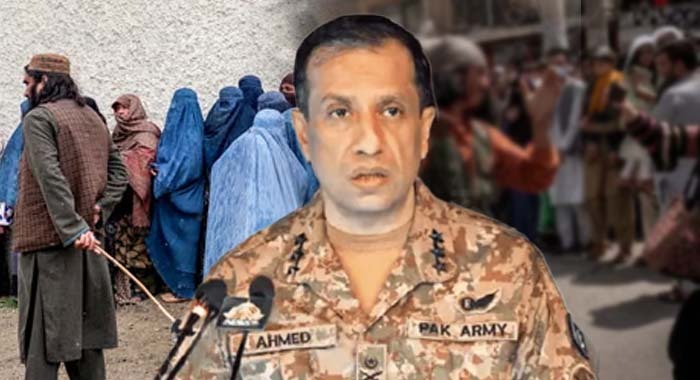
During a detailed media briefing, Director General of the Inter-Services Public Relations, Lieutenant General Ahmed Sharif Chaudhry, said 274 militants were killed in precision strikes targeting 22 locations across Afghanistan. The sites included militant hideouts, command facilities and logistical positions allegedly used to launch attacks inside Pakistan.
He said Pakistan acted after concluding that Afghan territory was being used as a base for cross-border militancy. According to the military spokesperson, seven areas across three Afghan provinces were identified as operational origins of attacks against Pakistan.
Operation Ghazab Lil Haqq will continue until its objectives are fully achieved.
Security Guarantees Under Question
The DG ISPR questioned whether the Afghan Taliban regime has honored assurances that Afghan soil would not be used against other countries.
Pakistan’s position, as reflected in the briefing, suggests that sovereignty is viewed not only as territorial control but also as responsibility. If territory is allowed to be used for transnational militant activity, it creates what Islamabad describes as a security obligation gap.
The message carried a diplomatic undertone: Pakistan is assessing actions, not statements.
Governance Pledges and Women’s Rights Commitments
The military spokesperson also raised concerns over broader promises made by the Taliban, including those related to governance standards and the protection of women’s rights.
By linking security and social commitments, the briefing expanded the conversation beyond military confrontation. The implication was that credibility in international relations is measured by the consistency between pledges and practical implementation.
The DG ISPR asked whether assurances given to the international community regarding rights protection had been translated into policy reality inside Afghanistan.
Inclusive Government Question
Another key issue highlighted during the briefing was the question of political inclusivity in Kabul.
The spokesperson asked whether the current Afghan administration reflects the principle of inclusive governance, a commitment that has been repeatedly discussed in international diplomatic forums since the Taliban’s return to power.
The absence of broad-based representation, according to the framing used in the briefing, remains a concern for regional stability and political legitimacy.
Strategic Message
The briefing signaled a shift from purely operational communication to a broader narrative covering security enforcement, governance credibility and diplomatic responsibility.
While providing operational figures, including 274 militant casualties and destruction of multiple militant positions, Pakistan maintained that the strikes were conducted with precision and without civilian casualties.
The overarching message from Islamabad was that cross-border terrorism, in its view, cannot be separated from questions of state responsibility, governance commitments and regional security stability.



