
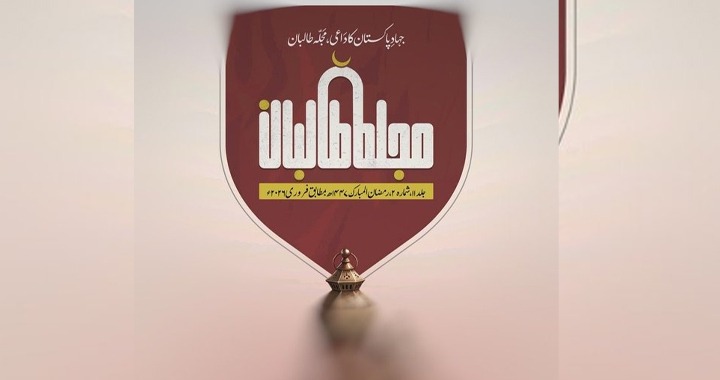
The banned militant outfit Tehrik-i-Taliban Pakistan (TTP) has released the February edition its 11th issue of its flagship propaganda magazine Mujala Taliban, intensifying its campaign of disinformation, ideological indoctrination, and anti-state rhetoric.
Security analysts describe the publication as a calculated attempt to rehabilitate the group’s image and expand its influence by exploiting politically sensitive issues, particularly the longstanding dispute surrounding the Durand Line.
The editorial section of the magazine focuses heavily on criticism of Pakistan’s policies regarding the Durand Line, portraying the issue in a manner designed to stir nationalist sentiment and gain sympathy within Afghan public circles. Experts warn that this approach reflects a deliberate propaganda strategy aimed at manipulating cross-border sensitivities and driving wedges between neighboring communities.
Observers note that by inserting itself into a complex geopolitical debate, the TTP is attempting to rebrand its violent campaign as a political cause despite its long record of deadly attacks against civilians, security forces, and public institutions.
The issue also features a speech attributed to TTP chief Noor Wali Mehsud, in which he links the situation in Gaza with calls for so-called “jihad,” attempting to frame global conflicts as justification for armed militancy. Analysts describe this narrative as a classic extremist tactic appropriating international events to legitimize local violence and radicalize followers.
Security experts caution that such rhetoric is intended to inflame emotions, recruit impressionable individuals, and sustain militant morale rather than contribute constructively to political discourse.
In another section, the magazine presents the holy month of Ramadan as a period of “piety, sacrifice, and armed struggle,” urging supporters to strengthen internal support networks. Authorities have strongly condemned this characterization, calling it a distortion of religious teachings to serve violent objectives.
The publication further includes ideological guidance for militants, sharply worded political criticism, stylized operational reports aimed at glorifying attacks, and militant-themed poetry all hallmarks of extremist propaganda designed to romanticize violence and sustain recruitment pipelines.
Counterterrorism officials emphasize that such publications are part of a broader information warfare campaign aimed at spreading radical ideology and sustaining operational networks. The TTP remains a proscribed organization under Pakistani law, responsible for numerous acts of terrorism that have claimed thousands of lives.
Authorities reaffirm their commitment to combating both the physical and digital manifestations of extremism. Monitoring of online propaganda channels continues, and citizens are urged to remain vigilant against attempts to disseminate or amplify extremist material.
Security analysts conclude that the latest edition of Mujala Taliban underscores the group’s continued reliance on propaganda to mask its violent agenda. Despite efforts to reshape its narrative, the TTP’s record of militancy and destabilization remains unchanged.



