
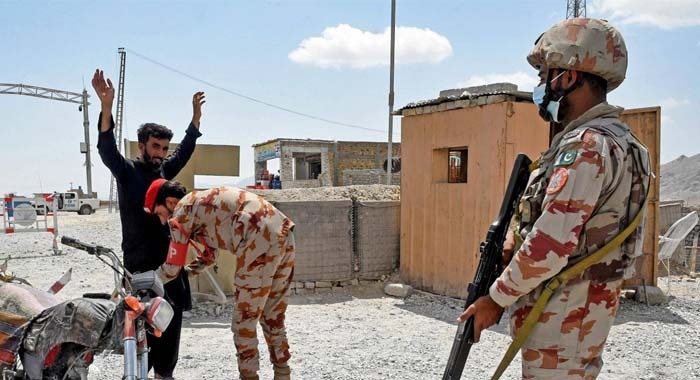
In a decisive escalation of counterterrorism efforts, security forces in Balochistan have delivered one of the most significant blows to militant networks in recent months. Operations carried out by the Counter Terrorism Department (CTD) in Quetta and Barkhan resulted in the elimination of 14 militants linked to banned extremist organizations. The operations, marked by intense exchanges of fire, also led to the martyrdom of two police personnel, while three others sustained injuries.
According to official sources, the militants were affiliated with proscribed outfits identified as Fitna al-Khawarij and Fitna al-Hindustan labels authorities use for networks accused of waging a coordinated campaign to destabilize the state. The scale and simultaneity of the operations indicate that security agencies were acting on actionable intelligence pointing to imminent threats.
The significance of these developments extends beyond the tactical success of neutralizing armed militants. Security officials suggest that the recent uptick in violence reflects a broader transformation in militant strategy. Once largely concentrated in remote or mountainous terrain, extremist networks are now attempting to expand their operational footprint closer to urban centers. This shift is widely seen as an effort not only to inflict casualties but also to undermine public confidence, strain law enforcement capacity, and project an image of persistent instability.
The timing of the renewed wave of violence is also notable. Regional dynamics have grown increasingly complex following political changes in neighboring Afghanistan, altering border security realities and complicating intelligence coordination. Pakistani officials have repeatedly expressed concern that hostile elements are exploiting cross-border sanctuaries to orchestrate attacks inside the country.
In a recent interview with France 24, Defense Minister Khawaja Asif stated that Pakistan would not hesitate to conduct air operations within Afghanistan if its territory continued to be used for attacks against Pakistan. He characterized the current security challenge as part of a broader “proxy war,” alleging that anti-Pakistan elements are receiving support from networks operating out of Afghan soil in coordination with India.
While such statements reflect rising frustration within official circles, they also underscore the delicate balance Pakistan must maintain between safeguarding sovereignty and avoiding further regional escalation. Cross-border action carries diplomatic and strategic implications that extend beyond immediate security objectives.
Analysts point out that terrorism today is as much about perception as it is about physical violence. Modern militant campaigns frequently combine armed attacks with digital propaganda, sectarian rhetoric, and exploitation of economic grievances. The objective is multidimensional: erode trust in institutions, deter foreign investment, and amplify narratives of fragility. In provinces like Balochistan rich in natural resources and central to major connectivity and infrastructure initiatives sustained instability can have ripple effects on national development goals.
Pakistan’s counterterrorism campaign over the past two decades has come at immense cost. Thousands of civilians and security personnel have lost their lives, and the economic toll has been measured in billions of dollars. Yet officials maintain that the state’s resolve remains intact. Intelligence-based operations continue across sensitive districts, with authorities emphasizing that dismantling extremist networks requires both kinetic action and long-term policy consistency.
Beyond the battlefield, there is growing recognition that sustainable peace demands parallel reforms. Implementation of national counter-extremism frameworks, disruption of terror financing channels, regulation of hate speech, judicial efficiency, and socio-economic inclusion particularly in historically marginalized regions are frequently cited as essential pillars of a comprehensive strategy. Security experts argue that without addressing structural vulnerabilities, tactical victories may not translate into enduring stability.
The latest CTD operations serve as a reminder that while militant capabilities have been degraded over the years, they have not been entirely extinguished. The threat has evolved, adapting to shifting regional circumstances and internal fault lines. For Pakistan, the challenge now lies not only in neutralizing armed cells but in safeguarding economic momentum, strengthening institutional resilience, and maintaining national unity in the face of complex hybrid threats.
As investigations continue in Quetta and Barkhan, authorities reiterate their commitment to uninterrupted operations against all proscribed outfits. The message from security circles is unequivocal: the campaign against terrorism will proceed with resolve, but its ultimate success will depend on a coordinated national effort that combines security, diplomacy, economic stability, and political consensus.



