
Pakistan’s security forces have thwarted two major terrorist plots in swift, high-intensity operations in Bajaur and Karachi, preventing what officials describe as a calculated attempt to plunge the country into widespread instability and fear.
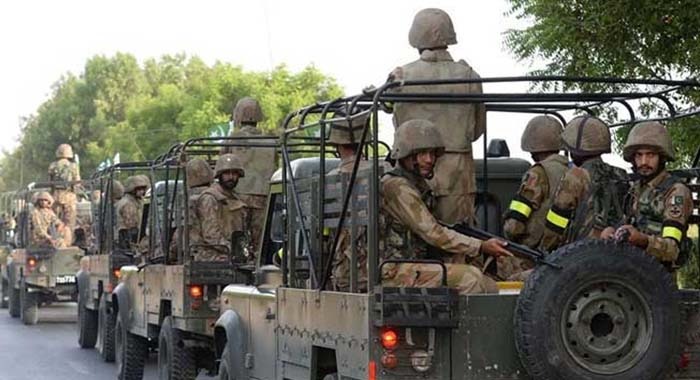
In Bajaur, terrorists launched a coordinated assault on a joint security checkpoint, deploying a vehicle-borne suicide explosive device in an effort to breach defenses and inflict maximum damage. Security personnel responded decisively, eliminating 13 militants after a fierce exchange of fire. Eleven brave servicemen embraced martyrdom while holding their ground and preventing the attackers from advancing into civilian areas. The explosion damaged the checkpoint’s structure and nearby residential buildings, underscoring the attackers’ intent to spread fear beyond the battlefield and into the heart of the community.
Hundreds of miles away, in Karachi’s Shah Latif Town, the Counter-Terrorism Department (CTD) intercepted another unfolding threat. In a high-risk operation, law enforcement personnel engaged heavily armed militants who were reportedly preparing explosive materials. Four terrorists were neutralized in a gun battle that security officials say likely prevented a catastrophic attack in the country’s largest economic center.
Taken together, these incidents reveal more than isolated acts of violence. Authorities believe they form part of a broader and coordinated campaign aimed at destabilizing Pakistan simultaneously at its security frontlines and its economic core. The choice of targets—a border checkpoint and the nation’s financial capital reflects a deliberate strategy: weaken state defenses while undermining economic confidence.
The Bajaur assault demonstrated tactical sophistication, combining suicide explosives with armed aggression to overwhelm defenses. Its psychological objective was equally clear—create a perception of vulnerability in sensitive border regions and project the message that no location is beyond reach.
The Karachi operation exposed a parallel effort to infiltrate urban centers. Had the plot succeeded, the consequences for public safety, investor confidence, port activity, and industrial output could have been severe. Officials stress that terrorism today is not confined to battlefield casualties; it is designed to erode public trust, damage economic stability, and generate sustained uncertainty.
Security authorities note that Pakistan has repeatedly highlighted the risk of cross-border networks and external facilitation of militant elements. The complex terrain along regional borders, combined with shifting political realities in neighboring Afghanistan, presents operational challenges that hostile actors may attempt to exploit. Longstanding regional tensions further complicate the security environment, increasing the risk of proxy strategies aimed at indirect destabilization.
At the same time, officials emphasize that internal vulnerabilities ranging from ideological radicalization to technological exploitation of digital platforms require urgent and coordinated response. While large-scale military operations in past years dismantled major militant strongholds, residual networks and extremist narratives continue to evolve.
Pakistan’s response framework now extends beyond kinetic operations. Authorities are strengthening integrated intelligence coordination, deploying advanced surveillance technologies, enhancing cyber monitoring, and reinforcing border management systems. Financial tracking mechanisms are being upgraded to disrupt funding streams that sustain terrorist networks.
Equally critical is the ideological dimension. Religious scholars, educators, and media leaders are being called upon to counter extremist propaganda and reinforce constitutional values, tolerance, and civic responsibility. Long-term stability depends not only on eliminating militants but on dismantling the narratives that enable recruitment.
Socioeconomic development in vulnerable and border regions remains a cornerstone of sustainable peace. Expanding infrastructure, education, healthcare, and employment opportunities strengthens public trust and reduces susceptibility to radicalization. Community engagement initiatives are being revitalized to ensure that local populations remain partners in safeguarding their own security.
Diplomatically, Pakistan intends to continue engaging regional and international forums with evidence-based advocacy, emphasizing that cross-border terrorism and any form of external support for militant networks are unacceptable under international law. Constructive dialogue, even amid strained relations, remains essential to prevent escalation and miscalculation.
Officials describe the current moment as pivotal. The recent attacks demonstrate both the persistence of hostile elements and the resilience of Pakistan’s security institutions. While immediate threats have been neutralized, vigilance remains paramount.
The message from Islamabad is resolute: the sacrifices of the martyrs will not be in vain. Through unity, technological modernization, strategic diplomacy, and comprehensive reform, Pakistan aims not only to contain this renewed wave of terror—but to extinguish its roots before the silence breaks again.



