
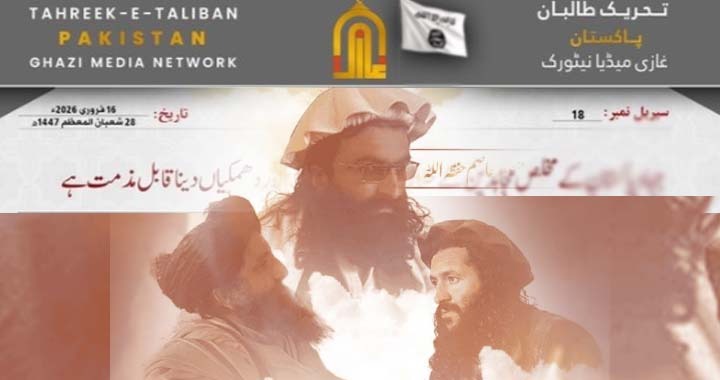
Recent developments within Pakistan’s militant landscape have revealed growing divisions between two notorious extremist organizations, Jamaat-ul-Ahrar (JuA) and Tehreek-i-Taliban Pakistan (TTP), raising further concerns about the continued destabilizing influence of these groups. For the first time, JuA issued a statement in the name of its former spokesperson, Asad Mansoor, rather than through its previously affiliated propaganda platform, Ghazi Media Network. In the statement, the group openly identified itself as a faction of the TTP while simultaneously condemning senior TTP leadership.
The emergence of this statement follows warnings by Mufti Burjan, a senior TTP leader, who publicly threatened JuA with strict measures for allegedly operating a parallel network in competition with the TTP. JuA’s response, attributed to Asad Mansoor, not only rejected these warnings but also leveled serious accusations against TTP leadership, exposing the deep fissures within these already notorious extremist entities.
Security analysts note that the move to issue statements under a personal spokesperson’s name rather than an established media wing signals a significant evolution in JuA’s operations. This development reflects the group’s increasing autonomy and willingness to publicly challenge its parent organization, emphasizing its ongoing dedication to extremist agendas rather than any political or social legitimacy.
The internal conflict between JuA and TTP underscores the broader threat posed by militant networks in Pakistan. Both groups continue to pursue violence, intimidation, and destabilization, exploiting sectarian, ideological, and territorial fault lines. Observers warn that such infighting does not diminish their threat; rather, it increases unpredictability, heightens the potential for uncoordinated attacks, and exposes civilians to the ongoing consequences of their extremist campaigns.
Officials highlight that the trajectory of these groups is a clear reminder that they operate entirely outside the framework of law and governance. Rather than contributing to any meaningful political discourse, both JuA and TTP continue to engage in tactics that perpetuate terror, sow division, and undermine national and regional security. The apparent divergence between the two groups may soon lead to a formal split, further complicating counterterrorism efforts and expanding the operational footprint of extremists within Pakistan.
The Government of Pakistan and security agencies remain committed to monitoring these developments closely, countering extremist propaganda, and neutralizing the operational capabilities of groups such as JuA and TTP. Authorities reaffirm their zero-tolerance stance toward terrorism, emphasizing that militant infighting, factionalism, and public spats do not legitimize their actions but instead highlight their destructive and lawless nature.



