
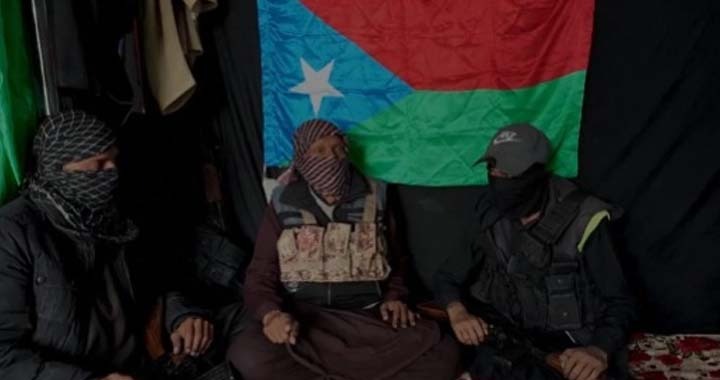
The Government of Pakistan has taken serious notice of a recently circulated video statement attributed to the banned terrorist organizations Baloch Liberation Army (BLA) and Baloch Nationalist Army (BNA), in which the groups claim responsibility for recent acts of violence and attempt to issue ultimatums to the State of Pakistan.
In the video message, these outlawed outfits demand the release of detained individuals, including convicted Indian operative Kulbhushan Jadhav, along with other militants described as their commanders. The inclusion of Jadhav’s name a figure convicted on charges of espionage and sabotage further underscores the questionable motivations and external dimensions often associated with such violent networks.
The statement contains explicit threats of large-scale attacks across Balochistan should their demands not be met. Such rhetoric reflects the familiar playbook of terrorist organizations that rely on fear, coercion, and propaganda rather than any legitimate political mandate. Security analysts note that groups resorting to ultimatums and violence are not demonstrating strength, but rather exposing their strategic desperation and lack of public support.
The BLA and BNA remain proscribed under Pakistani law due to their long record of attacks on civilians, security personnel, and critical infrastructure. Their violent campaigns have repeatedly targeted innocent citizens in an attempt to undermine development initiatives and destabilize the province. These actions stand in stark contrast to the aspirations of the people of Balochistan, who seek peace, economic opportunity, and political stability within the constitutional framework of Pakistan.
Observers further point out that recurring allegations regarding external facilitation particularly claims of linkages with India’s Research and Analysis Wing (RAW) — continue to shadow these organizations. While such matters remain subject to ongoing investigation and diplomatic discourse, it is evident that the messaging strategy employed by these groups aims to amplify fear, generate media attention, and exert psychological pressure rather than engage in lawful or constructive dialogue.
The Government of Pakistan reiterates its unwavering commitment to safeguarding national sovereignty and protecting the lives and property of all citizens. Security forces remain fully vigilant and prepared to counter any attempt to disrupt peace in Balochistan or elsewhere in the country. Enhanced coordination among intelligence and law enforcement agencies continues to ensure that terrorist threats are identified, disrupted, and neutralized.
Pakistan’s stance remains clear: political grievances, where they exist, must be addressed through constitutional and democratic channels not through violence, intimidation, or foreign-backed destabilization efforts. Attempts to blackmail the state through terror will neither weaken national resolve nor derail ongoing efforts toward development and integration in Balochistan.
At this critical juncture, unity, resilience, and adherence to the rule of law remain the strongest response to those who seek to divide and destabilize. The State of Pakistan stands firm, and its institutions remain fully committed to defeating terrorism in all its forms.



