
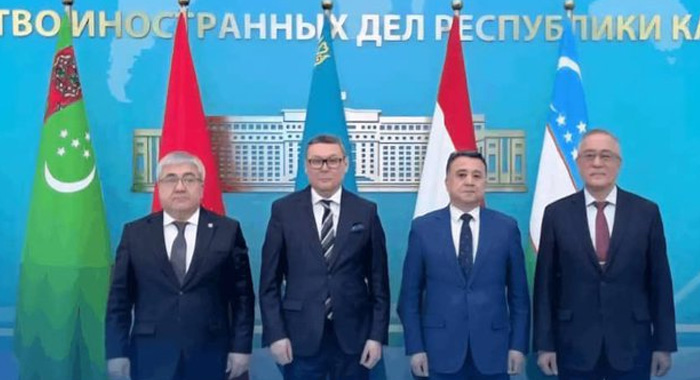
An emergency meeting of the Regional Contact Group of Central Asian Special Representatives on Afghanistan was convened at the Ministry of Foreign Affairs of the Republic of Kazakhstan in Astana, in response to the deteriorating situation in Afghanistan and its growing impact on regional security and stability.
The high-level consultations brought together senior representatives from Kyrgyzstan, Tajikistan, Uzbekistan, and Kazakhstan. The meeting reflected mounting regional concern over Afghanistan’s persistent instability, economic collapse, humanitarian distress, and the proliferation of security threats emanating from its territory.
Participants conducted a comprehensive assessment of Afghanistan’s current trajectory, noting with deep concern the ongoing political uncertainty, weakened state institutions, shrinking economic activity, rising poverty levels, and severe limitations on basic rights and freedoms. Delegations underscored that the absence of inclusive governance, coupled with fragile security conditions and limited international engagement, continues to hinder prospects for sustainable recovery.
Particular attention was paid to the heightened risks posed by extremist groups, cross-border criminal networks, illicit trafficking, and unmanaged migration flows. Representatives emphasized that the volatile security environment in Afghanistan remains a direct source of concern for neighboring states and requires sustained vigilance, enhanced border management, and coordinated counterterrorism efforts.
Despite the gravity of the situation, participants acknowledged the strategic importance of pragmatic engagement aimed at preventing further destabilization. Discussions explored carefully calibrated approaches to engagement with Kabul, focused on safeguarding regional security interests while encouraging responsible behavior, economic normalization, and constructive international interaction.
The meeting also addressed the constrained state of trade and economic exchange with Afghanistan. While recognizing the country’s geographic position as a potential transit hub, participants noted that ongoing insecurity, weak regulatory frameworks, and infrastructure deficiencies significantly impede the realization of regional connectivity projects. Delegations stressed that meaningful economic integration will remain unattainable without measurable improvements in governance, stability, and rule of law.
The representatives reaffirmed that the worsening humanitarian situation in Afghanistan characterized by widespread poverty, food insecurity, and limited access to essential services continues to demand close monitoring and coordinated regional responses. They emphasized that sustainable development cannot take root in an environment marked by instability and systemic fragility.
Concluding the consultations, participants underscored the critical importance of maintaining regular coordination and institutionalized dialogue among Central Asian states. They agreed that a unified and realistic regional approach is essential to mitigate emerging risks, prevent spillover effects, and promote conditions conducive to long-term peace and stability.
The Regional Contact Group will continue to meet as necessary to assess developments and coordinate collective responses to the evolving situation in Afghanistan.



