
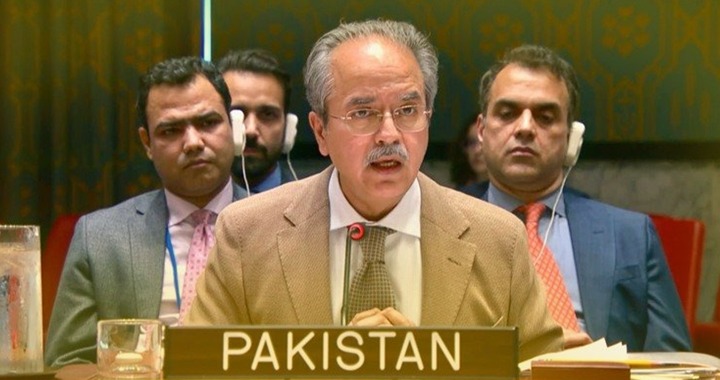
Pakistan’s Permanent Representative to the United Nations, Asim Iftikhar Ahmad, has welcomed the UN Security Council’s unanimous decision to extend the mandate of the 1988 Taliban sanctions monitoring team, emphasizing that Afghanistan must carefully choose its path toward peace and stability. Ahmad described the extension as a “clear, unambiguous message” to the Taliban, reinforcing the international community’s commitment to accountability and counterterrorism efforts.
Speaking on the occasion, Ambassador Ahmad called on the sanctions monitoring team to continue proactive reporting and fully support the work of the UN Security Council Sanctions Committee under Resolution 1988, which is designed to hold the Taliban accountable for actions that threaten regional and global security.
The extension comes amid continued international concern over the Taliban’s conduct in Afghanistan, including the use of hostages as tools for diplomatic leverage. Zabihullah Mujahid, spokesperson for the Taliban, criticized the decision, describing sanctions as “unsuccessful” and urging Western nations to reconsider their approach.
Several key Security Council members, including China, Russia, and Pakistan, expressed strong support for the mandate extension, stressing the importance of sustained measures to prevent Afghanistan from becoming a hub for terrorism. The United States, meanwhile, warned that the Taliban could exploit hostages for political bargaining and emphasized that Resolution 1988 remains vital in maintaining international accountability. Deputy U.S. Ambassador Tami Bruce condemned hostage-taking tactics and reaffirmed the resolution’s importance in countering Taliban misuse of detainees.
Resolution 1988, first established in June 2011, monitors compliance with UN sanctions including asset freezes, travel bans, and arms restrictions against individuals and entities linked to the Taliban. It is a key mechanism for ensuring that the Taliban cannot operate with impunity or undermine regional stability.
During Security Council discussions, China stressed the urgent need to combat ISIS and Al-Qaeda activities within Afghanistan, asserting that the country must not be used to threaten regional security. Russia emphasized the priority of counterterrorism measures, noting that sanctions enforcement should focus on neutralizing threats rather than serving as a political tool.
Ambassador Ahmad noted that the Security Council’s decision sends a strong signal to the Taliban to comply with international obligations, choose peace, and prevent Afghanistan from becoming a base for terrorism. He underscored that Pakistan remains committed to supporting regional stability and encouraging dialogue that advances security, development, and human rights in Afghanistan.
The extension of the sanctions monitoring mission reinforces the international community’s resolve to hold the Taliban accountable while continuing to work toward a peaceful and stable Afghanistan that does not threaten regional or global security.



