
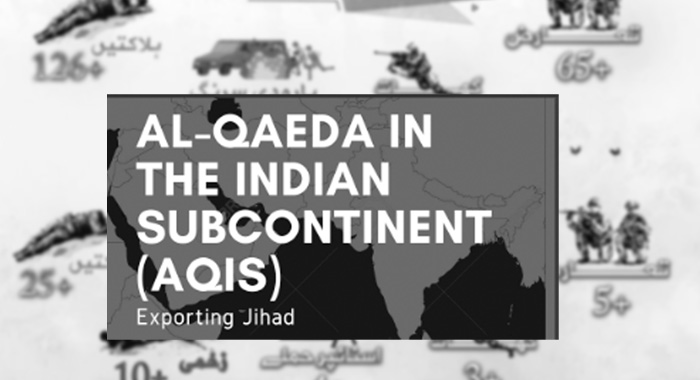
The latest edition of the official publication of Al‑Qaeda in the Indian Subcontinent (AQIS), Nawa‑e‑Ghazwa‑e‑Hind, has once again drawn global and regional security scrutiny with its controversial presentation of militant networks. In a graphic titled “Overview of the Operations of Global Jihadist Fronts,” AQIS placed the Pakistan‑based faction Ittehad‑ul‑Mujahidin Pakistan (IMP) alongside internationally recognised extremist entities such as Al‑Shabaab and Jama’at Nusrat al‑Islam wal‑Muslimin (JNIM). This inclusion amplifies growing international concern over the interconnected nature of jihadist propaganda and the evolving security landscape in South Asia.
The mention of IMP within AQIS’s propaganda narrative appears to reflect more than ideological solidarity; it underscores the manner in which violent extremist elements that have operated in and around Pakistan are increasingly influenced and bolstered by conditions in neighbouring Afghanistan. Since the return of the Taliban to power in Kabul in August 2021, Pakistan’s national security apparatus has consistently warned that militant groups, including Tehreek‑e‑Taliban Pakistan (TTP) and other jihadist formations, benefit from sanctuaries, logistical support and permissive terrain across the border. Islamabad has repeatedly described Afghan soil as a de facto sanctuary for extremist actors who train, regroup and cross back into Pakistan to perpetrate violence, a reality highlighted in recent diplomatic statements to the United Nations where Pakistan framed terrorism from Afghan territory as one of the gravest threats to its security.
IMP itself is a coalition that emerged in 2025, comprising factions such as Harakat Inqilab Islami Pakistan (IIP) and others that seek to assert militant influence inside Pakistan. The broader operational context in which IMP functions includes not just local dynamics but also regional militant cooperation and strategic relocation patterns. Many analysts note that the Taliban’s control of Afghanistan has inadvertently provided a permissive environment in which militant leaders and fighters displaced from Pakistan by earlier counter‑terrorism measures have found refuge, access to resources, and opportunities for cross‑border movement.
According to Foreign Office briefings and United Nations assessments, militants based in Afghanistan have repeatedly attempted to infiltrate Pakistan, often launching attacks against civilians and security forces. Pakistan has publicly advocated international cooperation to compel Afghan authorities to dismantle these sanctuaries and deny safe havens, a call that underscores Islamabad’s view that unchecked extremist proliferation jeopardises not only its own citizens but also regional stability.
The portrayal of IMP in Nawa‑e‑Ghazwa‑e‑Hind therefore carries tangible implications for security professionals and policymakers. It reflects how extremist groups seek to exploit political vacuums, weak governance and geopolitical fault lines to project strength and sustain recruitment narratives. For Pakistan, the concern is not merely ideological affiliation but the real and present danger posed by relocated militant networks operating with near impunity on Afghan territory and maintaining influence inside Pakistan. Such developments underscore the complex transnational dimensions of terrorism in the region and the urgent need for coordinated counter‑terrorism strategies.
Pakistan remains committed to combating all forms of violent extremism and continues to urge the international community and neighbouring states to support efforts that address the root causes of radicalisation, disrupt cross‑border militant movement, and enhance intelligence cooperation. The inclusion of IMP in AQIS’s latest propaganda material should serve as a stark reminder that extremist narratives are increasingly intertwined with on‑the‑ground security realities, necessitating a unified response that transcends borders.



