
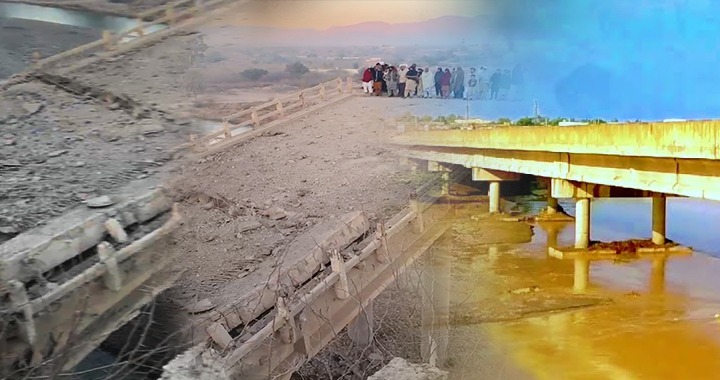
The recent pattern of landmine blasts and improvised explosive attacks on bridges across North Waziristan, and adjoining southern as well as tribal districts, reflects a tactical shift that extends far beyond hit and run violence against security personnel. What is emerging instead is a deliberate campaign to fracture mobility arteries, isolate population clusters, and shape the battlespace in advance of larger militant designs.
Over the past months, multiple bridge destructions along critical link routes have been reported, particularly on the Bannu, Miranshah, and Jani Khel axes. Among the most consequential incidents are the blasts at Bannu–Miranshah Road near Baka Khel, the Baka Khel–Khaisoor link bridge in Tehsil Mir Ali, the smaller but strategically vital Baka Khel–Khaisoor crossing, the Show–Tal Road bridge, and the intra city Bannu bridge structure. Additional attacks on Jani Khel–Sra Dargah and Bannu–Jani Khel bridges further reinforce the geographic clustering of these incidents.
Security officials note that even smaller tehsil level crossings have not been spared. While such structures may appear minor on administrative maps, in tribal terrain they function as lifelines, sustaining civilian evacuation routes, troop logistics, medical access, and supply corridors.
This widening sabotage footprint is accompanied by parallel attacks on mobile communication towers and fiber infrastructure. The dual targeting of physical mobility and digital connectivity indicates doctrinal planning rather than sporadic militancy.
Militant Intent, From Disruption to Territorial Conditioning
The destruction of bridges in insurgency theatres historically signals preparation, not desperation.
By dismantling connective infrastructure, militant groups aim to produce three layered operational advantages.
First, they restrict rapid deployment capability of security forces. Armored and logistical movement in tribal districts is heavily road dependent. Even a single destroyed culvert can delay reinforcement by hours, sometimes days.
Second, they generate civilian isolation. Populations cut off from administrative centers become more vulnerable to coercion, recruitment pressure, and propaganda penetration.
Third, they create segmented conflict zones. Fragmented terrain allows militants to convert pockets into temporary safe havens, training grounds, or weapons storage corridors.
The clustering of bridge blasts around Jani Khel is particularly instructive. With three directional access points damaged, the area risks being shaped into a semi insulated militant pocket. Such geographic conditioning mirrors insurgent playbooks observed in other theatres where peripheral isolation precedes major attacks.
Recent Incident Pattern Across the Southern Tribal Belt
Field reporting and security briefings from the same duration indicate that the bridge attacks are part of a broader escalation grid across southern and former FATA districts.
Recent weeks have witnessed:
• Landmine detonations targeting patrol routes in Mir Ali and Datakhel, injuring security personnel and damaging convoy vehicles.
• IED strikes along the Razmak corridor, aimed at disrupting military supply convoys moving between North and South Waziristan.
• Explosive sabotage of culverts along Tank–Wana Road, temporarily suspending civilian and commercial traffic.
• Destruction of mobile towers in Shawal Valley, causing communication blackouts that lasted several days.
• Rocket and grenade attacks on check posts in Spinwam and Ghulam Khan sectors, often timed after infrastructure sabotage to exploit slowed reinforcement.
In Bannu’s periphery, multiple low intensity blasts on road shoulders have been recorded, widely assessed as route shaping operations rather than direct casualty seeking attacks.
The pattern suggests militants are mapping and softening mobility grids before attempting higher impact assaults.
Strategic Echoes from the Balochistan Theatre
Security analysts increasingly draw operational parallels between this bridge targeting campaign and recent infrastructure focused attacks in Balochistan by separatist groups.
In Balochistan, transport corridors, railway tracks, and remote security posts were first isolated through infrastructure sabotage before coordinated high visibility attacks were launched.
The replication risk lies not in ideological overlap, but in tactical imitation. Militant ecosystems often borrow operational successes irrespective of organizational identity.
If such convergence is underway, North Waziristan may be witnessing the preparatory phase of complex, multi node assaults rather than stand-alone sabotage incidents.
Psychological and Governance Impact
Infrastructure attacks generate psychological ripples that exceed their physical damage.
For civilians, destroyed bridges translate into:
• Restricted medical access
• School disruptions
• Market supply shortages
• Delayed humanitarian assistance
For governance structures, they erode administrative writ. When state mobility is visibly constrained, militant narratives portraying state weakness gain traction.
This perception warfare dimension is central. Militants understand that governance paralysis, even temporary, amplifies their strategic messaging.
Why Bridges, Not Just Bases
Security installations are hardened targets. Bridges are not.
Attacking infrastructure allows militants to:
• Avoid direct confrontation
• Conserve manpower
• Inflict economic cost
• Maintain operational tempo
Moreover, repeated infrastructure repair cycles drain state resources, both financial and logistical, creating a sustainability burden.
In mountainous terrain, rebuilding even small bridges requires engineering corps deployment, heavy machinery escort, and extended security cover, all of which stretch operational bandwidth.
Indicators of Future Escalation
Three indicators will determine whether the current sabotage wave is preparatory to larger violence:
Expansion of attacks toward fuel depots or ammunition transit routes.
Increased night movement sightings in isolated pockets like Jani Khel.
Coordinated communication blackouts preceding assaults.
Should these markers appear, it would confirm battlespace shaping rather than harassment level militancy.
Required Countermeasures
Security planners are already recalibrating response frameworks, but the scale of sabotage demands layered protection.
Key measures include:
• Dedicated bridge protection units drawn from Frontier Corps and local levies.
• Drone surveillance over vulnerable crossings.
• Rapid repair engineering detachments.
• Community intelligence incentivization in infrastructure adjacent settlements.
Equally critical is redundancy planning. Temporary steel bridges, modular culverts, and alternate dirt bypass routes can neutralize militant gains from infrastructure destruction.
The landmine driven bridge sabotage campaign unfolding across North Waziristan and the southern tribal belt is not an isolated tactical trend. It reflects deliberate insurgent intent to fracture connectivity, condition terrain, and psychologically dislocate governance presence.
If left unchecked, such systematic dismantling of communication arteries could convert already volatile districts into segmented conflict enclaves, complicating both counterterrorism operations and civilian life sustainability.
Infrastructure, in insurgent warfare, is never just concrete and steel. It is control, mobility, and legitimacy poured into physical form. Whoever shapes it, shapes the conflict that follows.



