
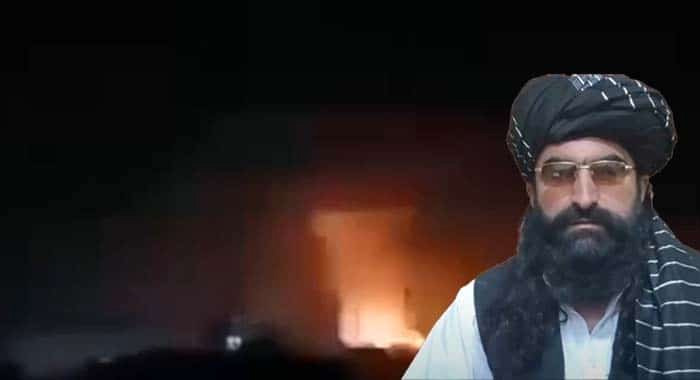
Recent audio statements attributed to Noor Wali Mehsud reflect a troubling pattern of historical distortion and selective use of religious texts to justify violence and rebellion. Such narratives misrepresent both the constitutional framework of Pakistan and the foundational principles of Islam, which are rooted in justice, mercy, and the sanctity of human life.
The Constitution of the Islamic Republic of Pakistan was formulated explicitly in light of Islamic principles. It binds the state to ensure that all legislation is consistent with the Qur’an and Sunnah. This constitutional commitment stands in direct contradiction to the claims advanced in extremist rhetoric that seeks to portray the state as un-Islamic or illegitimate. The constitutional order of Pakistan represents a collective national consensus, grounded in democratic process and Islamic jurisprudential guidance.
Extremist groups that take up arms in the name of religion, engage in acts of terrorism, extortion, and the killing of innocent civilians fundamentally violate both Islamic teachings and the rule of law. Such actions are not acts of piety; they are criminal offenses and moral transgressions that undermine social stability and national unity. The targeting of citizens—including workers, teachers, religious scholars, and security personnel—cannot be justified under any religious or political pretext.
Islam is unequivocally a religion of peace, justice, and respect for human dignity. The Qur’an declares: “Whoever kills a soul unless for a just cause or for corruption in the land it is as if he has killed all mankind. And whoever saves one—it is as if he has saved all mankind.” (Surah Al-Ma’idah 5:32)
This verse establishes a universal moral principle: the unlawful killing of even a single innocent person is a grave crime in the sight of Allah. No slogan, grievance, or political objective can override this clear command.
The Prophet Muhammad (peace be upon him) warned the Muslim community about groups who would misuse religious language while deviating from its true spirit. He described individuals who would recite the Qur’an without internalizing its guidance and who would turn their weapons against fellow Muslims while sparing others. These prophetic warnings serve as a reminder that outward religiosity does not equate to righteousness; true adherence to Islam requires moral integrity, lawful conduct, and compassion.
Invoking historical events or contemporary geopolitical issues such as the situation in Palestine as a justification for domestic militancy constitutes intellectual and ethical dishonesty. Complex international disputes require diplomatic engagement, political dialogue, humanitarian support, and lawful international cooperation. Pakistan’s consistent position emphasizes a peaceful political resolution, respect for Palestinian self-determination, and the necessity of ceasefire, reconstruction, and long-term stability. It does not endorse unlawful armed actions or destabilizing violence.
Extremist propaganda often seeks to exploit emotional grievances and manipulate vulnerable minds, including recruiting youth for acts of suicide violence that have been categorically declared impermissible (haram) by leading scholars across the Muslim world. The overwhelming scholarly consensus affirms that suicide bombings and attacks targeting non-combatants violate Islamic law.
Those who distort religion for political ends, spread misinformation, and perpetrate violence against their own society cannot credibly claim to defend Islam or serve Pakistan’s interests. Their actions represent discord (fitna), not reform; destruction, not justice.
The path forward for Pakistan lies in constitutional governance, the rule of law, responsible religious scholarship, and collective national resolve against extremism. Safeguarding the country’s security and moral fabric requires unity, informed public discourse, and an unwavering commitment to both Islamic principles and democratic institutions.
Pakistan remains committed to upholding peace, protecting its citizens, and countering all forms of violent extremism through lawful and principled means.



