
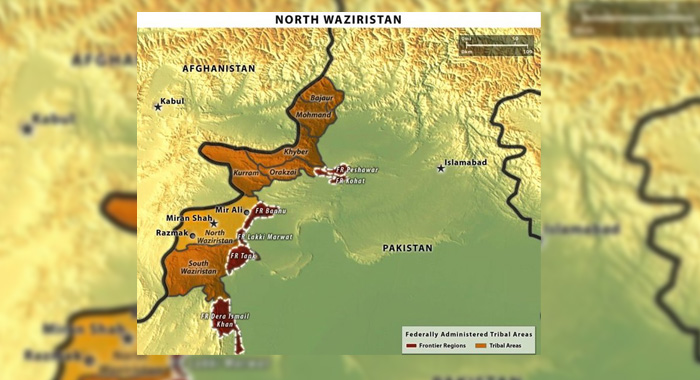
The suffering endured by the tribal population over the years cannot be reduced to statistics or isolated incidents. From loss of life to abductions, extortion, collective punishment, and psychological trauma, these experiences represent the deep and enduring anguish of an entire generation. These are wounds that do not heal with time alone; they demand truth, accountability, and justice.
The extremist groups that once operated with impunity turned peaceful communities into landscapes of fear, anxiety, and relentless torment. Their brutality knew no bounds. Acts of inhuman violence including public executions and grotesque displays of cruelty were employed not only to kill individuals but to terrorize society as a whole. Everyday life was deliberately transformed into a constant state of dread.
These groups adopted a consistent and calculated pattern of violence and propaganda. Temporary road blockades staged for mere minutes, quickly filmed and disseminated on social media, were falsely portrayed as major victories. Such theatrics were used to project power, recruit impressionable youth, and fabricate an image of strength and legitimacy. In reality, murder over trivial suspicions became routine, and bloodshed turned into an obsession rather than an exception.
Today, the public is fully aware of these groups’ true intentions. As local voices have repeatedly stated, even if such elements were to bring prosperity or wealth, their bloodstained history cannot be erased. Their methods, narratives, and objectives have always remained the same.
One of the most dangerous aspects of this extremist ideology is its outright rejection of the religious scholarship of Pakistan and the broader Muslim world. Renowned scholars, respected institutions, and centuries of established Islamic consensus are dismissed wholesale. According to this mindset, all scholars are corrupt, and only a handful of armed, untrained individuals claim exclusive ownership of truth. This is not religion; it is a self-constructed cult of power where violence replaces knowledge, and guns substitute courts, jurisprudence, and moral authority.
Extremist propaganda has systematically misused selective Quranic verses, historical events, emotional poetry, and unauthenticated literature to manipulate young minds. Complex concepts of jihad were stripped of context and presented as if every verse and historical episode was revealed solely to justify their actions. Scholarship, research, and jurisprudential insight were entirely absent.
Alarmingly, recent extremist content has even included blatant historical distortions, such as the false claim that Caliph Abu Bakr (RA) waged jihad against Muslims. This assertion is categorically false and represents a grave distortion of both Islamic history and theology. Authentic scholarship unanimously confirms that the actions taken during his caliphate were against apostasy and armed rebellion threatening the state, not against Muslims. The refusal to pay zakat and the rise of false claimants to prophethood were not matters of opinion but direct attacks on the foundations of religion and governance.
Islamic history further demonstrates that whether during the turmoil of Caliph Uthman’s (RA) era or the emergence of the Kharijites during Caliph Ali’s (RA) time, no declaration of jihad against the general Muslim population exists. Armed action was consistently directed against those spreading disorder and rebellion, never against civilians. This principle remains a unanimous and foundational tenet of Islamic jurisprudence: armed rebellion under the guise of religion constitutes fasad fil ard (corruption on earth).
These groups also trampled upon the core Islamic principle of Dar-ul-Aman the sanctity of public safety. When markets, mosques, seminaries, playgrounds, and sports fields are no longer safe, the very claim of jihad collapses. A so-called struggle in which civilians are used as shields and victims stands in direct contradiction to Islam.
The events witnessed in areas such as Domel over a few short months are too extensive to fully document. Kidnappings for ransom, extortion, and killings based on minor suspicions were normalized and even portrayed as acts of worship. There was no court, no law, and no due process. Life-and-death decisions were made at gunpoint by local commanders acting as judge, jury, and executioner.
In Bannu, young men were abducted from public places, including football grounds. Videos were recorded, and victims were executed under the cover of darkness. Drone attacks targeted local leadership, government officials were assassinated, peace committee members were threatened, and doctors and public servants were subjected to so-called “taxation.” Attacks on electricity infrastructure became routine. Fear gripped communities so deeply that residents avoided leaving their homes after sunset.
The repeated claim that “our war is against the government, not the public” proved to be the greatest deception. The loss of life, property, dignity, and livelihood was borne almost entirely by ordinary citizens. This was not collateral damage but a deliberate strategy to instill fear, silence dissent, and fracture society.
When the state launched intelligence-based, multi-layered, and precision operations aimed solely at protecting civilians and restoring order, sudden calls for protest emerged. This contradiction raises serious and legitimate questions.
It is also a reality that many people, due to fear, cannot speak openly. Yet beneath this silence lies a collective desire for peace, employment, and a secure future. The people are not war-driven. Their only demand is that their land should not be turned into a laboratory of bloodshed and that their children be allowed to grow up without fear.
Islam is a religion of reason, justice, and mercy. Those who turn the killing of innocents into an ideology do not represent Islam. They represent only destruction. Their hands are stained with the blood of Muslims, and no slogan, distortion, or propaganda can cleanse that reality.



