
Pakistan’s security landscape is once again passing through a phase where frequency of incidents risks distorting the deeper picture. From North Waziristan’s Datakhel to Nushki, from intelligence-based interdictions to community-security engagements, recent developments collectively point not to institutional fatigue, but to an evolving contest between militant adaptation and state-society cohesion.
What stands out across the reported incidents is the persistence of militant intent to reclaim operational space, particularly in Khyber Pakhtunkhwa and Balochistan. Drone strikes on civilian-populated pockets, attempts to plant improvised explosive devices near places of worship, and sporadic high-visibility attacks reflect a calibrated shift toward psychological warfare. The objective is not merely physical damage, but narrative disruption, to seed fear, provoke mistrust, and manufacture distance between local populations and security institutions.
Yet the ground response captured in the field reporting tells a different story.
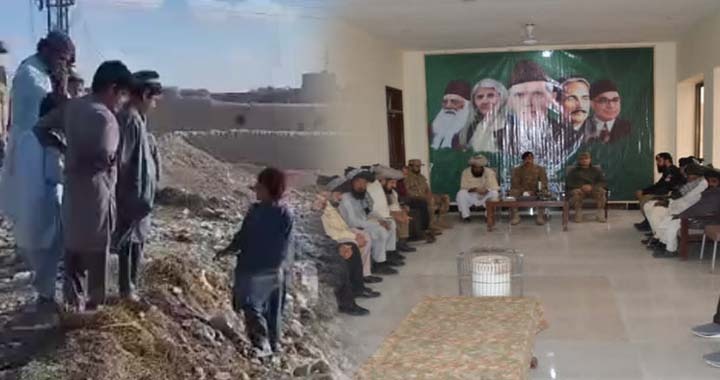
In Datakhel, the convening of a jirga between military leadership and tribal elders illustrated an institutional preference for consultative stabilization rather than kinetic visibility. Tribal concerns were heard, administrative pathways were identified, and follow-up mechanisms were agreed upon. The symbolism mattered as much as the substance. Militants have historically sought to weaponize grievances in tribal districts, but structured dialogue narrowed that exploitable space.
Similarly, in Nushki, the foiling of a potential bombing plot did not originate from surveillance architecture alone. It began with citizen awareness. Public tip-offs enabled police to secure the site, deploy bomb disposal teams, and neutralize risk before casualties occurred. This pattern, replicated across several of the referenced incidents, signals a critical counterterrorism multiplier, community vigilance.
Security operations, both acknowledged and preemptive, form another visible layer. Intelligence-based actions, arrests, weapons recoveries, and network disruptions indicate that law enforcement and paramilitary structures are operating in sustained pressure mode. Militant groups, deprived of large-scale maneuverability, appear increasingly reliant on asymmetric tactics, low-cost, high-panic methods such as IED placements, drone harassment, and soft-target probing.
However, kinetic containment alone does not define the present phase.
Where Militants Miscalculate: The Public–Security Equation
Across the compiled developments, one strategic misreading by militant actors becomes evident, the assumption that repeated violence will fracture public trust in the state’s defenders.
Field indicators suggest the opposite trajectory.
Tribal jirgas reaffirm cooperation. Civilians share intelligence. Communities participate in stabilization dialogues. Even in areas directly affected by attacks, collective pledges to stand alongside security forces continue to surface. Militants have attempted, particularly in tribal districts and parts of Balochistan, to engineer resentment by targeting civilians and attributing instability to security operations. The expectation has been that fear will mutate into hostility.
It has not materialized.
Instead, each attempted provocation appears to reinforce the perception that the threat emanates from militant networks, not from counterterror frameworks. This distinction is strategically decisive. Counterterror campaigns falter when public legitimacy erodes. Here, legitimacy, though tested, remains intact.
None of this suggests the absence of challenges.
Capacity gaps within policing and investigative arms remain a recurring theme in the broader discourse. Resource constraints, technological lag, and training asymmetries continue to shape response ceilings. Militants’ access to advanced weaponry, cross-border facilitation channels, and digital coordination tools complicates the threat matrix. These structural pressures require sustained modernization, not episodic upgrades.
Equally relevant is the information battlespace.
Premature political commentary, speculative attribution, and fragmented narratives risk muddying operational clarity after major incidents. Investigative agencies require evidentiary space to establish linkages, whether cross-border, network-based, or logistical. When conjecture overtakes process, confusion benefits militant propaganda.
Regional geopolitics further thickens the environment. Militant safe havens, weapons seepage from conflict theatres, and hostile intelligence facilitation form part of the extended ecosystem within which Pakistan’s internal security apparatus must operate. These externalities do not replace internal responsibilities, but they do magnify them.
Still, the cumulative reading of the referenced developments yields one consistent conclusion.
Militants retain the capacity to strike, but not the capacity to socially isolate the state.
Attempts to incite tribal backlash have stalled. Efforts to terrorize civilian populations into disengagement have faltered. Plots relying on secrecy have been exposed through public reporting. Even symbolic attacks on mosques or populated zones have not translated into anti-state mobilization.
The bond militants seek to rupture continues to harden under stress.
Pakistan’s counterterror trajectory, therefore, sits at an inflection defined by dual imperatives, sustaining operational pressure on militant infrastructures while deepening public-security trust architecture. One without the other produces only temporary stability. Together, they generate strategic denial of space.
Recent events, viewed in isolation, may resemble scattered security flare-ups. Viewed collectively, they resemble something else, a contest militant is still waging but increasingly failing to socially win.



