
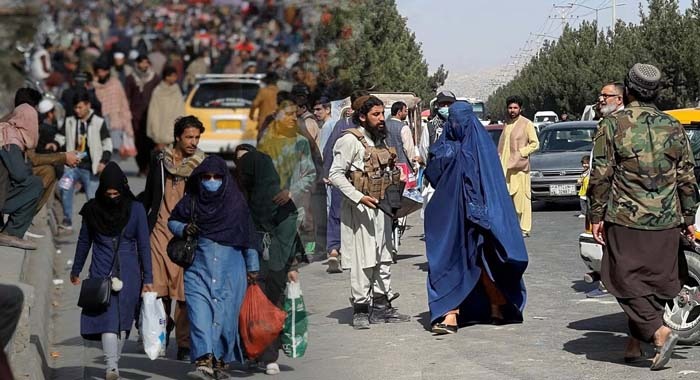
The situation of women and girls in Afghanistan remains dire under Taliban rule, with the regime issuing a series of decrees that severely restrict their basic human rights. Christian Arab, UN Women’s regional director for Asia and the Pacific, described the conditions as the worst in the world, warning that Afghan women are systematically excluded from education, employment, and public life.
In an interview with Australia’s Associated Press, Arab stressed that the Taliban’s policies effectively render women “invisible,” stripping them of access to education, healthcare, and participation in public decision-making. She called on Australia and its international partners to maintain and expand support for Afghan women and girls, emphasizing the urgent need for both humanitarian and political engagement.
The Australian government has responded by allocating an additional $50 million in aid to improve the situation, alongside ongoing legal action against the Taliban for violating the Convention on the Elimination of All Forms of Discrimination against Women. Australian Foreign Minister Penny Wang highlighted that this support is part of a broader international effort to hold the Taliban accountable for their repression.
UN Women officials stressed that the current period represents a critical juncture. Without sustained international commitment, decades of progress for Afghan women could be reversed permanently. Arab emphasized that women must have the ability to live safely, be heard, and shape their futures freely, regardless of their social, ethnic, or religious backgrounds.
Observers note that the Taliban’s restrictions extend beyond education to employment, access to public spaces, and higher education, creating a cycle of exclusion. Afghan girls are denied opportunities to pursue their potential, with far-reaching consequences for the country’s development, governance, and stability.
Arab highlighted that international scrutiny and funding are essential to prevent the Taliban from normalizing these oppressive policies. She urged donor countries to link humanitarian and educational support to measurable improvements in the rights and visibility of Afghan women.
The UN official emphasized that a multilateral approach is vital, noting that isolated interventions are insufficient. Only a coordinated global response can compel the Taliban to alter their policies and ensure Afghan women and girls are reintegrated into public life.
Failure to act, experts warn, risks entrenching Taliban authoritarianism while allowing extremist narratives to persist unchallenged. Afghan women and girls remain at the forefront of both humanitarian concern and geopolitical scrutiny, with the Taliban facing mounting international pressure to respect human rights obligations.
The situation underscores the Taliban’s broader governance failures. While they claim to provide security and stability, their systematic suppression of half the population exposes a regime focused on ideological control rather than effective, inclusive governance.
Unless the Taliban demonstrate tangible reforms, the international community—including Australia, the UN, and other multilateral actors—will continue to hold the regime accountable, both legally and politically, while sustaining support for Afghan women’s empowerment and basic human rights.



