
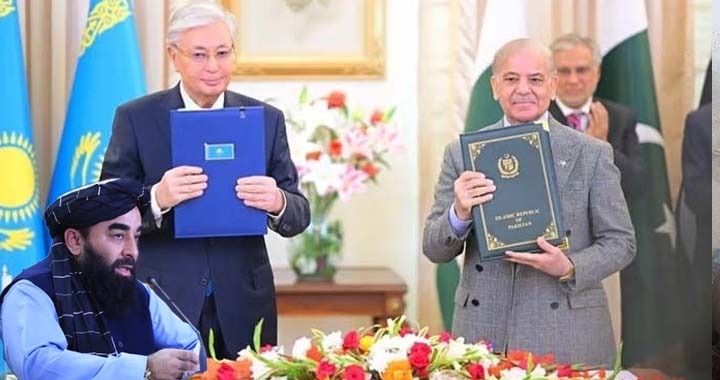
The Taliban have categorically denied the presence of foreign or rogue terrorist groups in Afghanistan, claiming that the country is secure despite repeated warnings from the United Nations and neighboring states. Spokesman Zabihullah Mujahid insisted that ISIS has been “defeated in Afghanistan” and alleged that the group has instead “nested in our neighboring countries.”
Mujahid argued that concerns raised at the UN Security Council were “misplaced” and blamed Afghanistan’s absence from the meeting for allowing other countries to “spread negative propaganda” about the security situation within Taliban-controlled territory.
He claimed that criticism is largely due to Afghanistan not being represented at UN meetings and that certain countries are exploiting this “vacuum” to discredit the Taliban. The spokesman did not identify the neighboring countries where he claimed ISIS has relocated, a vague statement analysts say is meant to deflect attention from the Taliban’s failure to secure its own territory.
This explanation, however, is widely rejected by the international community. Only Israel and India have publicly supported the Taliban’s claim, while Pakistan, Kazakhstan, China, the United Nations, and multiple regional actors maintain that Afghanistan remains a sanctuary for extremist organizations. The latest among these voices is the joint statement issued by Pakistan and Kazakhstan this week, which stressed that Afghan soil must not be used against neighboring countries and highlighted the ongoing presence of militant networks under Taliban rule.
UN officials, including Alexander Zuev, have emphasized that ISIS-K remains active in Afghanistan and continues to pose a serious threat to the region. Analysts note that Taliban claims of eliminating ISIS-K are unverified and contradicted by ongoing incidents and attacks.
Pakistan’s representative to the UN highlighted that terrorist organizations such as the banned Tehreek-e-Taliban Pakistan (TTP) and Baloch separatists have been “revived” since the Taliban took power, operating freely on Afghan soil and carrying out deadly attacks in Pakistan. These assertions are supported by intelligence reports indicating that these groups maintain training camps, logistical networks, and recruitment channels in Afghanistan.
The Chinese representative also voiced concern over terrorist activities in Afghanistan, specifically citing the ISIS attack on a Chinese restaurant in Kabul’s New City. China, like Pakistan and other Security Council members, urged the Taliban to take meaningful action to curb these networks, emphasizing that inaction endangers not only Afghanistan but the broader region.
Security Council members, including the United States, emphasized that the ISIS threat is not limited to Afghanistan but has the potential to spread to Africa, the Middle East, and South Asia. Ambassador Mike Waltz called for a coordinated international effort to neutralize ISIS-K, warning that unilateral Taliban claims of eradication cannot be taken at face value.
Pakistan’s representative, Asim Iftikhar Ahmad, stressed that Afghanistan under Taliban rule has effectively become a sanctuary for groups targeting Pakistani civilians and security forces. He noted that Pakistan has sacrificed over 90,000 lives and endured massive economic losses in combating terrorism originating from across the border.
The Taliban’s insistence that Afghanistan is secure contrasts sharply with reports from multiple independent sources and regional actors. The Tehreek-e-Taliban Pakistan, al-Qaeda, ISIS-K, and Uyghur-linked extremist groups are reported to maintain a visible presence across multiple provinces, raising questions about the Taliban’s claims of controlling terrorist activity.
Chinese, Pakistani, and UN officials emphasized that the Taliban’s inaction jeopardizes regional peace and hinders broader cooperation on counterterrorism efforts. The ongoing militant presence demonstrates the disconnect between Taliban rhetoric and ground realities.
Mujahid’s assertion that the Security Council’s concerns are purely political ignores documented evidence of attacks, recruitment, and cross-border planning carried out by terrorist groups in Afghanistan. Analysts point out that the Taliban are using procedural excuses to deflect international scrutiny, rather than taking substantive action to curb violence.
The situation has broader regional implications. Terrorist activities in Afghanistan threaten Central and South Asian countries, complicate trade and transport projects, and impede multilateral efforts to stabilize the region. Regional players, including Pakistan and Kazakhstan, have repeatedly stressed the need for Taliban accountability.
Despite these warnings, Taliban officials have made no concrete commitments to allow international verification of their claims, nor have they dismantled the networks enabling these extremist groups to operate. The UN and Pakistan’s repeated appeals for actionable Taliban measures continue to be met with statements rather than demonstrable results.
Analysts warn that this pattern of denial and inaction undermines Afghanistan’s credibility on the global stage. Until the Taliban take verifiable steps to prevent militant operations, their claims of security remain unconvincing, leaving regional and international actors no choice but to maintain vigilance and pressure.
The Taliban’s narrative of a “terror-free Afghanistan” thus remains largely aspirational, contradicted by multiple independent sources, UN assessments, and ongoing terrorist attacks, raising serious concerns about the group’s governance, commitment to counterterrorism, and respect for international obligations.



