
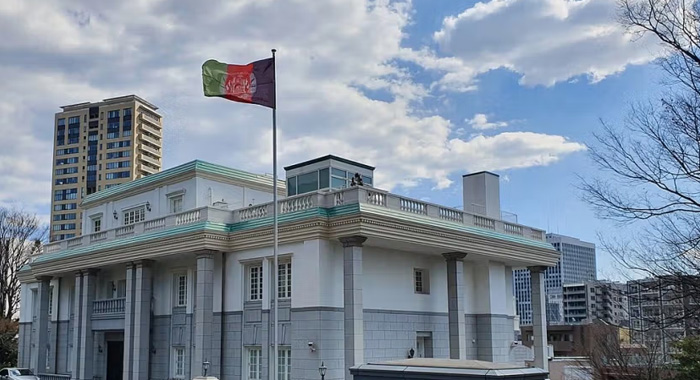
Afghanistan’s Embassy in Japan formally ceased operations on Saturday, marking a significant development in the country’s overseas diplomatic presence, according to the mission’s outgoing ambassador. Shida Mohammad Abdali, who was appointed by Afghanistan’s former government, announced the suspension of the embassy’s activities, stating that he was departing Tokyo “with deep sadness” after ensuring that Afghanistan’s national flag continued to fly over the embassy until the final moment.
The Afghan diplomatic mission in Tokyo had continued to function under diplomats appointed by the previous Afghan administration following the change of power in Kabul. However, after consultations with Japan’s Ministry of Foreign Affairs, the embassy announced that it would suspend all operations effective January 31, until further notice.
In an official statement, the embassy confirmed that all political, economic, cultural, and consular activities have been halted. Ambassador Abdali expressed hope that the national flag would remain raised at the embassy premises until a legitimate and internationally recognized Afghan representative is appointed.
“I leave Tokyo with deep sadness, but also with pride that we upheld our national responsibility and kept Afghanistan’s flag flying until the very end,” Abdali said.
The closure reflects the broader diplomatic uncertainty surrounding Afghanistan’s international representation. Several ambassadors and diplomats appointed by the former Afghan government have declined to cooperate with the Taliban authorities or transfer control of diplomatic missions to the current administration in Kabul.
Japan remains among the countries that continue pragmatic engagement with the Taliban, primarily focused on humanitarian assistance, while withholding formal recognition. Japan’s embassy in Kabul remains operational, underscoring Tokyo’s commitment to humanitarian support and diplomatic dialogue. However, Japan has not recognized the Taliban government nor transferred control of Afghanistan’s embassy in Tokyo to the group.
The suspension of embassy operations highlights the ongoing challenges facing Afghanistan’s diplomatic missions abroad amid unresolved questions over legitimacy, representation, and international recognition.
Japanese authorities have reiterated that their engagement with Afghanistan remains centered on humanitarian needs and regional stability, while decisions regarding diplomatic recognition will continue to be guided by international consensus and developments on the ground.



