
Pakistan is currently facing a serious and escalating threat from terrorism, which has emerged as a significant challenge not only to the state and government but also to the stability and well-being of its society. The ongoing wave of terrorism has disrupted the country’s security apparatus, undermined political stability, and created conditions of economic uncertainty, placing Pakistan in a heightened state of alert and crisis management.
The complexity of Pakistan’s security environment stems from both internal and regional factors. Terrorist networks operating within the country are increasingly bolstered by cross-border support, particularly from elements based in Afghanistan and, indirectly, India. Afghan territory has been exploited as a launchpad for attacks within Pakistan, while proxy conflicts, fueled by regional actors, continue to exacerbate the security challenges on the domestic front.
According to the Pakistan Security Report 2025, compiled by Islamabad’s leading think tank, the Institute for Peace Studies, the country witnessed 699 terrorist incidents nationwide in 2025, representing a 34 percent increase compared to 2024. These attacks claimed the lives of 1,034 individuals, while 1,366 people were injured, marking a 21 percent rise in fatalities. These figures underscore the grave and escalating nature of terrorism in Pakistan and highlight the urgent need for comprehensive and coordinated counter-terrorism strategies.
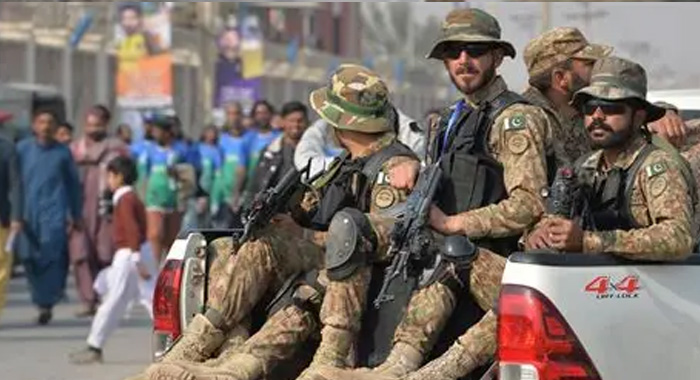
A particularly concerning trend is the deliberate targeting of security personnel and institutions alongside civilian populations. By focusing attacks on the state’s defenders, terrorists aim to undermine public confidence, challenge institutional authority, and convey a message that the state itself is vulnerable. Despite these challenges, Pakistan’s military and security forces have shown unwavering commitment, often sacrificing their lives to defend the nation and protect its citizens.
However, the battle against terrorism is not limited to the frontlines. Political and administrative fragmentation at the provincial and federal levels continues to complicate efforts to create a unified and effective counter-terrorism strategy. Discrepancies between the federal government and provincial authorities, particularly in Khyber Pakhtunkhwa, have at times led to inconsistent policies and conflicting statements, undermining public trust and reducing operational efficiency. Similar challenges are evident in Balochistan, where organized terrorist elements continue to exert influence over certain areas, exploiting both local vulnerabilities and regional support networks.
The current situation illustrates that terrorism in Pakistan is not merely a law enforcement or military issue; it is a multidimensional challenge that requires coordinated action at the political, administrative, and international levels. Terrorist organizations are benefiting from political, financial, and logistical support, making unilateral efforts insufficient. Combating these threats effectively demands regional and global cooperation, as well as a clear recognition of the cross-border networks that sustain extremist operations.
The case of the Tehreek-e-Taliban Pakistan (TTP) exemplifies these challenges. Despite international awareness of TTP’s activities and the role of Afghan-based networks, a lack of consistent regional cooperation and political indecision has allowed the organization to operate with relative impunity. Until TTP and similar entities are neutralized as coordinated threats, Pakistan’s internal security will remain vulnerable, and the cycle of violence is likely to continue.
Pakistan’s security forces, however, continue to demonstrate resilience and professionalism, carrying out precise operations that have neutralized terrorist networks and disrupted planned attacks. But these tactical successes alone cannot guarantee lasting peace without strategic political consensus, institutional unity, and sustained regional support.
The nation stands at a critical juncture where terrorism, political discord, and regional instability intersect. Overcoming these challenges will require the concerted efforts of all stakeholders: the government, opposition parties, security institutions, and international partners. Only through coordinated action, clear political will, and robust regional cooperation can Pakistan hope to curb the rising tide of terrorism and secure lasting stability for its citizens.
Pakistan remains committed to combating terrorism at every level, ensuring the safety of its people, and strengthening the rule of law across all provinces. The message is clear: terrorism will not dictate the country’s future, and Pakistan’s institutions and citizens will continue to resist threats to national security and sovereignty.



