
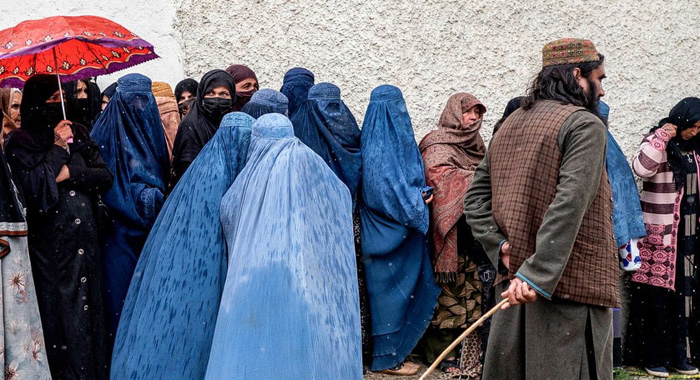
The recently imposed legal code by the Taliban represents a profound and dangerous departure from universally recognized principles of justice, accountability, and the rule of law, raising grave concerns about Afghanistan’s political future and its standing in the international community.
Far exceeding the scope of social segregation, the new framework fundamentally reshapes the legal order by institutionalizing legal authoritarianism, where power dictates legality and the law functions primarily as a shield for those in authority. Under this system, religious scholars and clerics are effectively elevated into a protected legal class, exempt from ordinary judicial scrutiny and accountability mechanisms.
Legal experts warn that this clerical immunity has hollowed out the justice system, dismantling any meaningful checks on abuse of power. By placing certain individuals beyond the reach of courts, the code undermines the very concept of equal application of the law, replacing it with a hierarchy rooted in status rather than legal responsibility.
Of particular concern is the implicit legal and practical protection this framework affords to modern forms of slavery and coercive control, especially affecting women and marginalized groups. Increasingly, individuals are treated not as rights-bearing citizens but as property or “spoils,” a notion that stands in direct contradiction to contemporary moral, legal, and humanitarian standards.
Observers stress that this is not a legitimate jurisprudential debate grounded in legal tradition or interpretation. Rather, it constitutes a calculated mechanism of social domination in which a person’s worth is defined by position, gender, or affiliation, rather than by inherent human dignity.
“When a legal system formally divides society into masters and subordinates,” analysts note, “the foundations of social stability and economic viability collapse.” Such systems deter investment, stifle education and innovation, and drive long-term development into retreat, leaving societies trapped in cycles of isolation and decline.
The enforcement of this legal code further entrenches Afghanistan’s international isolation. By institutionalizing legalized oppression, the Taliban are transforming the country into a state incapable of earning global trust, diplomatic legitimacy, or sustainable engagement with the international community.
Human rights advocates caution that silence in the face of these developments carries serious moral and historical consequences. Ignoring the codification of injustice today will not be remembered as oversight or uncertainty, but as a deliberate failure to uphold fundamental human values.
As Afghanistan stands at a critical crossroads, the international community is urged to recognize the gravity of this legal transformation and its long-term implications not only for the Afghan people, but for regional stability and the global commitment to justice and human dignity.



