
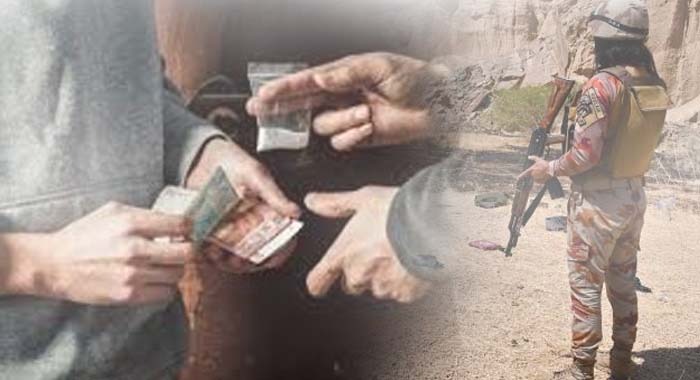
Ongoing investigations into smuggling in Naseerabad have revealed the direct involvement of politically connected individuals and law enforcement officials, highlighting the intricate narco-politico-terror nexus in the region. Security officials and the DIG Police Naseerabad have confirmed decisive action against those attempting to exploit political cover for illicit operations.
According to the official report, two politically connected figures—Jamaat-e-Islami provincial assembly member and parliamentary secretary Abdul Majid Badini’s brother-in-law, Jalal Khan Umarani, and Muhammad Asif Lehri, brother of Muslim League-N parliamentary secretary excise and taxation Mir Muhammad Khan Lehri—were directly involved in smuggling operations.
The report further disclosed that two police inspectors, eight additional police personnel, and others were complicit in smuggling non-customed vehicles, Pan Prag, Chalia, and Iranian diesel.
Accountability Measures Taken
Following the investigation:
The two inspectors and eight police personnel were transferred to District Badr for three years, with three salary increments withheld.
As part of their penalty, police officers are assigned duty on prisoner transport vehicles for the duration of their transfer.
IG Police Balochistan imposed a complete ban on smuggling, and strict, non-discriminatory action was enforced against all involved, regardless of political affiliation.
Political Implications
These developments underscore the critical intersection of political influence and criminal networks in Naseerabad, with relatives of provincial ministers directly implicated. Security sources emphasize that such political protection is often a key enabler for smuggling and terror-financing operations.
Officials hailed the swift action of the police and law enforcement in choking the illicit network, ensuring that political influence could not shield offenders. The operation is being cited as a model for dismantling similar narco-politico-terror nexuses, including regions where militants exploit civilian or political cover.
Broader Counterterror Context
While the Naseerabad operation is geographically separate from Khyber Pakhtunkhwa’s Tirah Valley, officials note structural similarities: militants and criminal elements often rely on political umbrellas and administrative loopholes to continue operations. The Tirah displacement operations had earlier demonstrated how security forces neutralized entrenched terrorist threats while ensuring civilian safety, a lesson now applied in cracking smuggling and narco-terror channels in Balochistan.
Security authorities stress that such integrated counterterrorism and anti-smuggling operations are essential to:
Deny militants and criminals political and administrative protection.
Block financing channels that fuel both terrorism and narcotics trade.
Uphold the rule of law while safeguarding civilians.
The Naseerabad crackdown is being hailed as a major success of law enforcement integrity, demonstrating that political connections will not shield individuals involved in illicit activities, and sending a strong message that the state remains committed to dismantling complex criminal and terror-finance networks.



