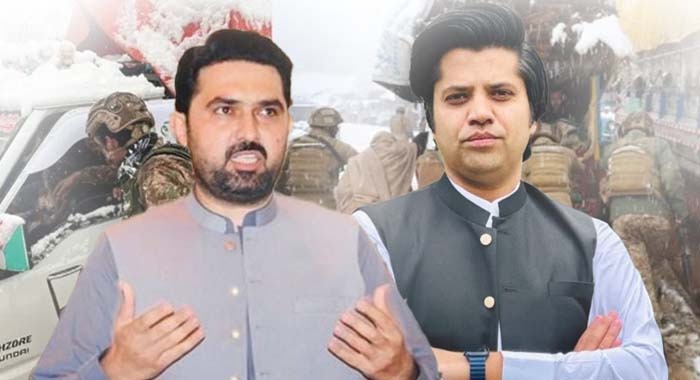
A clear contradiction has emerged between the Khyber Pakhtunkhwa government’s official notification declaring an emergency in Tirah Valley and subsequent claims made by its own Adviser on Information and Public Relations, Shafee Jan, who has challenged the very basis of the relief operation in a letter to the federal government.
On December 26, 2025, the Khyber Pakhtunkhwa Relief, Rehabilitation and Settlement Department formally imposed an emergency in Tirah Valley, district Khyber, under Section 16(A)(1) and (2) of the National Disaster Management Act, 2010. The notification, signed by Secretary Suhail Khan, was issued on the basis of a report submitted by the Deputy Commissioner of Khyber.
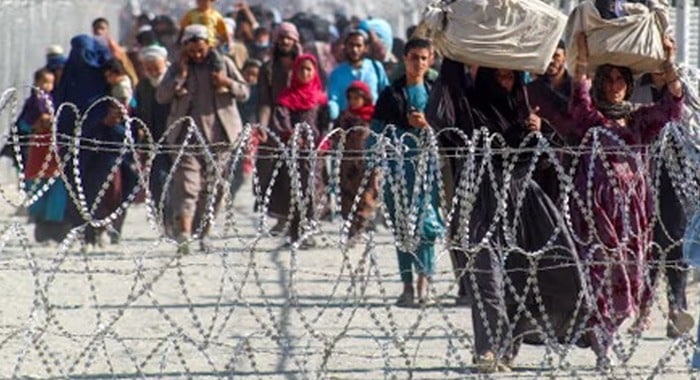
The report identified the likelihood of temporary and voluntary displacement of residents from certain areas of Tirah, including Bagh, in view of prevailing ground conditions. According to the notification, the potential movement of population was based on the wishes expressed by local communities through a representative jirga held at the district level, while taking into account seasonal, logistical, and other on-ground realities.
The stated purpose of enforcing the emergency was to enable advance arrangements for transportation, food supply, temporary shelter, registration points, and other humanitarian assistance. The notification authorised the Provincial Disaster Management Authority and the district administration to immediately initiate relief activities, with all expenditures to be met from the relief account and subject to strict financial and stock record oversight.
The document explicitly clarified that the emergency was imposed solely for humanitarian preparedness and facilitation of relief.
However, in a parallel development, Chief Minister’s Adviser on Information and Public Relations Shafee Jan addressed a letter to Federal Minister for Information and Broadcasting Attaullah Tarar, portraying the relief operation as flawed and attributing responsibility for its consequences to the federal government.
In his letter, Shafee Jan argued that such relief activities disrupt economic life and lead to what he described as forced displacement, despite the provincial government’s own December 26 notification formally authorizing the operation. He further claimed that evacuation orders were issued without consultation with the provincial government or elected leadership, forcing the province to intervene on an emergency basis, even though the notification itself originated from the KP government.
The adviser also asserted that actions taken under federal authority, including relief and civil powers, placed responsibility for rehabilitation, relief, and compensation of affected populations on the federal government. Critics note that the letter makes no reference to the provincial notification that legally enabled the emergency and relief framework in the first place.
According to official records, the federal government had released Rs 4 billion for the operation. These funds, however, were allegedly diverted by the provincial government for political activities, including protests, rallies, and demonstrations. As residents of Tirah began demanding their due relief and compensation, provincial leaders, according to critics, appeared to distance themselves from the commitments reflected in their own official documents.
Despite adopting this position, Shafee Jan’s letter simultaneously emphasized the need for constitutional balance, transparency, and alignment between policy statements and ground realities, particularly on sensitive matters such as population movement and security-related operations. He cautioned that federal-level statements should reflect facts on the ground.
The conflicting positions taken by the Khyber Pakhtunkhwa government on the Tirah Valley situation have raised serious questions about policy coherence within the province and the effectiveness of coordination between provincial and federal authorities at a time when clarity and accountability remain critical for affected communities.