
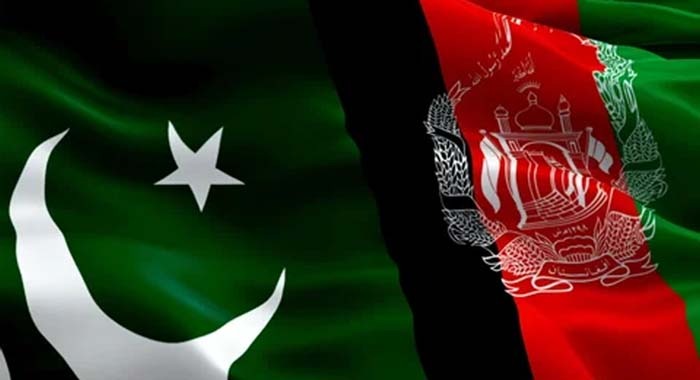
In international relations, notions of brotherhood, sympathy, or enduring friendship rarely dictate state behavior. Instead, global politics operates fundamentally on the basis of interests. Pakistan, a country whose citizens and policymakers have often acted on emotions, religious interpretations, and short-sighted decisions, has faced consequences for choices made over the past seventy years. Several historical examples illustrate how these dynamics have shaped Pakistan’s foreign relations and national security.
In the 1950s, Pakistan, under the banner of Islamic solidarity, extended support to Algerian independence leader Ahmed Ben Bella by issuing him a Pakistani passport and facilitating his speech at the United Nations against French colonial rule. The country even opened a “Republic of Algeria” consulate in Karachi in 1958, years before Algeria achieved independence in 1962. This proactive support brought Pakistan into diplomatic tension with France. The long-term consequences became evident decades later when Algeria, in 2013, visited India on Republic Day and recognized Kashmir as part of India. Similarly, Pakistan issued a passport to Ahmed Balafraj, a Moroccan independence leader, in the early 1950s, creating friction with France and European powers. Today, Morocco aligns with India on global platforms rather than Pakistan.
In the case of Afghanistan, Pakistan’s security position has historically been precarious, and few of its policy decisions can be characterized as unilateral provocations. During the Soviet intervention in Afghanistan, the internal agreements of Afghan leaders such as Sardar Daud, Hafizullah Amin, Nur Muhammad Taraki, and Babrak Karmal paved the way for foreign military involvement. Pakistan did not invite Soviet forces into Afghanistan. Following the September 11, 2001 attacks, multiple Pakistani delegations—including political, religious, and military representatives attempted to persuade the Afghan government to hand over Osama bin Laden and other high-profile terrorists to avoid international conflict. Delegations led by figures such as Mufti Shamsi and General Mahmood were rebuffed, with Afghan authorities refusing to act against these individuals.
Consequently, NATO forces invoked Article 5 and initiated military operations in Afghanistan. Pakistan faced a difficult choice: confront the United States and NATO directly or align with global efforts under the framework of international responsibility. Historically, Pakistan’s security has been repeatedly challenged by Afghanistan. In 1947, Afghanistan opposed Pakistan’s creation at an international level, and in the 1950s and 1960s, Afghan forces and air units repeatedly bombed Pakistani border regions, as documented in archival reports including BBC Urdu analyses.
Pakistan’s attempts to avert the 2001 NATO-led assault were consistent with international norms and regional diplomacy. Pakistani delegations continued negotiations until mid-October 2001, urging Afghan authorities to hand over Osama bin Laden and his associates. Despite Pakistan’s diplomatic efforts, Afghan authorities refused, stating they would not betray their guests. Pakistan’s options were therefore constrained: either engage the world’s military powers in open conflict or fulfill global responsibilities by cooperating with the international community.
Over seventy years, NATO’s Article 4 has been activated eight times for consultations on collective defense, with only a single instance in October 2001 triggering Article 5 for the United States. In this context, Pakistan’s decisions regarding Afghanistan were guided by prudence, geopolitical realities, and a careful assessment of national security. Any alternative course direct confrontation with NATO and countries such as the United States, Europe, Japan, Korea, Australia, New Zealand, Brazil, and Argentina would have posed existential threats to the nation.
The history of Pakistan’s engagement with Afghanistan and broader global powers underscores a fundamental truth: international relations are shaped by strategic interests rather than permanent loyalties or sentimental ties. For Pakistan, navigating these dynamics has often required balancing national security imperatives against diplomatic pressures, historical obligations, and regional complexities.



